|
 |
 | | | | | | |||||||||||||||||||||||||||||||||||||||||||||||||||||||||||||||||||||||||||||||||||||||||||||||||||||||||||||||||||||||||||||||||||||||||||||||||||||||||||||||||||||||||||
| | | You are in: Americas | |||||||||||||||||||||||||||||||||||||||||||||||||||||||||||||||||||||||||||||||||||||||||||||||||||||||||||||||||||||||||||||||||||||||||||||||||||||||||||||||||||||||||||||
|
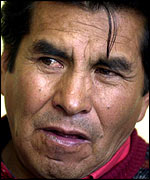
| | Saturday, 29 June, 2002, 10:57 GMT 11:57 UK Bolivians back indigenous leaders Evo Morales is a controversial figure
When Bolivians go to the polls on Sunday it is expected that as many as one in five will vote for Evo Morales or Felipe Quispe, the two most important indigenous leaders in the country. The popularity of these men reflects a loss of faith in the traditional parties who have shared power throughout 17 years of democracy.
Until now Mr Morales and Mr Quispe have been best known for their ability to mobilise nation-halting protests against the treatment of Bolivia's poverty-stricken indigenous majority and in defiance of US coca eradication policy. But if polls are correct, these indigenous leaders will command unprecedented influence inside the government for the next five years. Evo Morales' party, the Movement Towards Socialism (MAS) is now polling 15% and is battling for third place. Radical appeal It is clear their radical policies are striking a note with a disillusioned electorate. "We have seen that people are looking for new alternatives, different from those which have governed during these 17 years of neo-liberalism," said Antonio Peredo, VP candidate for the MAS.
"We offer the only program that proposes the elimination of this economic model." Mr Morales is a controversial figure who has been at the centre of conflicts between coca farmers and US backed eradication forces for a decade. He was expelled from the previous government after three policemen were killed as farmers fought to prevent the closure of a coca market. But with rumours that the US embassy was behind his ousting, and no evidence of his involvement in the deaths, the event has only reinforced the view that he is not part of a political elite famed for its corruption and nepotism. 'Self-determination' Felipe Quispe is also seen as a radical. As leader of Bolivia's second largest ethnic group, the Aymara, he has been accused of racism because of his fiery rejections of the political elite who are predominantly of European descent.
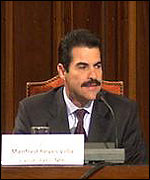
But it is a label he rejects. "We are not racists but the people have to be conscious of our right to govern ourselves," he said. "We want to take our seats in parliament because we are the original owners of this land." With the MAS and Quispe's Indigenous Pachacuti Movement (MIP) set to win 20% of the vote it is possible that they could be the kingmakers in what is proving to be a typically fragmented Bolivian election. The two leading candidates, Manfred Reyes Villa and Gonzalo Sanchez de Lozada are currently polling 26% and 20% respectively, and will need to form a coalition to win the presidency. But both the indigenous leaders are adamant they will not back any candidate that supports continuation of the neo-liberal model. "Don't offend me," said an indignant Morales. "How am I going to ally myself with Manfred Reyes Villa, a racist and a fascist. And with Gonzalo Sanchez de Lozada, even worse!" 'No compromise' Such a belligerent opposition will undoubtedly make governing the country difficult for whichever coalition takes power. Both the MAS and the MIP are determined that questions of land reform and re-nationalisation of certain industries be taken on board by the incoming government.
But the most likely outcome is that the new president, under pressure from the IMF and World Bank to reduce the fiscal deficit by cutting spending, and under pressure from the US State Department to continue coca eradication, will fail to meet the demands of the MAS and the MIP. By applying such unpopular policies they will only strengthen the already tarnished view of international organisations and their role in Bolivia. And there are legitimate concerns that the result could be a country torn by protest. "We are facing a highly conflictive situation," said Antonio Peredo. "If the government doesn't break with its neo-liberal policies it will face a very difficult and bloody social scenario." Felipe Quispe views the future in even more extreme terms: "If foreigners continue to rule us in our country you are going to see war, tell them this, publish this!" he said. | | See also:  05 May 02 | Americas 21 Mar 02 | Americas 28 Mar 02 | Country profiles Top Americas stories now: Links to more Americas stories are at the foot of the page. | |||||||||||||||||||||||||||||||||||||||||||||||||||||||||||||||||||||||||||||||||||||||||||||||||||||||||||||||||||||||||||||||||||||||||||||||||||||||||||||||||||||||||||
| |
|  E-mail this story to a friend E-mail this story to a friend |
| |
| Links to more Americas stories |
| | | ||
 | ||||
 | | Back to top
| ||
| ---------------------------------------------------------------------------------- To BBC Sport>> | To BBC Weather>> | To BBC World Service>> ---------------------------------------------------------------------------------- © MMIII | News Sources | Privacy |