|
 |
 | | | | | | ||||||||||||||||||||||||||||||||||||||||||||||||||||||||||||||||||||||||||||||||||||||||||||||||||||||||||||||||||||||||||||||||||||||||||||||||||||||||||||||||||||||||||||||||||||||||||||||||||||||||
| | | You are in: Americas | ||||||||||||||||||||||||||||||||||||||||||||||||||||||||||||||||||||||||||||||||||||||||||||||||||||||||||||||||||||||||||||||||||||||||||||||||||||||||||||||||||||||||||||||||||||||||||||||||||||||||||
|
| | Friday, 28 June, 2002, 18:40 GMT 19:40 UK Bolivia's election hopefuls promise reform Manfred Reyes Villa (c) is only one of 11 candidates
Corruption, cocaine and free market economics are the three big issues dominating Bolivia in the run-up to Sunday's presidential and congressional elections. Bolivians have enjoyed political stability since 1982, in sharp contrast to the 189 coups they have endured since independence from Spain in the early 19th century. But democracy has brought little relief for the poor Indian majority, most of whom live high up in the Andes. Bolivia remains firmly at the bottom of the South American poverty league. 'No more of the same' Leading the polls is a former military captain and mayor, Manfred Reyes Villa, whose main promise to the country's four million voters has been "no more of the same".
Both Mr S�nchez de Lozada, a rich businessman, and Mr Paz Zamora, a social democrat, followed a version of "Andean Thatcherism". The policy was successful in bringing down inflation from 24,000% in 1985, when Bolivians carried their wages around in brown paper bags. Supporters of the reforms say it brought economic stability, while critics say it only stabilised poverty and benefited too few. Improved transport All 11 presidential candidates advocate some tinkering with the free market policies, although they differ in how much. Mr Reyes wants more state investment in agriculture, while Mr S�nchez de Lozada promises "jobs, jobs, and more jobs", particularly by building roads - a popular move in a country the size of France and Spain combined which has no more than a handful of paved roads.
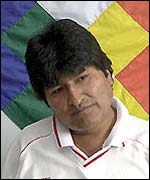
Leading the pack is Evo Morales, a high profile leader of farmers who grow coca, the raw material for cocaine. Morales� campaign received a healthy boost when the US ambassador in Bolivia, Manuel Rocha, warned that Washington could cut off aid if Bolivians chose candidates like Morales. His comments were widely condemned as interfering with the elections, but they bolstered Morales� standing as a radical anti-US candidate. Political horse trading The United States gives more than $100m a year to Bolivia in exchange for coca eradication. Historically, Bolivia has been one of the world�s three leading growers of coca, but in the last five years, more than 50,000 hectares have been destroyed under huge US pressure. Ironically, its success has made the economy more fragile, as coca brought in hundreds of millions of dollars a year, and provided plenty of jobs. If no candidate wins more than 50% of the vote, the new members of Congress decide who will be the next president. In the past, this has meant horse trading - and unusual outcomes. Former dictator Hugo Banzer won the popular vote in 1985 and 1989, but lost out in the deals in Congress. He finally emerged as winner in 1997, but had to resign after being diagnosed with cancer last year. He died in May. It is the horse trading and politicians� lack of credibility which prompted the normally cautious Bolivian churches to make an unprecedented warning about Bolivia�s fragile democracy. They criticised the daily poverty, insecurity and corruption, and warned that "if things go on as they are, and if we vote without thinking, we will be jointly responsible for the destruction of democracy". | |
See also:  29 Jun 02 | Americas 21 Jun 01 | Business 20 Dec 00 | Americas 05 May 02 | Americas 28 Mar 02 | Country profiles Internet links: The BBC is not responsible for the content of external internet sites Top Americas stories now: Links to more Americas stories are at the foot of the page. | ||||||||||||||||||||||||||||||||||||||||||||||||||||||||||||||||||||||||||||||||||||||||||||||||||||||||||||||||||||||||||||||||||||||||||||||||||||||||||||||||||||||||||||||||||||||||||||||||||||||||
| |
|  E-mail this story to a friend E-mail this story to a friend |
| |
| Links to more Americas stories |
| | | ||
 | ||||
 | | Back to top
| ||
| ---------------------------------------------------------------------------------- To BBC Sport>> | To BBC Weather>> | To BBC World Service>> ---------------------------------------------------------------------------------- © MMIII | News Sources | Privacy |