|
 |
 | | | | | | ||||||||||||||||||||||||||||||||||||||||||||||||||||||||||||||||||||||||||||||||||||||||||||||||||||||||||||||||||||||||||||||||||||||||||||||||||||||||||||||||||||||||||||
| | | You are in: Africa | ||||||||||||||||||||||||||||||||||||||||||||||||||||||||||||||||||||||||||||||||||||||||||||||||||||||||||||||||||||||||||||||||||||||||||||||||||||||||||||||||||||||||||||||
|
| | Tuesday, 12 November, 2002, 17:02 GMT On DR Congo's ivory trail 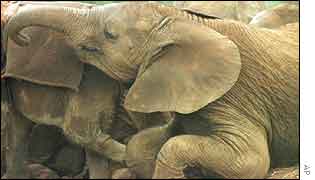 Campaigners are worried about the future of the elephant
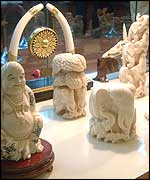
They cost $100, $200 or even more to buy.
The traders' difficulties have partly been caused by the international ban on the ivory trade and partly by the United Nations. UN peacekeepers have been deployed in Kisangani to monitor a ceasefire in DR Congo's four-year war. Their presence has also deterred the illegal trade in ivory. Condemnation Stallholders like Festus are fed up with wildlife campaigners. "Your politics are bad. It's because of your politics that we can't pay our rent. We want you to change your approach."
DR Congo's ivory is no longer being bought openly by the roadside in Kisangani. But it is leaving by other routes. A recent report by the Worldwide Fund for Nature, found that the Democratic Republic of Congo was one of the major sources of illegally trafficked ivory in the world. Hiding Place Leonard Mubalama is a Congolese conservationist. He says Kahuzi Biega national park used to be one of East Africa's best nature reserves.
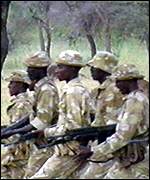
The militias have hunted the elephants to the point of extinction. They've channelled the ivory into the hands of well-known dealers. "These people use this contact between them. They stay under the cover in the forest and people who were dealing with them outside the country," Mr Mubalama said. The ivory route leads out through the ports of East Africa and into the markets of the Far East. Stockpile The porous African border, ineffective customs controls and corrupt officials make smuggling easy. Rob Barnet works for Traffic, an organisation which monitors trade affecting endangered species.
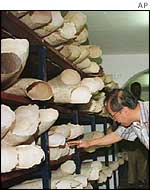
"There's many different ways - in the diesel tanks of lorries through borders in coffee consignments - many, many different ways". A stockpile of ivory is kept under lock and key at Kenyan Wildlife Service headquarters in Nairobi. Hundreds of tusks - some small maybe only half a metre long, and some very, very big tusks - are piled up in a strongroom. Impossible Kenya is already experiencing a rise in elephant slaughter. Officials say poachers are preparing for the easing of the ivory ban. Omar Bashir is the deputy director of the wildlife service. He says his cash-strapped organisation will not be able to cope.
Before the international ban, Kenyan was losing 3,000 elephants a year. The moratorium has not destroyed the ivory trade but it has dramatically reduced it. In Kisangani, the stallholders are already trying out a new business - wood carving. The money is not as good but the men here say they do not have an option. The generations-old skill of ivory carving is being abandoned. Elephant campaigners in Santiago, Chile, are fighting to keep it that way. | | See also:  02 Nov 02 | In Depth 30 Oct 02 | Hardtalk 14 Oct 02 | Science/Nature 11 Oct 02 | Africa 09 Oct 02 | Africa 04 Oct 02 | Asia-Pacific 13 Jun 02 | Asia-Pacific 14 May 02 | Science/Nature 01 Nov 02 | Africa 01 Nov 02 | Business Internet links: The BBC is not responsible for the content of external internet sites Top Africa stories now: Links to more Africa stories are at the foot of the page. | ||||||||||||||||||||||||||||||||||||||||||||||||||||||||||||||||||||||||||||||||||||||||||||||||||||||||||||||||||||||||||||||||||||||||||||||||||||||||||||||||||||||||||||
| |
|  E-mail this story to a friend E-mail this story to a friend |
| |
| Links to more Africa stories |
| | | ||
 | ||||
 | | Back to top
| ||
| ---------------------------------------------------------------------------------- To BBC Sport>> | To BBC Weather>> | To BBC World Service>> ---------------------------------------------------------------------------------- © MMIII | News Sources | Privacy |