|
 |
 | | | | | | ||||||||||||||||||||||||||||||||||||||||||||||||||||||||||||||||||||||||||||||||||||||||||||||||||||||||||||||||||||||||||||||||||||||||||||||||||||||||||||||||||||||||||
| | | You are in: Asia-Pacific | ||||||||||||||||||||||||||||||||||||||||||||||||||||||||||||||||||||||||||||||||||||||||||||||||||||||||||||||||||||||||||||||||||||||||||||||||||||||||||||||||||||||||||||
|
| | Thursday, 13 June, 2002, 18:47 GMT 19:47 UK Thailand carving an illegal trade Analysts say Thailand take elephants for granted
Tour groups from many countries pass daily through its doors.
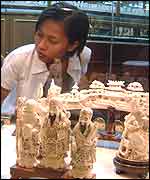
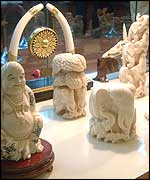
In the hotel lobby are at least six shops whose brightly-lit windows are filled with gleaming white ivory figurines and other decorative ornaments. There are Chinese-style statuettes, carved animals, and other figures crafted in exquisite detail. There are even whole tusks, intricately hollowed and shaped into miniature representations of village life in rural China. On show These curios - on sale to any hotel guest or visitor - are among more than 88,000 ivory products openly on sale in shops in Bangkok and other Thai cities.
They were recorded in a recent survey that identified Thailand as having far and away the largest domestic market for ivory of any Asian country. Since 1993, Thailand has been a signatory of the Convention on International Trade in Endangered Species (Cites). The trade in elephant products is also banned under Thai law. But there is an important loophole. Cites only prohibits the trade in wild animal products - not those taken from domesticated creatures. This allows unscrupulous traders to claim their ivory was procured from Thailand's small population of tamed, working elephants. "It's very hard to tell the difference between domestic and wild elephant ivory," says Sawan Sangbunlung of the Worldwide Fund for Nature (WWF). "It's a big problem and the traders know how to exploit it. We must train the authorities how to distinguish the two kinds." Escape clause The traders have other excuses at the ready too. King Antiques is a plush central Bangkok store dealing mainly in top-end furniture and other oriental goods. But one cabinet is set aside for ivory items which the shopkeeper - who introduced himself as Mr King - was only too pleased to show me.
"These are old pieces, from China and Burma" he explained, gesturing to some delicately carved ivory figures priced at anywhere up to 75,000 baht (US$ 1,785). Asked whether it wasn't illegal to try to export such items from Thailand, Mr King replied: "Small pieces like these I think are no problem. Because we have many foreign customers, they usually carry (them) out." The survey - commissioned by Save the Elephants - found that Western tourists and businessmen, especially French, Germans and Italians, head the list of purchasers of ivory goods in Thailand. Visitors from other parts of Asia are also eager customers, the report says. Smuggling port Another important finding is that most of the ivory on sale in Thailand is not from Asian elephants but from their African cousins. The survey says the majority of raw elephant tusks being smuggled out of Africa are bound for Thailand and China. Tim Redford of WildAid says huge quantities of poached African ivory are being, in effect, laundered through Thailand: "There are regular seizures of imported ivory at Thai ports," he says. "But these represent only a fraction of what's getting through. I think the authorities could act more positively and take more drastic action by looking at the 'legal' trade in ivory on their own doorstep." Back in the lobby of the Ambassador hotel, few of the ivory traders seemed concerned by the possibility of a crackdown on their activities. "We had one visit from the inspectors last year," one shopkeeper told me. "We told them our ivory was all old, from before the law (banning its sale). We didn't have any problem at all." Ivory trade hotline The WWF's priority is raising public awareness about the ivory issue and the plight of elephants in general. Part of the current campaign is special radio announcements, asking members of the public to phone a hotline number with any information they might have about the illegal ivory trade. Tim Redford of WildAid says it's a start, but that much more needs to be done. "There seems to be complacency in Thailand about elephants, because people have seen them all around them historically for thousands of years, and they're seeing them on the streets of Bangkok - they seem to think there's no problem facing elephants." The reality is very different, and so long as the Thai authorities fail to fulfil their international obligations, elephant populations worldwide will continue to pay the price. | | See also:  14 May 02 | Science/Nature 25 Apr 00 | Asia-Pacific 06 Mar 00 | Asia-Pacific 30 Dec 98 | Asia-Pacific 14 Apr 00 | Forum 10 Apr 00 | In Depth 04 Apr 00 | Africa 09 Feb 99 | Science/Nature Internet links: The BBC is not responsible for the content of external internet sites Top Asia-Pacific stories now: Links to more Asia-Pacific stories are at the foot of the page. | ||||||||||||||||||||||||||||||||||||||||||||||||||||||||||||||||||||||||||||||||||||||||||||||||||||||||||||||||||||||||||||||||||||||||||||||||||||||||||||||||||||||||||
| |
|  E-mail this story to a friend E-mail this story to a friend |
| |
| Links to more Asia-Pacific stories |
| | | ||
 | ||||
 | | Back to top
| ||
| ---------------------------------------------------------------------------------- To BBC Sport>> | To BBC Weather>> | To BBC World Service>> ---------------------------------------------------------------------------------- © MMIII | News Sources | Privacy |