|
 |
 | | | | | | ||||||||||||||||||||||||||||||||||||||||||||||||||||||||||||||||||||||||||||||||||||||||||||||||||||||||||||||||||||||||||||||||||||||||||||||||||||||||||||||||||||||||||
| | | You are in: Africa | ||||||||||||||||||||||||||||||||||||||||||||||||||||||||||||||||||||||||||||||||||||||||||||||||||||||||||||||||||||||||||||||||||||||||||||||||||||||||||||||||||||||||||||
|
| | Friday, 1 November, 2002, 17:51 GMT Ivory row tops trade agenda 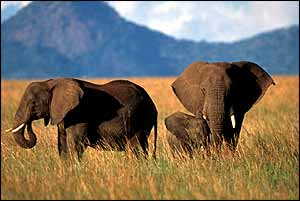 Elephants remain at risk despite trade controls
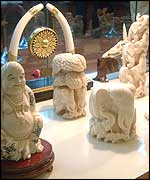
Five southern African countries want to sell some of the large stocks of ivory they have accumulated. Botswana, Namibia, South Africa, Zambia and Zimbabwe have proposed to Cites that they be allowed to make a one-off sale of ivory from their legal stockpiles and then have annual quotas for ivory sales.
Already opposed by the Kenyan Government and environmental groups, the proposal for a resumption in the ivory trade will be debated at the Cites meeting in Santiago, which starts on 3 November. At the last meeting in April 2000, a request for ivory sales was rejected but compromise was reached on a two-year freeze pending the development of better controls on poaching and the illegal trade in ivory. The ivory issue has been a bone of contention at Cites meetings over the last 25 years. The combatants are those who believe that only a total ban on the trade can prevent the poaching of elephants for their tusks and those who want to sell legal ivory to raise money for conservation. Legal sales and poaching The southern African states bidding for permission to sell ivory have large stockpiles of legal ivory, some of it from culling elephants in what they say are overstocked game reserves. They want to sell a total of 87,000 kg of ivory in a first sale and Botswana, Namibia, South Africa and Zimbabwe want annual quotas. They want to sell the following quantities:
Those two countries want all African elephants to be on Cites Appendix I - this list is for animals threatened with extinction and trade in specimens is permitted only in exceptional circumstances and not for primarily commercial purposes.
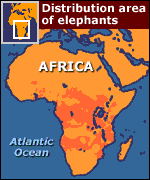
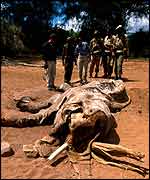
The Cites meeting in 1999 downgraded southern African elephants from Appendix I to less endangered category of Appendix II and allowed a one-off sale of ivory by Botswana, Namibia and Zimbabwe. All other African elephants remained on the higher risk appendix. Poaching increasing Kenya argues that allowing any legal sales of ivory increases the demand for tusks. The director of Kenya's Wildlife Service, Joe Kioko, says the expectation that there could be a resumption of legal sales, however limited, has increased poaching. "I spend a lot of my time out in the field and every time there is a Cites meeting there seems to be an upsurge in poaching," Mr Kioko told the Reuters news agency. The wildlife service has recorded the poaching of 80 elephants this year compared with 57 in 2001. Elephant overload The southern African countries argue that the sale of ivory will raise money for conservation. They estimate that they have at least 242,000 elephants and that many of their reserves are overstocked as a result of sound anti-poaching measures.
They also believe that the ivory collected during culls can be used to make elephants "pay their way" and thereby ensure their survival. This is opposed by many conservation and animal welfare groups. Phyllis Campbell-McRae, director of Ifaw in Britain, sees permission to sell limited stocks of ivory commercially as the start of a slippery slope that would lead to greater legal and illegal exploitation of the species, which could threaten its survival. Smuggling ring The EIA is campaigning for the rejection of the ivory sales proposal on the grounds that legal trading "could further stimulate demand in consumer countries" and increase poaching. The agency recently uncovered what it said was a major operation smuggling illegal ivory from Zambia via Malawi and South Africa to Japan. Hong Kong, China and Thailand are other destinations for poached tusks. Mary Rice of EIA told BBC News Online that until there is a way of preventing poaching and controlling the trade in ivory efficiently, then the agency would oppose moves to legalise sales. She said that the agency does not support culling as a means of controlling elephant populations.
The country has been involved in relocating elephants to countries such as Angola but this has only involved a relatively small number of animals. The government has the support of many local environmental groups, such as the Kalahari Conservation Society. Felix Monggae, the society's chief executive backs the ivory sale as a means of convincing the local, population of the value of elephants. "We support the government view of selling its ivory to benefit the communities which are living in areas populated by elephants. "We think the communities should not see the elephants as menace but rather as a resource," he told South Africa's Business Day newspaper. But this view is one that receives little support among international conservation groups and the opposing sides are lining up to lock horns in Santiago. | | See also:  30 Oct 02 | Hardtalk 02 Nov 02 | In Depth 14 Oct 02 | Science/Nature 11 Oct 02 | Africa 09 Oct 02 | Africa 04 Oct 02 | Asia-Pacific 13 Jun 02 | Asia-Pacific 14 May 02 | Science/Nature Internet links: The BBC is not responsible for the content of external internet sites Top Africa stories now: Links to more Africa stories are at the foot of the page. | ||||||||||||||||||||||||||||||||||||||||||||||||||||||||||||||||||||||||||||||||||||||||||||||||||||||||||||||||||||||||||||||||||||||||||||||||||||||||||||||||||||||||||
| |
|  E-mail this story to a friend E-mail this story to a friend |
| |
| Links to more Africa stories |
| | | ||
 | ||||
 | | Back to top
| ||
| ---------------------------------------------------------------------------------- To BBC Sport>> | To BBC Weather>> | To BBC World Service>> ---------------------------------------------------------------------------------- © MMIII | News Sources | Privacy |