|
 |
 | | | | | | |||||||||||||||||||||||||||||||||||||||||||||||||||||||||||||||||||||||||||||||||||||||||||||||||||||||||||||||||||||||||||||||||||||||||||||||||||||||||||||||||||||||||||||||||||
| | | You are in: Africa | |||||||||||||||||||||||||||||||||||||||||||||||||||||||||||||||||||||||||||||||||||||||||||||||||||||||||||||||||||||||||||||||||||||||||||||||||||||||||||||||||||||||||||||||||||||
|
| | Monday, 15 July, 2002, 13:39 GMT 14:39 UK Ex-rebels join Angola's army 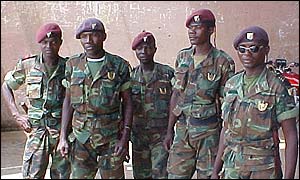 The civil war in Angola lasted 26 years
A rebel army which once controlled more than half of Angola will officially cease to exist by the end of the week. Angolan army officers have been selecting 5,000 members of the Unita rebel movement to be incorporated into the Angolan Armed Forces, in accordance with the peace agreement signed in April.
On Saturday, the Unita soldiers not selected will formally be discharged. But in practical terms, this process may not be as dramatic as the plan would suggest. At the moment, all of the Unita soldiers and their families - over 300,000 people in total - are living in quartering camps around the country. For most of these people, there is no immediate prospect of leaving. The programmes which were promised to help Unita families to reintegrate into civilian life are still only being talked about. Political polarisation The camps will still be controlled internally by ex-Unita officers, even though overall responsibility now passes from the army to the government's reconciliation commission. Most of Unita's weapons are by now meant to have been handed to the armed forces. But there is no independent audit of this process, and the Unita camps do retain some weapons, supposedly for their own security.
The quartering camps were meant to be temporary structures, but there are fears that they may end up becoming permanent settlements exclusively for Unita supporters, and thus perpetuate the political polarisation in the country. The task of reconciliation is one area where the United Nations hopes it might be able to play a role. The mandate of the UN mission in Angola expires on Monday, and in the coming weeks the Security Council will be discussing a new role for the UN in a political environment which has changed radically since the death of Jonas Savimbi. With the government and Unita having pressed ahead with their own peace agreement, the UN is not expecting any major role in the demobilisation process. But UN officials in Luanda are hopeful that it may play a role in human rights monitoring. | |
See also:  11 Jul 02 | Africa 06 Jul 02 | From Our Own Correspondent 23 Jun 02 | Africa 21 Jun 02 | Africa 23 May 02 | Africa Internet links: The BBC is not responsible for the content of external internet sites Top Africa stories now: Links to more Africa stories are at the foot of the page. | |||||||||||||||||||||||||||||||||||||||||||||||||||||||||||||||||||||||||||||||||||||||||||||||||||||||||||||||||||||||||||||||||||||||||||||||||||||||||||||||||||||||||||||||||||
| |
|  E-mail this story to a friend E-mail this story to a friend |
| |
| Links to more Africa stories |
| | | ||
 | ||||
 | | Back to top
| ||
| ---------------------------------------------------------------------------------- To BBC Sport>> | To BBC Weather>> | To BBC World Service>> ---------------------------------------------------------------------------------- © MMIII | News Sources | Privacy |