|
 |
 | | | | | | ||||||||||||||||||||||||||||||||||||||||||||||||||||||||||||||||||||||||||||||||||||||||||||||||||||||||||||||||||||||||||||||||||||||||||||||||||||||||||||||||||||||||||||||||||
| | | You are in: Africa | ||||||||||||||||||||||||||||||||||||||||||||||||||||||||||||||||||||||||||||||||||||||||||||||||||||||||||||||||||||||||||||||||||||||||||||||||||||||||||||||||||||||||||||||||||||
|
| | Sunday, 23 June, 2002, 15:58 GMT 16:58 UK Getting Angola back on track
The Angolan Government announced this week that it was to start seeking investment for the restoration of the country's roads and railways, which have been all but destroyed by decades of war. One particularly important rail route is the Benguela railway, which was a transport artery for much of southern and central Africa, connecting the Angolan ports with the rich farmlands of the interior, and the mines of the present-day Zambia and the Democratic Republic of Congo. Now all that is left operating is a 30 kilometre (18.6 mile) section along the Angolan coast.
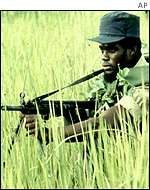
As more and more Portuguese settlers arrived in Angola right up until the 1970s, the Benguela railway encouraged the growth of towns in the interior, and opened up the rich agricultural area of the Angolan central plateau. But it was this same area that was among the most bitterly contested in the civil war that followed independence in 1975. Unita target The railway was an easy target for sabotage by the Unita rebels. Parts of the track are still mined - elsewhere, the rails have become unusable through neglect. In the eastern town of Luena, the station was used as a refugee centre during the early 1990s. Next to the smoke-blackened building, lush vegetation sprouts through rusting goods wagons.
Supporters say the revival of a link through the heart of Angola will help the redevelopment of the very region worst hit by the war, and continue to provide revenue through the export of goods from Zambia and the Democratic Republic of Congo. But some regional economic analysts sounded sceptical about the possibility of financing the rebuilding of the railway, which will require a huge investment that could take many decades to recoup. Funding needed The Zambian copper industry is not as lucrative as it used to be, and mining in the Congo has been hit badly by the civil war there. As to the usefulness of the railway in Angola itself, it is a chicken and egg situation. The redevelopment of the line would help to revive the economy of central Angola. But investors will not want to commit large amounts of money until they are confident that enough is being produced to make the railway viable. Analysts say that investment in road transport in Angola would be a safer and more likely bet. Already, trucks are venturing back onto Angola's potholed roads, though some routes remain impassable because of broken bridges. But the Benguela railway has a symbolic importance. Supporting its reconstruction would be a vote of confidence in Angola's future, and for this reason if no other, the project could well attract political support within Southern Africa and abroad. | |
See also:  15 May 02 | Africa 02 Apr 02 | Africa 31 Mar 02 | Africa 25 Feb 02 | Business Internet links: The BBC is not responsible for the content of external internet sites Top Africa stories now: Links to more Africa stories are at the foot of the page. | ||||||||||||||||||||||||||||||||||||||||||||||||||||||||||||||||||||||||||||||||||||||||||||||||||||||||||||||||||||||||||||||||||||||||||||||||||||||||||||||||||||||||||||||||||
| |
|  E-mail this story to a friend E-mail this story to a friend |
| |
| Links to more Africa stories |
| | | ||
 | ||||
 | | Back to top
| ||
| ---------------------------------------------------------------------------------- To BBC Sport>> | To BBC Weather>> | To BBC World Service>> ---------------------------------------------------------------------------------- © MMIII | News Sources | Privacy |