|
 |
 | | | | | | ||||||||||||||||||||||||||||||||||||||||||||||||||||||||||||||||||||||||||||||||||||||||||||||||||||||||||||||||||||||||||||||||||||||||||||||||||||||||||||||||||||||||||||||||||||||||||||||||||||||||||||||||||
| | | You are in: Africa | ||||||||||||||||||||||||||||||||||||||||||||||||||||||||||||||||||||||||||||||||||||||||||||||||||||||||||||||||||||||||||||||||||||||||||||||||||||||||||||||||||||||||||||||||||||||||||||||||||||||||||||||||||||
|
| | Thursday, 27 June, 2002, 14:35 GMT 15:35 UK Inside famished Malawi Millions of people in Malawi are at risk of starvation
Imagine a country of 11.5 million where more than half the inhabitants are children. Where the average life expectancy is just 39, where half a million have died from Aids and there are a million Aids orphans.
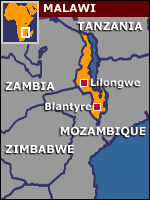
On top of all that, this small African nation is facing a crop failure on a scale not known since 1949. It has not affected Malawi alone. Severe food shortages are also threatening the populations of Zambia, Zimbabwe, Mozambique, Swaziland, and Lesotho. But the crisis is nowhere more acute than in Malawi.
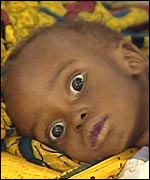
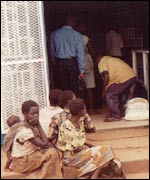
It was caused by floods which swept away the newly planted maize last winter, followed by a drought which reduced the harvest last March to a fraction of what the people need to survive. Unicef, the UN Children's Fund, believes that three million of them are at risk. 200,000 tons of emergency food aid will be required by October at the latest, and only a small proportion of this has been pledged so far. Baby sale I travelled with a Unicef team to a drought-affected area near Kasungu in the centre of the country. In the first village that we came to, a community of just 30 people, two had already died of malnutrition; and the same number in the next village. The survivors showed us the graves and told us they hardly had the strength to bury the dead. I was invited as a Unicef representative to attend the funeral of a man who had died the day before of illness brought on by starvation.
People at the moment are getting by on the small amounts of maize they salvaged from the failed harvest, and on husks that would be used as chicken feed in a normal season. In one field, among the dead stalks of maize we found them harvesting the only crop they could find - field mice. They were digging for the mice to feed their families, or to sell to others. A stick of salted mice was on sale for the equivalent of $1.50. Eating mice The individual tragedies are multiplying. One man, with virtually no food remaining, was responsible for his own three children, and 13 others he had taken on from family members who had died of Aids and starvation.
Time is short. Aid agencies are aware of the gravity of the problem, but have not yet been able to translate their hopes into plans of action. Unless the food can be transported to Malawi in an emergency road and rail operation in the next few weeks, tens of thousands will starve to death. | |
See also:  27 Feb 02 | Africa 12 Feb 02 | Africa 19 Nov 01 | Africa 15 Dec 00 | Africa 07 Mar 02 | Country profiles Internet links: The BBC is not responsible for the content of external internet sites Top Africa stories now: Links to more Africa stories are at the foot of the page. | ||||||||||||||||||||||||||||||||||||||||||||||||||||||||||||||||||||||||||||||||||||||||||||||||||||||||||||||||||||||||||||||||||||||||||||||||||||||||||||||||||||||||||||||||||||||||||||||||||||||||||||||||||
| |
|  E-mail this story to a friend E-mail this story to a friend |
| |
| Links to more Africa stories |
| | | ||
 | ||||
 | | Back to top
| ||
| ---------------------------------------------------------------------------------- To BBC Sport>> | To BBC Weather>> | To BBC World Service>> ---------------------------------------------------------------------------------- © MMIII | News Sources | Privacy |