|
 |
 | | | | | | ||||||||||||||||||||||||||||||||||||||||||||||||||||||||||||||||||||||||||||||||||||||||||||||||||||||||||||||||||||||||||||||||||||||||||||||||||||||||||||||||||||||||||||||||||||||||||||||||||||||||||||||||||||||||||||||||||||||||||||||||
| | | You are in: Programmes: Real Story | ||||||||||||||||||||||||||||||||||||||||||||||||||||||||||||||||||||||||||||||||||||||||||||||||||||||||||||||||||||||||||||||||||||||||||||||||||||||||||||||||||||||||||||||||||||||||||||||||||||||||||||||||||||||||||||||||||||||||||||||||||
|
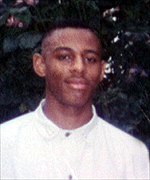
| | Monday, 7 April, 2003, 16:56 GMT 17:56 UK Lawrence friend's decade of despair  Duwayne Brooks: 'Used and abused' since the murder Duwayne Brooks escaped with his life when his friend Stephen Lawrence was murdered by a racist gang ten years ago. Ahead of his autobiography, Duwayne talked exclusively to BBC One's Real Story about crucial mistakes made by "institutionally racist" officers and what he claims is continued torment at the hands of the Metropolitan police. On a south east London street on 22 April 1993, something was to happen that would change 18-year-old Duwayne Brooks' life forever. His best friend, Stephen Lawrence, was stabbed by a gang of white youths who would never be punished for their crime.
"I looked back at him and I could see blood around his neck. I started to cry because I was scared," he told Real Story. "The more he was running he kept saying, 'Duwayne, Duwayne, what's happened? What's happened to me?' Look at me.' " "His coat was puffed up with all the blood that was inside.
Duwayne said when the police arrived he was treated not as a victim but as a suspect, while Stephen lay unattended. "They said, 'Why would a group of white boys attack two black boys for nothing?' Two of the boys many believed killed Stephen Lawrence were captured on a police surveillance camera placed in a flat 18 months after the murder, showing off their stabbing skills and making explicitly racist comments. Catalogue of failures Duwayne expected arrests to be made within a week but then rumours started to spread that his attackers had friends within the police. None of those at the bus stop on the night of the stabbing would later be able to pick out any of the suspects at an ID parade. Some were too afraid to give evidence. So Duwayne Brooks was not only a victim of a racist attack, but the main victim to Stephen's murder. "I was in fear of my life," he recalls.
But Duwayne feels he was again badly let down by his own lawyer, Imran Khan, who was also representing the Lawrence family. Weeks after Stephen's murder, Mr Khan failed to accompany Duwayne to three identity parades, the results of which were crucial to the case. "He always had an excuse," says Duwayne. "He never came to one ID parade. I had to listen to police officers telling me what to do." Private prosecution Imran Khan later apologised to Duwayne for the "distress and disappointment" he had caused him.
In April 1996, the Lawrence family launched their own private prosecution, their only hope of justice for their son. Duwayne, now medically unfit, was in the spotlight once again. "You need a word that's bigger than burden to explain how I felt at that time," he told Real Story. "I'd been left out of everything, then all of a sudden I was rushed back in to give evidence to convict these guys." The private prosecution collapsed before the suspects were even called as Duwayne's evidence simply was not strong enough. 'Institutional racism' "I felt hurt. Everybody just blamed me. I just felt so hurt - used and abused." Five years after Stephen's murder, a public inquiry was held in the inauspicious surroundings of a shopping centre in South London. Yet again, Duwayne had to face the suspects who turned on the crowd when they were booed and jeered. "They've got away with murder basically," says Duwayne, "and they've flaunted it in everybody's face." The public inquiry highlighted a culture of institutional racism in the Metropolitan police. It also concluded that Duwayne Brooks would never have been treated the way he was, had he been white instead of black. No apology Soon after the inquiry, Duwayne had several run-ins with the police. He was continually stopped and searched and arrested six times for various motor offences. All this culminated in a charge of rape, but none of the allegations stood up in court. Duwayne, who works as a photocopying engineer, is trying to put his life back together but remains convinced there is no such thing as British justice for non-white people. "The police have never apologised to me personally. I'm suing the Met and the Commissioner and the officers involved for the way I was treated during the whole Lawrence investigation." But the former Commissioner of the Met, Sir Paul Condon, is appealing against Duwayne's right to sue him. "They've always been fighting me. We've always been fighting each other. That's how it's been in the Lawrence life - me against the Met. "It's easier for a dead dog to get justice than a dead black man." Real Story: Monday, 7 April, 1930 GMT, on BBC One and the Real Story website | |
Internet links:  The BBC is not responsible for the content of external internet sites Top Real Story stories now: Links to more Real Story stories are at the foot of the page. | ||||||||||||||||||||||||||||||||||||||||||||||||||||||||||||||||||||||||||||||||||||||||||||||||||||||||||||||||||||||||||||||||||||||||||||||||||||||||||||||||||||||||||||||||||||||||||||||||||||||||||||||||||||||||||||||||||||||||||||||||
 | |
|  E-mail this story to a friend E-mail this story to a friend |
|  |
| Links to more Real Story stories |
| | | ||
 | ||||
 | | Back to top
| ||
| ---------------------------------------------------------------------------------- To BBC Sport>> | To BBC Weather>> | To BBC World Service>> ---------------------------------------------------------------------------------- © MMIII | News Sources | Privacy |




 It's easier for a dead dog to get justice than a dead black man.