|
 |
 | | | | | | ||||||||||||||||||||||||||||||||||||||||||||||||||||||||||||||||||||||||||||||||||||||||||||||||||||||||||||||||||||||||||||||||||||||||||||||||||||||||||||||||||||
| | | You are in: Programmes: From Our Own Correspondent | ||||||||||||||||||||||||||||||||||||||||||||||||||||||||||||||||||||||||||||||||||||||||||||||||||||||||||||||||||||||||||||||||||||||||||||||||||||||||||||||||||||||
|
| | Saturday, 3 August, 2002, 16:46 GMT 17:46 UK Zambia's sad road to famine 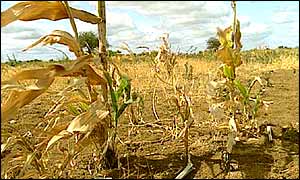 Crops have failed across southern Africa
The road south of the capital, Lusaka, follows the railway up to the Copper Belt in the north, which is why this country was one of the richest African states at independence in the 1960s. But that wealth has now given way to poverty.
The confrontation with Ian Smith's Rhodesia in the 1970s has been followed by the international isolation of the Mugabe regime in Zimbabwe. Wars in neighbouring Angola, Congo and Mozambique have all taken their toll. This country is poor - dirt poor. Yet it is not without resources. Despite the rains failing, the commercial farms along the road are still marked by emerald green fields as irrigated crops push their way through the red soil. Zambia may be facing a famine and millions are going hungry, but still the country is flying top quality roses and fine string beans to European markets. Strange as this may seem, these exports are vital if it is to pay its bills over the coming months. Crops failing As one gets further into the southern provinces the greens fade to brown. Here the road is dotted with traditional villages. They have no dams or deep boreholes to fall back on when the rains fail. This should be the season of abundance. The harvest is just in, and there should be plenty to go around. But as we turned off the tarred road and bumped along the track through the bush, it was all too evident what had taken place. Field after field of maize was no more than stubble.
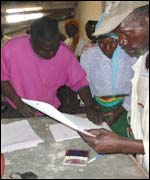
The village hall had been used to store grain, and after weeks of waiting the bags of maize were something to celebrate. One by one, the men and women came forward as their names were called out, to be fingerprinted and then issued with the precious food. The sacks were hauled up and thrown - with a thump - out of the hall. Harriet Moyo was one of those standing in line. Like the other women she wore a long, colourful, printed skirt and scarf. On her back was her eight-month old daughter. I asked whether I could come to her home, and with a shy smile she agreed. We walked along a narrow track, through the tall, dry grass. Suddenly another very similar path came to mind. Happier times It was in Lesotho, and led from the trading post to the nearest village. For many years we had come to have holidays here, and my childhood memories are filled with young boys herding cattle with long sticks, and of children sitting on narrow mud benches, learning by rote at the village school. But above all I remember my sister's pram, coming home from a walk festooned with heads of maize, eggs and flowers. It was simply impossible to go anywhere without being given a gift. These were the most generous people I had ever known. The people of southern Africa are welcoming to a fault.
As I walked on to Harriet's small farm she pointed to the withered crops. "We got nothing," she told me. Her five other children were playing in the yard. All smiles, they greeted our arrival. Then she took me to her kitchen to show me what she had for them. In the centre was a fireplace, and just above it some pots. "So what do you have to feed them?" I asked. "Nothing' she told me. "Nothing at all." Until her maize had come thumping out of the warehouse, Harriet hadn't made a fire. What is the point when you have no food for your children? Snacks welcome We talked a little more, and then I turned to leave. But before I did, I remembered that deep inside my rucksack I had some snacks I had picked up at London's Heathrow airport, on the way out to Zambia. I fished them out and handed them to Harriet for her children. She was delighted. But I was ashamed. The snacks I had bought - I suddenly realised - were not ordinary bars packed with sugar and fats. These were low-calorie food, designed to help slimmers with their diets, and here I was in the middle of a famine, handing them over to a family on the brink of starvation. I walked slowly back to the car and drove back to Lusaka with a heavy heart. | |
See also:  25 Jul 02 | Africa 30 May 02 | Africa 23 May 02 | Africa 19 Feb 02 | Africa 12 Jul 02 | Country profiles Internet links: The BBC is not responsible for the content of external internet sites Top From Our Own Correspondent stories now: Links to more From Our Own Correspondent stories are at the foot of the page. | ||||||||||||||||||||||||||||||||||||||||||||||||||||||||||||||||||||||||||||||||||||||||||||||||||||||||||||||||||||||||||||||||||||||||||||||||||||||||||||||||||||
| |
|  E-mail this story to a friend E-mail this story to a friend |
|  |
| Links to more From Our Own Correspondent stories |
| | | ||
 | ||||
 | | Back to top
| ||
| ---------------------------------------------------------------------------------- To BBC Sport>> | To BBC Weather>> | To BBC World Service>> ---------------------------------------------------------------------------------- © MMIII | News Sources | Privacy |