|
 |
 | | | | | | ||||||||||||||||||||||||||||||||||||||||||||||||||||||||||||||||||||||||||||||||||||||||||||||||||||||||||||||||||||||||||||||||||||||||||||||||||||||||||||||||||||||||||||||||||||||||||||||||||
| | | You are in: Europe | ||||||||||||||||||||||||||||||||||||||||||||||||||||||||||||||||||||||||||||||||||||||||||||||||||||||||||||||||||||||||||||||||||||||||||||||||||||||||||||||||||||||||||||||||||||||||||||||||||||
|
| | Wednesday, 11 December, 2002, 14:15 GMT EU in search of natural boundaries 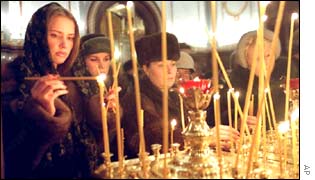 Orthodox Christians were traditionally excluded from Europe
Consider a photograph of upper or upper-middle class Europeans, taken a century ago.
They dress alike, sport the same hairstyles, and carry themselves in a similar way. One imagines them travelling across Europe in comfortable Pullman trains, staying at more or less identical hotels, listening to the same kind of music, reading similar books. Most are deeply patriotic - even chauvinistic - but in a similar way.
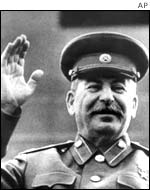
They discuss women's rights, socialism, international terrorism, the latest bout of sabre-rattling between Paris and Berlin, and human rights abuses in China. Mail trains bring the latest editions of French, German and Swiss newspapers to the towns of Transylvania and Eastern Galicia. There are electric trams and telephones. But beyond the city limits, the countryside has barely changed since the 17th century. Ideological divide Half a century later, Europe has been cut in two by the "Iron Curtain". Joseph Stalin runs an isolationist "national-socialist" regime in Moscow. His henchmen run similar outfits across Central and Eastern Europe.
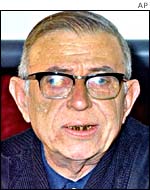
Everything Western is vilified. People with education have been killed, imprisoned, driven into exile, silenced - or are collaborating. Owning a shortwave radio is an offence. In London, BBC executives wonder whether it's worth broadcasting to the region in local languages. The French philosopher and Communist Party member Jean-Paul Sartre travels to Poland. "Strange country", he observes, "where the waiter speaks five languages, and the minister of culture can only communicate in Polish". Shared experiences From the Western perspective, "Europeans" share a set of historical experiences: Roman law and civic culture; medieval Catholicism, the Renaissance, the Protestant Reformation, the 18th century Enlightenment, and the emergence of liberal democracy. There have been some wobbles along the way - but even communism can be claimed as a Western invention. While Western Europe's post-war "social-market" system successfully reconciles social solidarity with free enterprise, Russia - it is claimed - oscillates between collectivist tyranny and gangster capitalism. On this reading of European history, the Calvinist aristocrats of 16th century Lithuania could be regarded as "Westerners" - and the gothic and baroque architecture of Vilnius as marking a Western cultural outpost. Exclusion Identity is reinforced by exclusion. Traditionally, one "excluded" group has been the Orthodox Christians of Eastern Europe and the Balkans.
This has traditionally allowed Hungarians and Poles to rationalise their political misfortunes as an heroic defence of "Western values" - and to despise their neighbours. Until the 19th century, Orthodox Romanians wrote their language in the Cyrillic alphabet. Their adoption of Latin script was part of a deliberate effort to rebrand themselves as a Western-oriented nation. The Czechs might assert their distinctive "Slav" identity against the traditionally dominant Germans - but, in dealings with their eastern Slovak neighbours, they saw themselves as purveyors of enlightened, Western, secular values. 'No-man's land' Until the Second World War, most Central Europeans had little experience of Russia. Russian literature was an exotic minority interest. The same cannot be said for Germany. When not proclaiming a distinctive "Germanic" tradition, Germans have tended to portray themselves as a "bridge" between the sophisticated but decadent Latin world to the West and the backward "Slavs" to the east. Germany's bulk - both physical and cultural - has often led West Europeans to regard Central Europe as a "no-man's land" between Germans and Russians - despite the powerful influence of Italian and French culture in the region. Debates about European identity may appear academic. But as the European Union prepares to take on members from the former Soviet bloc, some leading politicians are beginning to ask aloud, where the EU's natural boundaries lie - and whether certain countries should be excluded in advance. | |
See also:  21 Nov 02 | Europe 16 Oct 02 | Europe 09 Oct 02 | Europe Top Europe stories now: Links to more Europe stories are at the foot of the page. | ||||||||||||||||||||||||||||||||||||||||||||||||||||||||||||||||||||||||||||||||||||||||||||||||||||||||||||||||||||||||||||||||||||||||||||||||||||||||||||||||||||||||||||||||||||||||||||||||||
| |
|  E-mail this story to a friend E-mail this story to a friend |
| |
| Links to more Europe stories |
| | | ||
 | ||||
 | | Back to top
| ||
| ---------------------------------------------------------------------------------- To BBC Sport>> | To BBC Weather>> | To BBC World Service>> ---------------------------------------------------------------------------------- © MMIII | News Sources | Privacy |