|
 |
 | | | | | | ||||||||||||||||||||||||||||||||||||||||||||||||||||||||||||||||||||||||||||||||||||||||||||||||||||||||||||||||||||||||||||||||||||||||||||||||||||||||||||||||||||||||||||||||||||||||
| | | You are in: Europe | ||||||||||||||||||||||||||||||||||||||||||||||||||||||||||||||||||||||||||||||||||||||||||||||||||||||||||||||||||||||||||||||||||||||||||||||||||||||||||||||||||||||||||||||||||||||||||
|
| | Thursday, 5 December, 2002, 15:36 GMT Prodi seeks strong powers for Brussels 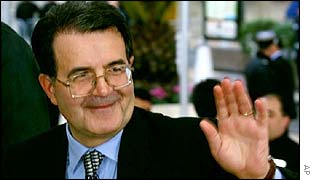 Prodi: Set for battle with governments President of the European Commission Romano Prodi has called for Brussels to be the powerhouse of the European Union, in a speech which is likely to set him on a collision course with EU members' governments.
He also wants a strong, federalist constitution and to abolish national governments' power to veto decisions in most areas. The proposals are likely to meet furious opposition from countries which have put forward very different ideas to the year-long Convention on the Future of Europe, headed by former French President Valery Giscard d'Estaing. Ahead of his speech, UK Government sources savaged the ideas, saying they would be "blown out of the water". 'Peace, Freedom, Solidarity' "National leaders should act on their commitment to make Europe a superpower, speaking with one voice is essential to defend Europe's social model in a globalised world and protect our values," Mr Prodi said. The Commission's proposals include:
Mr Prodi poured scorn on a British proposal for an EU President, elected by the national governments - an idea which has also won the backing of France and Spain. He said the post would create more problems than solutions, asking: "What would he do in the 360 days of the year when the European Council is not meeting and George W Bush is not calling?" Trouble brewing Mr Prodi is unlikely to get far with his plans for a European foreign minister, who would be part of the Commission.
His plans to scrap the national veto are also likely to meet opposition as many countries are reluctant to give up their power to block changes. "[Unanimity] has marked the bleakest periods in the Union's recent history," said Mr Prodi . "If the veto has frequently brought paralysis with 15 member states, think what could happen with 25 or more - that is why I think majority voting should be the rule." "The status quo is not an option, even more so in view of enlargement," Mr Prodi said. "We must build the first true supranational democracy in the world," he told the European Parliament. Mr Prodi's proposals are just some among many which are being put forward by the more than 100 participants in the Convention. | |
See also:  28 Nov 02 | Politics Top Europe stories now: Links to more Europe stories are at the foot of the page. | ||||||||||||||||||||||||||||||||||||||||||||||||||||||||||||||||||||||||||||||||||||||||||||||||||||||||||||||||||||||||||||||||||||||||||||||||||||||||||||||||||||||||||||||||||||||||
| |
|  E-mail this story to a friend E-mail this story to a friend |
| |
| Links to more Europe stories |
| | | ||
 | ||||
 | | Back to top
| ||
| ---------------------------------------------------------------------------------- To BBC Sport>> | To BBC Weather>> | To BBC World Service>> ---------------------------------------------------------------------------------- © MMIII | News Sources | Privacy |