
Within the history of global drug trafficking, the time when the cartels of Medellin and Cali controlled everything, from the coca, marijuana and opium plantations to selling the drugs on the streets, is well and truly in the past.
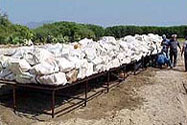
Most of the cocaine confiscated in the US comes originally from Colombia, experts say.

More from Narco Mexico
From BBC News
BBC Mundo
That was the viewpoint expressed to BBC Mundo in Bogota, by the Colombian Anti-Narcotics Police and spokespersons of the US Drug Enforcement Agency (DEA). Both organisations agree that now the cartels are different and the drug trafficking business is much more segmented. This explains the close alliance which exists between the Colombian and Mexican cartels.
BBC Mundo interviewed a spokesman for the DEA. He asked to remain anonymous but informed us: "The sale and wholesale distribution of cocaine to the US is now dominated by the Mexican cartels of Sinaloa and the Gulf."
But wholesale is only one part of the business because according to the DEA source, "the distribution of cocaine to the dealers (in the US) is run by armed gangs and organised crime, like the Italian, Russian and Chinese mafias."
When asked if there are any US cartels, the DEA official said there were not.
But we must ask ourselves the question, if the Italian mafias he refers to are the networks originally created by immigrants from Europe at the beginning of the last century and whose members, many generations later, could now be considered Americans.
On the other hand, anticipating the oft-quoted complaint that it is Latin America who pays with dead bodies in this war against a problem in which the Americans are so involved, the DEA official stresses that of the 1,600,000 prisoners in US jails, around 500,000 of them are in for drug-related crime.
Although 90% of the cocaine seized each year in the US is Colombian, the drug has already passed through Mexican hands. The business is shared between the Colombian and Mexican cartels.
A change of strategy
In the 80s and 90s, the Colombian cartels transported their drugs directly to the US, in heavily-laden planes taking off from secret runways. Later they used boats where the consignments were hidden among licit cargo.
The Director of the Colombian Anti-Narcotics Police, Alvaro Caro, explained to BBC Mundo that these days it is transported in stages, in much smaller quantities and there has been a "breaking up" (for camouflage purposes) of the business.
"They take the drugs out to sea on speedboats or semi-submersible craft, and to avoid suspicion, they are picked up by fishing boats flying under different flags," Caro explained.
These boats then carry the drugs towards Central America or Mexico before finally arriving in the US.
The official said this change in strategy was down to the programmes set up by the US government to prohibit incoming aircraft in an effort to stop drugs entering their territory.
The DEA spokesman declared that the Colombian and Mexican cartels do not deal only in cocaine.
Heroin too
He went on to say: "The Colombians control the wholesale distribution of heroin, from the centre to the east coast of the US, while the Mexicans dominate the heroin market from the mid-west to the west coast."
He also informed BBC Mundo that the Colombian cartels have also opted to pay the Mexicans with drugs, thus strengthening the cartels, who also produce drugs in their own country.
Juan Carlos Garzón, author of the recently published "Mafia & Co", told the Colombian magazine "Semana" that "things have changed for the Colombian cartels because the Mexicans want to impose their conditions."
Garzón says that "the Mexicans no longer want to wait for the drugs to arrive (in Mexico), they are the ones making contacts in the countries of origin."
This explains why the Mexicans are going to the Andean region to do business directly.
When asked by BBC Mundo how much business, proportionally, lay in the hands of the Mexicans and the Colombians, General Alvaro Caro replied: "half and half".
The DEA spokesman maintains that the fact the business has been segmented does not mean the Colombian cartels are not doing well out of it, they are simply "risking less". He adds that the alliance does not only deal with the trafficking of drugs to the US, but also to Europe where they earn in euros, currently much stronger than the dollar.
Turnover
Nobody knows for sure how much the cartels make with their drug trafficking activities, nor how much goes back into the countries involved.
However unofficial figures show that US$3,000 million per year are coming into Colombia. Others, like the extradited paramilitary, Salvatore Mancuso, have claimed recently that the figure could reach US$7,000 million.
The latest report issued by the UN Anti Drugs Crime Office indicates that Colombia is capable of producing 600 tonnes of cocaine per year. The price for the production of every kilo of cocaine is US$2,198.
According to DEA data, the fact that cocaine prices on the streets in the US have risen, that the drug´s purity has been substantially adulterated and that there is a scarcity of it in "many metropolitan areas", are indicative of the "success" of the Colombia Plan.
Will the same plan be adopted in Mexico?
The DEA spokesman indicates that just as the Colombia Plan is the result of a "process of collaboration" between the US and Colombia, the Merida Plan - by which the US offers aid to Mexico and Central America to combat drug trafficking and organised crime - will be measured solely by the requirements of the Mexican authorities.

