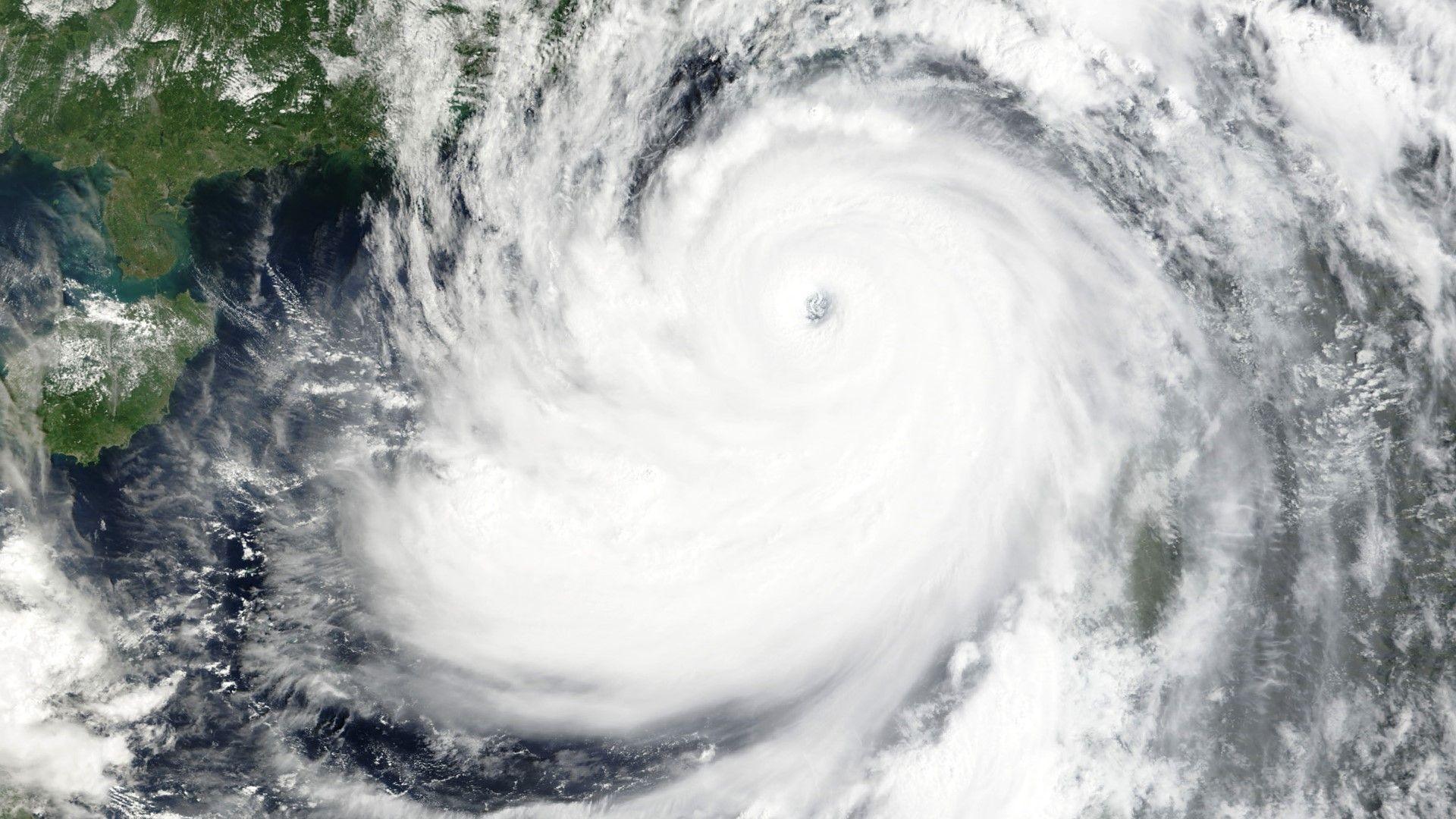
The 'dirty side' of Typhoon Ragasa heads for south China coast - why is it the most dangerous part of a storm?

- Published
When a tropical storm approaches, location is key in determining the extent of the impacts.
As Typhoon Ragasa approaches the Guangdong coastline, the dirty side of the storm may bring damaging winds and a storm surge of 4-5m leading to coastal inundation.
Tropical storms including hurricanes, typhoons and cyclones have a 'clean' side and a 'dirty' side, and the dirty side can be 50% stronger than the clean side.
Whilst all parts of a tropical cyclone can produce heavy rain, damaging winds and a storm surge, the most dangerous part of the storm is the region know as the 'right-front quadrant' or the 'dirty side'.
Right-front quadrant

Forward motion combines with circulation in the right-front quadrant leading to the strongest winds, heaviest rain and biggest storm surge
In the northern hemisphere, the right hand side of the storm (relative to its motion) is know as the 'dirty side' and can be much more destructive than the left hand side.
This is primarily because the forward motion of the storm is added to the rotating circulation of the system, which is always in an anti-clockwise direction in the northern hemisphere.
Typhoon Ragasa was producing sustained winds of 98mph (157 km/h) at 06:45GMT on Wednesday. But the whole system is also moving forward, at around 12mph (20 km/h). Where these two movements (rotation around the eye plus forward motion) combine on the right-hand front side of the storm, this is where the most destructive winds will be found.
Additionally, the winds in the right-front quadrant of the storm will be pushing water inland, resulting in a bigger storm surge.
In the southern hemisphere, the reverse in true, as storms rotate clockwise, it is the left-front quadrant that produces the most destructive impacts.

Hong Kong felt the full force of the dirty-side of Typhoon Mangkhut in 2018 which produced hurricane-force winds and widespread coastal inundation

Hurricane Helene caused devastation in September 2024 as the dirty-side of the storm barrelled into the Big Bend region of Florida
- Published12 July 2019