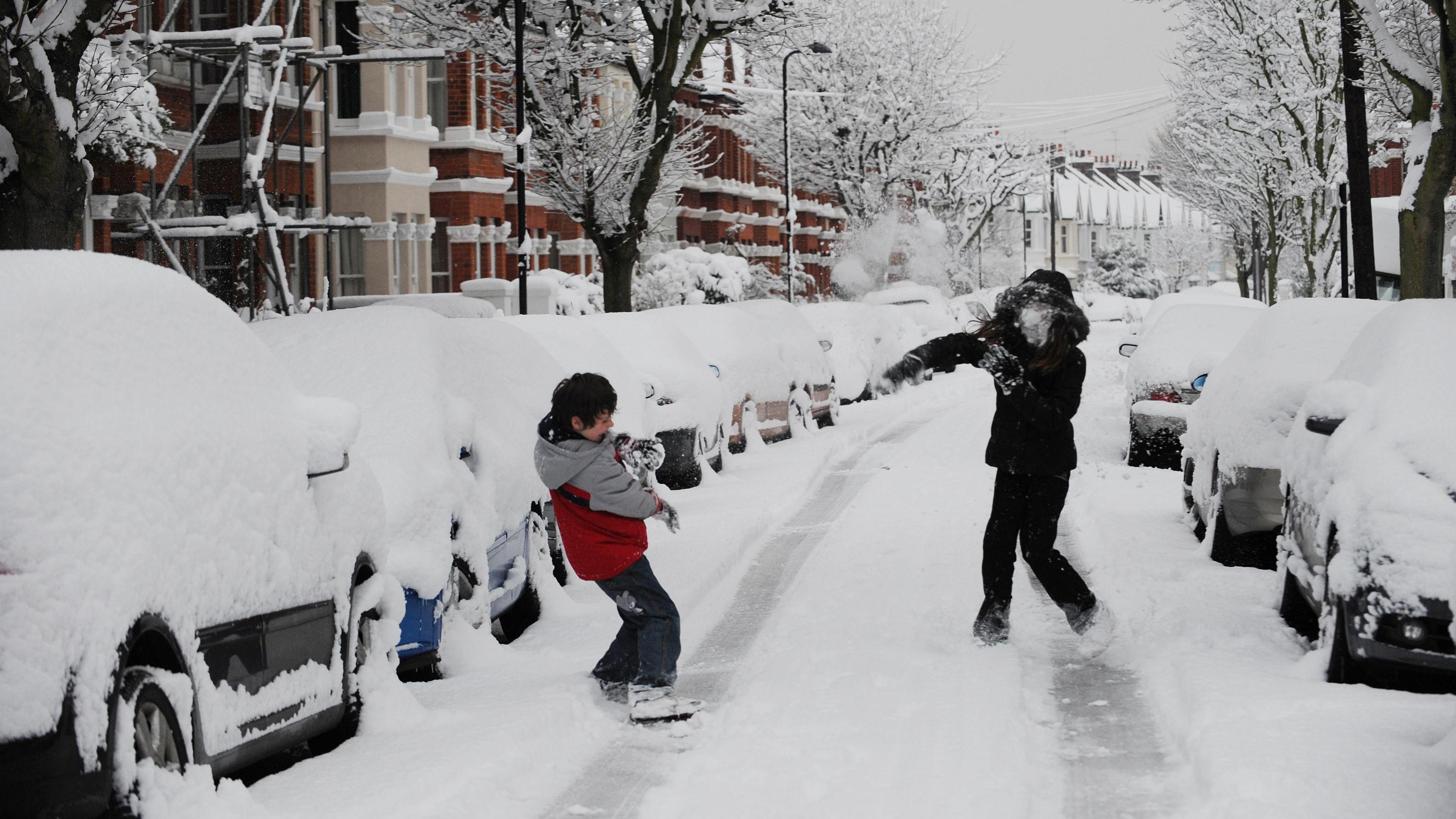
Festive forecast: Will we see a white Christmas this year?

- Published
As the mild December continues are our hopes of a white Christmas melting away?
It's still a little too early to confirm exact details of the forecast for Christmas 2025, but there are signs we may see a change in weather type and a drop in temperatures.
Since the turn of the century more than half of all Christmas Days in the UK have seen snow falling somewhere.
But at this stage what do we actually know about the chances of this Christmas being "white"?
How common is a white Christmas where you are?
- Published15 December 2025
A change to colder conditions towards Christmas?

Many places in the east - such as Tunbridge Wells in Kent - are showing a steady drop-off in temperature in the run up to Christmas
Forecasters look at data produced by several different weather supercomputers generated over different timescales.
Not all computer models are in agreement about how the finer details of the Christmas forecast will look, but most are in agreement that calmer and slightly colder conditions are expected.
The first half of December has been mild and wet, dominated by rain-bearing Atlantic low pressure systems. This general set-up is expected to continue for the rest of this week, but into the Christmas week, higher pressure is more likely to build, which would bring a drier and colder spell compared to recent weeks.
Whilst temperatures are likely to drop, there is no especially cold weather expected at this stage. However, the air is likely to be coming in from more of an easterly direction and may be just cold enough for some wintry precipitation over hills in the north and east.
Currently there are no indications of widespread snow. Overnight frost and fog could well become more of an issue over the Christmas period and especially towards the new year.
Forecasting snow in the UK is notoriously difficult, and it is still too early to know for certain whether we will see a white Christmas in 2025.
The festive forecast will become much clearer about five days before Christmas, so keep an eye on the BBC Weather app or website for the latest updates.

Lying snow looks beautifully festive but a Christmas is only officially 'white' if snow is recorded falling from the sky
What makes a Christmas officially 'white'?
Christmas cards often depict snow that is "deep and crisp and even", but often a "white Christmas" will be much less wintry in reality.
In fact, just a single snowflake has to be recorded falling at any point during the 24 hours of 25 December at any of the Met Office's network of around 300 observing stations.
Snow already lying on the ground on Christmas Day may make things look merry and bright, but it does not count under the official definition.
Will it be a White Christmas?
Join BBC Weather’s Carol Kirkwood, Matt Taylor and Barra Best, along with famous faces Jeremy Vine and Lucy Porter, to explore where our fascination with a white Christmas comes from.
What are the 'white Christmas' odds?
According to the Met Office, an "official white Christmas" has happened more often than not since 1960, but new analysis of its data by the BBC shows that locally, snow falling on Christmas Day is rare for most of us.
The last time the UK saw a widespread white Christmas was back in 2010, when snow fell at 19% of weather stations and, very unusually, 83% of stations reported snow lying on the ground.
Since 2020, every year except 2024 has officially been a white Christmas. However, in each of these years very few places reported any snow actually settling on the ground.
Whilst snow is more common between January to March than in December, odds are still pretty high that somewhere in the UK will see snow on 25 December.
However, as our climate warms, winters in the UK are becoming milder and wetter. Whilst the Met Office says, "This generally reduces the chances of a white Christmas," it also recognises that, "The natural variability of the weather will not stop cold, snowy winters happening in the future".
This article was updated on 16 December to reflect the increased confidence in a colder and calmer spell of weather developing towards Christmas Day.
- Published28 November 2025
- Published25 December 2024
- Published15 December 2025