
 | | | |||
| |||||
Tại sao chúng ta ngủ? | |||||
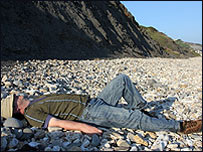
Một nghiên cứu mới đây có thể giải đáp một trong những bí ẩn khó hiểu nhất trong lĩnh vực khoa học - Ngủ để làm gì? Nghiên cứu này gợi ý là ngủ giúp mọi sinh vật hoạt động hiệu quả hơn trong môi trường sống của mình. Pythons, bats and giant armadillos are among the longest sleepers at over 18 hours a day. Human babies need 16 hours, and most of us probably feel we need around eight hours sleep to function well. Professor Jerry Seigel from the University of California, Los Angeles, conducted a study of the sleep times of a broad range of animals and found that they vary widely. Some, like migrating birds, can survive long periods without sleeping at all. He believes that shows sleep evolved to conserve energy: Jerry Seigel: 'It's animals that are needlessly active that will not survive, but animals that are most efficient and use their waking time to do vital functions, and are otherwise asleep that will survive.' Sleep helps make best use of limited resources. In humans, when we're awake, our brain accounts for 20% of the energy we use when just sitting around. Sleeping also makes us less likely to get injured and less likely to be detected by predators. Jon Stewart, BBC News to function well a broad range of vary widely migrating birds to conserve are needlessly active vital limited resources to get injured detected by predators | BÀI MỚI NHẤT 11 Tháng 11, 2009 Châu Phi thay đổi cung cách làm ăn 03 Tháng 11, 2009 Kinh tế Mỹ tăng trưởng 14 Tháng 10 , 2009 Tang lễ Edgar Poe lần thứ hai 12 Tháng 10 , 2009 Tại sao chúng ta ngủ? 10 Tháng 10 , 2009 Vai trò từ thiện của Hoàng Gia Other Stories | ||||

BBC iD
Căn cước BBCBBC navigation
Liên kết BBC

BBC © 2014BBC không chịu trách nhiệm về nội dung các trang bên ngoài.
Trang này hiển thị tốt nhất với phần mềm lướt mạng có mở CSS. Nếu không có chức năng này, hoặc phần mềm cũ, bạn vẫn đọc được nội dung trên trang này nhưng không tận dụng được hết các chức năng. Nếu có thể hãy nghĩ đến chuyện nâng cấp phần mềm hoặc mở CSS lên.
