Stuart Guest:If we have a care experienced child about to start with us, we know there is a high likelihood there is going to be some additional challenges for that child.
Bea Stevenson:
To be confronted with a child who has these really overwhelming feelings and who has experienced some really difficult things in their life, I think a lot of adults fear that.
Matthew Blood:
A care-experienced child or young person is a child or young person who has been cared for, looked after by the local authority. That means they could still be looked after by the local authority or they could have previously been in the care of the local authority. Some of these children or young people would have gone on to be adopted or looked after by special guardians or they may have reached the age of sixteen or eighteen and have left care. It's often a term that is preferred by young people because it takes away the stigma of the term looked after or cared for.
Rebecca Brooks:
The problem with that definition is it excludes a group of children who may be living with people who are not their birth parents, because they couldn't live with their birth parents anymore, but were never actually in the care of the state. So it's a good catch-all term, but it doesn't quite catch everybody.
Tai:
My mum and dad's relationship was on and off. My mum, she was quite depressed and wouldn't do much. It'd just be me looking after my siblings for a lot of the time. I was twelve when we went into foster care. We went in basically because my dad was abusive to us all.
Rachel Hiller:
We know that most young people that come into care have experienced maltreatment in their family home, so that is abuse and/or neglect.
Tyrone Sinclair:
There are other young people who are also in care not just because of their parents, but sometimes because they don't have parents. When you're thinking about cases of refugees or when you're thinking about cases of trafficked young people, when you're thinking about cases of orphaned young people.
Rebecca Brooks:
It can be because of sickness. It can be because of mental ill health of a parent. Almost every reason you can think of why a child might not be able to live temporarily or permanently with a birth parent. When a child comes into care, sometimes that can be initially a voluntary arrangement, something to help a family over a temporary problem in the hopes that the child will be able to return to the family quite soon. Most children that enter the care system will either return home to their families or will remain in the care system until they become care leavers at a later date.
Molly:
I was about two and a half when I was adopted. When you are adopted and you're learning to trust people, because I think adoptees will learn it later, it's quite difficult to sort of understand what they want to hear from you. People often compare you to like Tracy Beaker and she's not even adopted.
Rebecca Brooks:
Historically adoption has grown out of being something that was about babies, I think if we go back fifty, sixty, seventy years. Modern adoption, as we might call it, it is always administered by the state and it will always have involved the state intervening in family life to remove a child into care and then a process through which not a social worker, but actually a court will decide that adoption or another form of permanence is in the best interests of the child.
Stuart Guest:
We have to realise that adopted children have gone through the care experience and they've also then had a further loss from their foster carers into an adoptive home. They will still have issues on identity. They still need a lot of support.
Tai:
And they were saying, 'Oh, you're going now.' We weren't allowed to say bye to one another. Like, we just saw each other in the cars. I remember I got a warning from my social workers that said, you know, if you get into any more fights or anything else goes wrong, it'll be your fault that you go from short-term to long-term. My first foster parents, they were very controlling about everything. If we asked for cake, they would just say no and throw it away in front of us. They were sending me to bed at seven at night, even though I was twelve which always made me feel even weirder or even more outcasted by the rest of my peers.
Rachel Hiller:
Really all young people in care, it's safe to say, have experienced quite a significant adversity, but actually being moved into care can be incredibly difficult and stressful for young people as well.
Rebecca Brooks:
We might look objectively at the family situation that they've left and think, 'Well, they're better off not living in that way or not experiencing those things', but from a child's point of view, it's everything you've ever known. It's everyone you've ever known. It often is for young children every object they've ever owned. They're taken to a stranger's home with no introduction. They're told this is your foster carer now with maybe just the clothes that they're standing in and they have got to start again. The house smells different. The food that you're given, it might be called the same name, but it's not the same as, you know, your mum used to make or it's not the same. Everything is different. That is no doubt a significant and serious trauma for a child. I cannot overstate that enough.
Elliot:
I was a month off from being ten years old. I went into foster care and my sister was around the age of eight. It was with a lady and she had quite controlling behaviour. She would try to control every aspect of our lives. We'd be told off if we got home even five minutes past the expected time. We weren't allowed in our bedrooms until a certain time in the evening, so when it went dark. So every single day, we had to go outside. It led to a lot of anxiety, it led to a lot of feeling worthless, not having a lot of confidence. I just stopped really wanting to engage with people.
Matthew Blood:
What we know about these children is that they've had incredibly difficult early life experiences and many continue to do. And that their trauma will impact significantly on their ability to develop successfully and, most importantly, to learn effectively in the classroom.
Rachel Hiller:
Exposure to that type of chronic ongoing early adversity can fundamentally alter the brain. That doesn't mean the brain is damaged. That is not a message that is helpful to convey, but it does fundamentally alter how a young person might see themselves and the world around them. And that has real consequences for what you might see day-to-day, in terms of behaviour, in terms of actions that you might see in the classroom or in other parts of their lives.
Stuart Guest:
You need to really understand about these children from not only a personal-social level, but from a neuroscience point of view as well, to know that children that have suffered trauma will have differences in how they perceive the world around them, and how they receive sensory input, and therefore then how they respond to that sensory input.
Tai:
You've got to be sad enough for your mum to realise that you're going to miss her and then you have to be OK enough for your siblings, so that they find the transition easier. And then you have to also be open to this whole new world of rules and different people's houses.
Elliot:
That was the beginning of when I just went through foster placements. Different people, different houses, different expectations, different ways of doing things and I felt like a burden that had to be put somewhere that was safe.
Molly:
I get quite offended at the curriculum sometimes, because obviously adoption is not included in family life and religion. It's important that we're acknowledged in the sense that we might not want to do activities such as, like family trees and they might be a bit more difficult for us.
Rachel Hiller:
One of the most important things to recognise when we're talking about care-experienced young people is they're not a homogenous group, but certainly they are a group that we know experience much higher rates of mental health difficulties compared to their peers. And that can be all kinds of difficulties. That might be things like anxiety, depression, post traumatic stress symptoms, behaviour difficulties. We know all of these challenges. Also, neurodevelopmental needs, higher rates of autism, ADHD. They're all much more prevalent in our care-experienced young people.
Stuart Guest:
I don't think anything is inevitable when it comes to a care-experienced child. There are many, many amazing examples of care-experienced children having difficulties and then getting the support and dealing with those and being very successful. I think it's really important that schools put in extra support for care-experienced children knowing that the data out there shows that they have poorer outcomes. So not just accepting where they're at. What more can we put in, what extra support, what extra tuition? Anything that they need to give them the best possible chances.
Bea Stevenson:
See the long term gain, and believe and trust that that consistently empathic response which sets down clear boundaries and appropriate expectations of the child, but is done with kindness and empathy and from a place of understanding will, over time, be able to support the child to see that actually healthy relationships and stable, dependable relationships are possible.
A care-experienced young person is someone who has been looked after by the local authority at any point, for any length of time.
While it can feel like new terminology, it’s actually a broad umbrella term that includes a variety of phrases that are already used widely in schools: looked after child, previously looked after child, and adopted children who were previously looked after. The term recognises many of the shared commonalities these children or young people will have. In addition, it is often seen as less stigmatising.
The term is a useful catch all but it doesn’t quite catch everyone. Legally it may differ region to region, with Scotland introducing the concept of looked after at home; this recognises children who’ve had state intervention and supervision but have remained at home. This means, in Scotland, care-experienced may include those who are at risk of going into care - and it recognises that they may experience the similar issues to those who’ve gone into care.
The term care-experienced also doesn’t include all cases of kinship care, where a child is looked after by a member of their extended family. This arrangement may have been organised privately or so quickly that the child was never in the care of the state. However they will still share similar experiences and challenges to those who are care-experienced.
Why are some children and young people in care?
Most children and young people in care have experienced maltreatment, meaning abuse or neglect. However this isn’t true of every case and it does not mean that a child or young person will necessarily have a simplistic, black-and-white understanding of their home life.
The state generally intervenes when a family is in crisis. This may mean a variety of things for the family, including family members struggling with drug use, bereavement, mental ill-health, incarceration and sickness.
A teacher is unlikely to be aware of all the experiences a child has faced before or during their transition into care, but it is safe to say that all young people who moved into care will have experienced significant adversity.
Adoption
Adoption in the UK is administered by the state and will have always involved the state intervening in family life to remove a child into care.
This intervention can be significant and destabilising for a child, regardless of age. The average age of adoption in the UK is three years old but, even for children whose adoption process begins in infancy or upon birth, the experience of adoption and the challenges faced around identity, stress and fear for one’s safety will still be very real.
It's important to remember that adopted children have gone through the care experience. They will have had additional moves through the care system, for example from their foster carers to an adoptive home, and they still need a lot of support.
Adversities faced by care-experienced children
Tai: “We were brought to the car park…”
Going into care is a hugely dislocating transition for a young person or child, even if - as bystanders - we might look objectively at the situation they’ve left and think they’re better off.
Discussion point:In this animation Tai (not her real name) describes being told with very little notice that she’s moving into care. What are some of the disruptions or anxieties a child or young person may face after this sudden transition? How might this disrupt their education?
- For instance: they may have to travel further to school, they may not have a guarantee they can continue extracurriculars; they are unlikely to have all their belongings; they may feel responsible and preoccupied thinking about family; they may have time-consuming meetings and admin.
What are some of the actions a school can take to support them?
Feelings of instability and anxiety can then be exacerbated while in care. A young person may be moved multiple times within the care system, or be separated from siblings. They might have to change schools, leaving support networks they already have in place such as extracurricular activity groups, peer groups and teachers or members of staff with whom they have built relationships. They may have multiple social workers over a short period of time, due to the high attrition rate within the industry.
Experiences shape how children see the world
Difficult early life experiences can fundamentally alter the brain and impact how a young person sees themselves and the world around them.
It is not correct or helpful to view this as the brain being damaged or to use similar terminology. It is, however, important to acknowledge the discrepancy between how they might perceive and experience the world compared to the general population.
They have learnt that the world is not safe, and they may have a range of beliefs about themselves which can make navigating the world harder; for instance, they may see themselves as someone who cannot cope or someone who is often at fault.
Discussion point: In the film at the top of this page, Stuart Guest uses the term sensory input. Why might this emphasis on our sensory understanding of the world be so key when discussing children who have faced threatening or challenging situations? What might it mean for a child to have traumatic experiences when they are pre-verbal?
- For instance: they may not remember or be aware of triggers.
A young person who views the world and themselves through this lens may be quick to view setbacks as confirmation of these broader beliefs: Of course I failed that test, I was always going to fail that test, I am bad at this, my teacher doesn’t like me.
Needs are individual
Discussion point:Elliot: "I felt like a burden to be put somewhere safe." How do you think the adults in his life saw this emphasis on safety? Do you think this means Elliot didn’t want to be safe?
It’s important to approach each child as an individual and to involve them, and their caregivers, in discussions about their care where possible. Highly structured environments with well-established routines and boundaries can help children feel safe. However, these structures and boundaries need to be established in a context of high levels of nurture and support, rather than inflexible systems of consequences and rewards.
Care-experienced children are not a homogenous group, but they are a group that tend to have much higher rates of mental health difficulties compared to their peers; this can include anxiety, depression, post-traumatic stress symptoms and behavioural difficulties. Neurodevelopmental needs, like autism and ADHD, are also much more prevalent.
Nothing is inevitable when it comes to a care-experienced child. It’s important to acknowledge the statistically poor outcomes of care-experienced children, as this report from the Institute for Research and Innovation in Social Services (Iriss) explains, but always within the context of asking how the systems around them can then provide the support needed to bring their achievement and wellbeing up to that of the general population.
In the long-term, keeping clear boundaries and appropriate expectations but done with kindness and empathy, and from a place of understanding will help support the child to see that stable, healthy relationships are possible.
Further reading / watching
- Dream On by My Pockets - a short film about the day someone is moved into care.
- Lisa Cherry’s ‘The Brightness of Stars: Stories from Care Experienced Adults to Inspire Change’ - a collection of autobiographical accounts from different care-experienced people in the UK.
- Adoptee Futures - Adoptee Futures is the first UK adoption organisation made by adopted people.
- Coram Voice’s annual creative writing competition - a collection of past winners and submissions, written by care-experienced young people.
More from this Teacher Support resource:
Teacher training videos
2. A trauma-informed approach. video
A short film about the impact of trauma and how a trauma-informed approach can offer support to a traumatised child within a school setting.

3. How can we do more? video
A short film about actionable next steps teachers and schools can take to support care-experienced young people, with a focus on inclusion and supporting them through transitions.
Real testimonies from care-experienced young people
Molly's Story - Navigating school when you are adopted. video
A short animated film, using real testimony, about adoption and what it can be like navigating school and peer relationships when you are adopted.
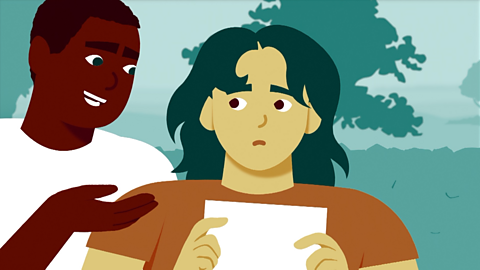
Tai’s Story - The impact of going into foster care. video
A short animated film, using real testimony from Tai (not her real name), on the impact going into foster care can have, leaving a young person feeling disconnected from peers and afraid to express herself.

Elliot's Story - Being moved around the care system. video
A short animated film, using real testimony, about a young person struggling with feelings of worthlessness and anger after being moved from a neglectful home into the care system.

Further support
As the statutory guidance states, schools in England and Wales must now have a designated member of staff to promote the educational achievement of looked-after and previously-looked-after children on the school’s roll, providing a person from whom advice and support can be sought.
Further information and guidance may be obtained from external organisations, including those listed below:
- Adoption UK is a charity connecting and supporting those across the adoption community. They have a helpline, and welcome calls from all including adoptees, adopters, kinship carers and those in their support network: 0300 666 0006
- Become is a charity for children in care and young care leavers. They have a care advice line to provide support and advice about the care system: 0800 023 2033
- Coram is a charity that finds adoptive families for children, and supports children, young people and their families. They also provide training and resources for educators.
- The Rees Foundation is a charity that offers help and advice to care-experienced individuals and have collated together a range of resources.
- BBC Action Line has more links to helpful organisations for if you, or someone you know, has been affected by issues for young people.
- BBC Bitesize has an article for young people on how to support care-experienced friends at school.
