Bea Stevenson:
Teachers have a huge amount on their plates at the moment. And there are lots of calls from all different angles of other things teachers should know and be experts in and I think it can feel quite overwhelming.
Tyrone Sinclair:
The correct sort of approach should be that safeguarding is everybody's responsibility.
Rebecca Brooks:
Just stop and really look at the child. How old are they emotionally? Because if this child is emotionally like a three year old, expecting them to always behave like an eight year old is really counterproductive.
Rebecca Brooks:
I think it's really tempting to, when we talk about the challenges and difficulties that young people have faced, to start to think 'Well, what can we expect then in terms of what they're gonna achieve. No wonder their attainment at GCSE is not as high as some other children. No wonder this happens. No wonder that happens.' And we really need as educational professionals to guard against having that. School can be transformational for a child.
Tyrone Sinclair:
It's always important to ask the question why and look for the cause rather than the symptoms. That's why in essence, you are asking staff, you are asking teachers to look for changes in their behaviour because all behaviour is communication.
Tai:
I was very extroverted, originally. I was always like a chatty kid, you know, 'She talks too much. She's always a lively member of the classroom.' Things like that. That's how I was described. Then when I went into foster care, it was like, 'Oh, she's very reserved. She doesn't speak much. She doesn't talk to anyone.'
Stuart Guest:
Schools are very complex places. They're very busy. There's lots of rules. There's lots of different people. So, for a care-experienced child, all those differences when they have already had a lot of change can be really challenging.
Rebecca Brooks:
So all care-experienced children will have experienced transitions in their lives that are impossible for us to imagine. Transitions from their birth family to a foster care placement, maybe from a foster care placement to another, onto an adoptive family. These are life- changing, dramatic transitions. Thinking about that, it's perhaps no surprise that then they go on to find other transitions difficult, challenging and destabilising.
Bea Stevenson:
If they are experiencing in a school environment, one classroom where there's real psychological safety, they feel understood, they feel trusted, but then moving through that, they're then presented with a very, very different approach and a really zero tolerance approach and then they're going home and they're experiencing something else entirely, very permissive, anything goes. Actually, that's really difficult for them to transition through those different boundaries and those different adult approaches to relationships and behaviour.
Rachel Hiller:
In terms of what schools can do to help with those transitions, probably the most practical thing is starting the preparation for them as early as possible. Having an adult who is safe and really consistent can really help young people with care experience to flourish and it sounds so simple, but it's often not there.
Molly:
I get quite offended at the curriculum, sometimes. Even subjects like in Spanish, trying to describe your family. And of course I could write about the family that I live with now, but in some sense, you also want to write about your biological family, because it is a part of you. But you don't really know them. You don't really know what they look like. And so you can't.
Stuart Guest:
I think the key thing with curriculum changes is understanding curriculum triggers for children, particularly care-experienced, children. So, for example, one of the typical things you see in a lot of schools is family trees in reception. You instantly, from early days for that child, you've raised the stress, you've added to it. So a trauma-responsive approach might be 'bring in or tell us about somebody that's important in your life'. That gives them complete open field to talk about a sibling, a foster carer, a birth parent. Whoever it might be.
Tyrone Sinclair:
One of the biggest challenges that we have is that teachers don't know the amount of information that I know. They're not always allowed to know, because of confidentiality. So unless a young person has said that we can share everything, we will always ask. We will usually sometimes just give an outline or we'll just let them know, 'Look, this family are in crisis. These are some of the things that you want to look out for. These are the ways that you want to handle and treat it.' And again, we direct them back to the Safeguarding Team if there's any concerns.
Molly:
Sometimes you can tell when someone's coming up to you and they're deliberately trying to hurt you because you can see their friends laughing in the background.
Tai:
As soon as I heard that it's going to be my fault, if anything goes wrong, it'll be my fault. And I remember just suddenly being like, 'Well, I've got to just change everything about who I am.' Like, I can't speak back to people. I can't do anything that will get a rise out of others in case it escalates and has consequences for us.
Tyrone Sinclair:
The difficulty is teachers will see behaviours that they're told to look out for, that might be a concern. Under no circumstance should that ever come with, one, judgement or, two, should that ever come with arriving at a sort of stereotype. 'Oh, because this person looks like this or because they look a bit dishevelled, it must mean this, it must mean that.' If in doubt, always refer up.
Rachel Hiller:
If a young person is experiencing complex mental health needs, which many care-experienced young people will be, they do need to be engaged with professional mental health services. Schools often have mental health workers in them now and sometimes that's a great place for young people to go to get mental health support. But crucially, what our research shows, is that for many care-experienced young people that's not the place they want to go for their mental health support. Because they are already having to put a lot of effort into navigating school and to be going in to see a therapist during the school day, which might be bringing up a lot of trauma memories, maltreatment memories and then expecting to go back to the classroom is just too much to navigate. So talk to the young person, talk to their caregiver about where that support might most helpfully come from. It might be someone in the school, but it might be looking at referrals elsewhere.
Elliot:
You know there's always a part of me that's known that it would have been worse to stay with my mum and dad. Of course it would have been, because of some of the abuse that we were going through and I know it would have only worsened with time.
Matthew Blood:
So virtual school heads do come across a challenge where schools have adopted a behaviourist approach and that is very common in schools. I think virtual school heads recognise that there's still lots of work to do to overcome some of that mindset around what behaviour means, but I think the evidence base is really being developed now that often those behaviourist approaches with vulnerable children don't work. And what a trauma-informed approach does is it strips it back and says, 'Look at the child's experience.' And what we know is that the brain when it's dysregulated and it hasn't developed fully is unable to often understand rational consequences. So by putting in a consequence or a sanction, it often relies on the ability of the person receiving that to recognise that they've done wrong or that in some way they broke some sort of code of behaviour. Now, traumatised children often don't have that ability to do that. So what you do is that you have to find an alternative way and the alternative way is by emphasising the importance that the way to get that child to behave and to connect and to regulate themselves is by developing a safe relationship.
Molly:
But I also remember having this brilliant teacher and we'd given her a leaflet about adoption and she'd read through it. And she seemed to be really understanding and caring and she made me feel really welcome in the classroom. I think she got the aspect that I am going to be different.
Tyrone Sinclair:
If you're talking about the development of the whole child, actually standing at your door and saying 'good morning' to every single child that walks past, looking them directly in the eye. You might be the first and the only person that allows them to be seen that day. Small things can have big impacts.
Rachel Hiller:
Schools are a huge opportunity to be the sanctuary for our care-experienced young people, because it's where they will spend a lot of their week, because it's where some of the most consistent adults in their life might be, because in an ideal world, it might be where their friendship group is and that peer support, your social environment, having an opportunity to have positive social interactions. Those are all things that are fundamental to mental health, to mental health of all of us and particularly for care-experienced young people as well.
Stuart Guest:
Our vision for our children leaving our school is that they're ready to take on the next step. Not that they get a particular result or they get a particular outcome. But we've given them enough so they will then survive and thrive in the next stage of their education. I always say the success of our school is when they come back when they're sixteen, eighteen, twenty, whatever it might be and say, 'oh, I'm doing OK'.
Rebecca Brooks:
And it may be that a child that has experienced all of this is going to take longer to get to their potential than a child that hasn't had all this to cope with, but their potential still exists. We need to give these children our time and we need to give them our dedication and we need to look at their futures with hope, because everything can change. Transformation can happen. And we cannot give up on these children and young people.
It can be really tempting, when considering the challenges and difficulties care-experienced children face, to think no wonder: no wonder their attainment isn’t as high and no wonder they might struggle. However, this is an attitude that educators must guard against.
School can be transformational. School can offer young people the opportunity to build positive relationships with adults and their peers, and a teacher can become one of the most reliable and trusted adults in a young person’s life.
An educator doesn’t need to become an expert in every single issue that may affect a young person in their classroom, but rather can see themselves as the first point of contact for many young people, often being the one to have the first initial conversation with a young person about an issue before the pastoral team or safeguarding team become involved.
By being responsive and curious about that child, by looking for the cause rather than the symptom when it comes to behaviour, they can support a child’s day-to-day needs and refer the child to the safeguarding team as needed. When in doubt, always refer up.
The impact of transitions
Discussion point: What transitions do you go through in a day? Are there any you find difficult to acclimatise to? What are some routines or actions you take to ease into these changes?
A care-experienced child or young person will have experienced transitions in their lives that are impossible for many of us to imagine, so it is no surprise that they may then find other transitions difficult, challenging and destabilising.
A school day, week, term and year is made up of multiple transitions. During a school day, a child may be moving classroom to classroom, or subject to subject. If they are experiencing a classroom where there’s real psychological safety but then moving on to other classrooms and a homelife with very different approaches to behaviour, it can be disorienting. This is why implementing trauma-informed policy and training throughout school is key.
Discussion point: What transitions might a young person or child go through in a day, a week, a term or a year?
- Take one of the most obviously disruptive examples, like moving school. What questions might a young person be asking themselves before starting? What actions can be taken to help that transition? (For instance, meeting their new form teacher beforehand in the presence of their caregivers, seeing photographs of the different spaces in advance).
- Take one of the smaller examples, like moving from the playground to the classroom after break. What are some actions that can be taken to help that transition? (For instance, allow children to come in from the playground a couple of minutes early to take part in a short regulating activity with a member of staff and avoid the sensory overload of busy corridors).
Not all care-experienced children or young people will need this level of support; check with them and with their caregiver.
Their caregiver can be an invaluable resource when preparing the child or young person for these transitions. For example, a caregiver who is told beforehand that there will be a supply teacher might use the journey to school with the child to prepare them for the new adult in the classroom.
Additional support in school can be built up around these key moments of transition in the day, which a young person may find destabilising. For example, a school might arrange to have the same key adult greet a child at the beginning of every day and walk them to their classroom if they find the beginning of the day overwhelming.
Many care-experienced children will have additional disruptions that many of their peers are unlikely to encounter: being called out of lessons to attend meetings with social workers, additional moves between foster homes or between schools during the school year, and visitations with birth parents or siblings during the week.
Looking out for triggers
The curriculum can hold triggers for adopted and care-experienced children.
Discussion point: In the film at the top of this page, Stuart Guest gives the example of family trees and offers an alternative activity: tell us about someone important in your life. What are some other examples of possible curriculum triggers and alternative activities?
It can be across a span of subjects including literature and performance pieces, broader PSHE lessons on families and family members, religion and philosophy, languages and science lessons like genetics. These references can “raise the stress” of a child who might already be significantly stressed at school.
As a teacher, you can’t always know or anticipate triggers that are individual to a child. Teachers don’t know the amount of information that those in pastoral roles may know and this confidentiality is often an important boundary to keep, with many young people appreciating discretion and sensitivity, including when they need to move in and out of the class for different meetings.
Supporting mental health
If a child or young person is experiencing complex mental health needs, school may be in a position to support them. However, in many cases, they will need to be engaged with professional mental health services outside of school instead. They are already having to put a lot of effort into navigating school; to have therapy and then be expected to then return to the classroom may be too much. It is important to speak to the young person and their caregiver to check their preferences.
It is also important, more generally, to consider when and where they are taken out of lessons; care-experienced children will often have meetings that mean they miss time in the classroom, which in turn can impact on their education and risk making them feel othered.
A trauma-informed approach to behaviour
It is important not to rely on a behaviourist approach which asks a child to understand rational consequences when they are stressed and dysregulated.
When upset or anxious, a child or young person is often not able to process or prioritise the information they are being given, and often won’t be able to until they are in a situation where they feel safe again.
Putting in a consequence or a sanction relies on the ability of the person receiving that to recognise that they’ve done wrong and to approach that logically. An emotional child encountering a stressful situation often won’t have the ability to do that. It is only by re-establishing that sense of safety and connection that they can begin again to process key information.
Creating a nurturing environment
School is where a lot of young people will spend much of their week. It is where some of the most consistent adults in their life might be. It may even be where their friendship group is.
This opportunity to have positive interactions with both adults and peers, building those key support networks, is important for teen mental health as a whole, and particularly for care experienced children.
Discussion point: Stuart Guest says his school’s aim is for a young person to be ready to take on the next step. Their definition of success is when a student reaches out at an older age and says they’re OK.
- What is your definition of success?
- How easy is it to think long-term as an educator?
- How helpful is data for you personally when measuring a child’s experience?
We need to give these children our time and we need to give them our dedication. We need to look at their futures with hope.
Further reading / watching:
- Each and Every Child - a toolkit to reassess the language used around care, specifically placing the emphasis and expectation on the system, rather than individual children or families.
- Become, a charity for children in care and young care leavers, has produced 'I Wish You Knew, six key takeaways for teachers as suggested by children in care.
- ‘Tracy Beaker made me want to grow up in care’ - Isabelle Kirkham’s article in the publication Fostering Families looks at the representation of care in media, specifically how comments about Tracy Beaker from peers can make a care-experienced child feel othered and misunderstood.
- Small Axe: The Podcast - Person with Care Experience. In this podcast from BBC Sounds, Ashley John-Baptiste and Dr Sylvan Baker discuss the experiences of Black children in care.
More from this Teacher Support resource:
Teacher training videos
1. Defining care experience. video
A short film about the term ‘care-experienced’ and how being in care will impact a child, from the adversities faced to the impact it will have on their core beliefs and identity.
2. A trauma-informed approach. video
A short film about the impact of trauma and how a trauma-informed approach can offer support to a traumatised child within a school setting.

Real testimonies from care-experienced young people
Molly's Story - Navigating school when you are adopted. video
A short animated film, using real testimony, about adoption and what it can be like navigating school and peer relationships when you are adopted.
Tai’s Story - The impact of going into foster care. video
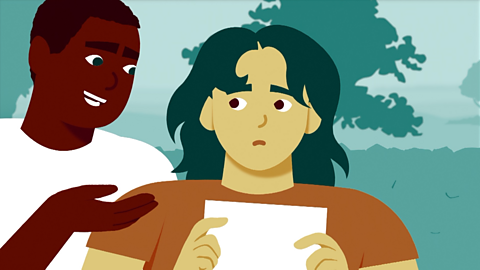
A short animated film, using real testimony from Tai (not her real name), on the impact going into foster care can have, leaving a young person feeling disconnected from peers and afraid to express herself.

Elliot's Story - Being moved around the care system. video
A short animated film, using real testimony, about a young person struggling with feelings of worthlessness and anger after being moved from a neglectful home into the care system.

Further support
As the statutory guidance states, schools in England and Wales must now have a designated member of staff to promote the educational achievement of looked-after and previously-looked-after children on the school’s roll, providing a person from whom advice and support can be sought.
Further information and guidance may be obtained from external organisations, including those listed below:
- Adoption UK is a charity connecting and supporting those across the adoption community. They have a helpline, and welcome calls from all including adoptees, adopters, kinship carers and those in their support network: 0300 666 0006
- Become is a charity for children in care and young care leavers. They have a care advice line to provide support and advice about the care system: 0800 023 2033
- Coram is a charity that finds adoptive families for children, and supports children, young people and their families. They also provide training and resources for educators.
- The Rees Foundation is a charity that offers help and advice to care-experienced individuals and have collated together a range of resources.
- BBC Action Line has more links to helpful organisations for if you, or someone you know, has been affected by issues for young people.
- BBC Bitesize has an article for young people on how to support care-experienced friends at school.
