Tai:
My mum and dad's relationship was on and off. My mum, she was quite depressed and wouldn't do much. It would just be me looking after my siblings for a lot of the time.
I was twelve when we went into foster care. We went in basically because my dad was abusive to us all.I've always been a bit more of the independent one, maturer one. So all of my siblings kind of naturally came to me anyway. I think that's kind of why I stepped up and took the role of parent and guardian of my siblings.
We knew it was coming. We knew we were going into foster care at some point but we were told that it was short-term. So it was only going to be for three months max.
We weren't told when. I just remember Mum had said to get some bags ready with a few things and just take them to school with you all this week for whenever you're going to be taken.
So I got called out of lessons and my social workers were waiting there. And they were saying "Oh, you're going now."We weren't allowed to say bye to one another. We just saw each other in the cars.
I remember I got a warning from my social workers that said, "If you get into any more fights or anything else goes wrong, it'll be your fault that you go from short-term to long-term."
I was very extroverted originally. I was always, like, a chatty kid. You know, "She talks too much. She's always a lively member of the classroom." Things like that. That's how I was described. And then when I went into foster care, it was like, "Oh, she's just very reserved. She doesn't speak much. She doesn't talk to anyone."
As soon as I heard that it's going to be my fault, if anything goes wrong, it'll be my fault, I just remember just suddenly being like "Well, I've gotta just change everything about who I am." I can't speak back to people. I can't do anything that will get a rise out of others in case it escalates and has consequences for us.
You've got to be sad enough for your mum to realise that you're gonna miss her and then you have to be OK enough for your siblings, so that they find the transition easier. And then you have to also be open to this whole new world of rules and different people's houses.
My first foster parents. They were very controlling about everything. If we asked for cake, they would just say no and throw it away in front of us. They were sending me to bed at seven at night, even though I was twelve, which always like made me feel even weirder or even more outcasted by the rest of my peers.
So I just went completely withdrawn. I wouldn't be paying attention in class. I would fall so far behind on everything because I just would zone out for a lot of it. Basically would just keep myself to myself.
Teachers would see me in my withdrawn state. They would assume that I'm not listening, that I don't care about whatever's going on in the classroom. It was always like very negative. She's not paying attention. She don't wanna be here. She's not doing the work. It was always just me being told off at the end of the class or having little notes in my book about not doing enough work.
As soon as I went into foster care, I got put in touch with the pastoral lead. She took the time to actually listen and understand me. Really listen to what was going on with me and she was someone who offered stability, which I'd never had before. The more she got to know me, then changed my outlook on school as a whole. This can be a safe haven.
Even though my care journey was up and down, I still would never change the experience that I had because I wouldn't be the person that I am.
Even though there were things that went wrong, it was a possibility. And it was a chance for me to completely turn my life around and get to a positive destination in the end.
In this short animated film, Tai (not her real name) gives first-hand testimony on the impact going into foster care can have.
She talks about feeling disconnected from peers and afraid to express herself.
The film explores how life changes can affect self-identity and how we relate to others.
This is one of three short animated films exploring stories of care-experienced and adopted young people, told by the young people themselves.
The films are presented here as part of a teacher training resource, to raise awareness of the experiences of looked-after or adopted children. They might also be used with small groups of care-experienced children as part of an intervention or pastoral care approach. Depending on your cohort, they might also be suitable to share in class. Due to the nature of the content they are most suitable for use with pupils in upper KS3 (ages 11 to 14) and above, but could also be considered (using teacher discretion) for Year 6 (ages 10 to 11).
In a classroom setting, the films could be used, individually or together, to explore and challenge perceptions and understanding of ‘family’, and to raise awareness of the experiences of children and young people in the UK care system. The direct insight into individuals’ thoughts, feelings and experiences can also be used to generate empathy towards care-experienced children, what it can be like for them adjusting to life with a new family or with carers, and the effects that these continuous transitions can have on feelings and behaviour. The films could also generate discussion around creative emotional expression as examples of narrative and creative depiction via imagery of personal feelings and emotions.
Please note that these films should not be used in isolation, but as part of a planned programme of learning within Relationships and Health education or PSHE. Teachers may want to integrate them within existing lessons about family relationships, and/or explorations of feelings and emotions connected to relationships. Use of the films should be carefully considered and not without previous viewing or planning of related discussion.
Teacher Notes
After watching this film, allow time for discussion in groupings that suit you and your pupils’ needs.
Lead discussion with impartial and non-judgmental questioning that encourages students to form their own opinions, and then follow these up for more detail. Use questioning to help pupils develop understanding and empathy for the child in the film, rather than seeing them as ‘other’. Remind pupils to use words, phrases and images in the film to inform their responses.
Examples of questions to help lead discussion:
- Discuss responsibilities that young people have, and how these change as a child gets older: how much responsibility do you think a child of different ages should have? What do you think about the amount of responsibility that Tai has?
- Tai had a lot of responsibility around the house when she was 12, including the day-to-day care of her younger siblings. How do you think this might have affected her life (e.g. tired, no time to do school work, not seeing friends, worry etc.)?
- What do you think Tai might have packed in her bag when she went into care? Discuss the difference between physical and emotional needs, and what things represent these different needs.
- Why did Tai change the way she behaved? Discuss the impact of being told that something was ‘her fault’ – was this a fair thing to say? How would it impact her thoughts and feelings from then on?
- Different carers had different expectations of Tai (e.g. bedtime). How might that have felt for Tai (e.g. confusing; left not knowing what to do; isolated from peers)? How might the different carers have made things easier for Tai in relation to expectations?
- What changed things for Tai? How could being taken into care be seen in a positive way for her?
More from this Teacher Support resource:
Real testimonies from care-experienced young people
Molly's Story - Navigating school when you are adopted. video
A short animated film, using real testimony, about adoption and what it can be like navigating school and peer relationships when you are adopted.
Elliot's Story - Being moved around the care system. video
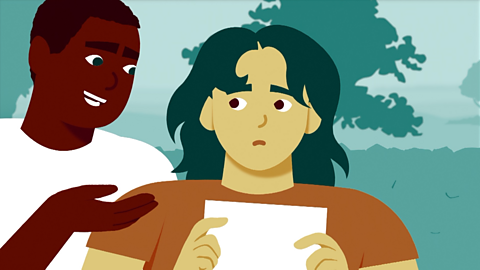
A short animated film, using real testimony, about a young person struggling with feelings of worthlessness and anger after being moved from a neglectful home into the care system.

Teacher training videos
1. Defining care experience. video
A short film about the term ‘care-experienced’ and how being in care will impact a child, from the adversities faced to the impact it will have on their core beliefs and identity.
2. A trauma-informed approach. video
A short film about the impact of trauma and how a trauma-informed approach can offer support to a traumatised child within a school setting.

3. How can we do more? video
A short film about actionable next steps teachers and schools can take to support care-experienced young people, with a focus on inclusion and supporting them through transitions.
Further support
As the statutory guidance states, schools in England and Wales must now have a designated member of staff to promote the educational achievement of looked-after and previously-looked-after children on the school’s roll, providing a person from whom advice and support can be sought.
Further information and guidance may be obtained from external organisations, including those listed below:
- Adoption UK is a charity connecting and supporting those across the adoption community. They have a helpline, and welcome calls from all including adoptees, adopters, kinship carers and those in their support network: 0300 666 0006
- Become is a charity for children in care and young care leavers. They have a care advice line to provide support and advice about the care system: 0800 023 2033
- Coram is a charity that finds adoptive families for children, and supports children, young people and their families. They also provide training and resources for educators.
- The Rees Foundation is a charity that offers help and advice to care-experienced individuals and have collated together a range of resources.
- BBC Action Line has more links to helpful organisations for if you, or someone you know, has been affected by issues for young people.
- BBC Bitesize has an article for young people on how to support care-experienced friends at school.
