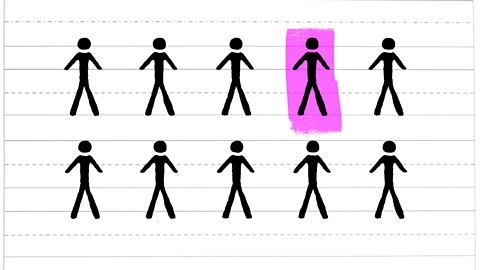
Lots of people have dyslexia. In fact, as many as one in ten schoolchildren have dyslexia.
V/O: We asked pupils with dyslexia to tell us what school and learning is like for them and pull together some top tips and hints which will help them in the classroom.
I like doing stories but with the writing thing it’s just hard.
I have loads of good ideas in my head, but getting them on the page is the real struggle.
My handwriting. I tried to start off neat, but usually I get frantic because I don't have enough time and it gets sloppier as the work goes on.
V/O: For some children, the process of handwriting is challenging. Could they do multiple choice or gap fill instead?
Writing is quite hard so the like circle, fill in the gap or tick the box is much easier because you're still thinking about it, it's just you not writing down everything. That's just easier for me.
This is how I hold my pen. I grip it too hard and I'll have to stop every few sentences and.
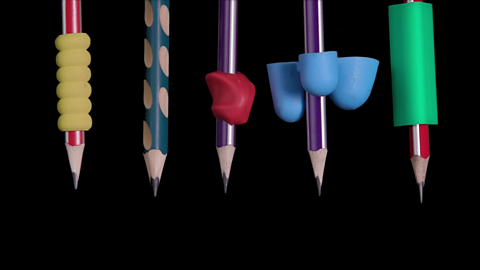
V/O: The way children hold their pen can really affect their writing. Ergonomic pens encourage better grip. Some children press too hard on the paper, so using a softer pencil can help.
Normally now when I do homework, I always type it and print out because it's a lot easier.
I find pretty much every high frequency word hard like there, their, they’re. I always spell each one wrong.
V/O: Think of the T in there as a signpost showing location. Think of the i in their as a stick person showing it belongs to someone. And remember that the apostrophe in they’re replaces the a in they are. Mnemonics can help with spelling difficult words. Big elephants can't always use small exits is a fun way to remember how to spell because.
I do dappy orange emus ski for does because I can't remember it and it's just funny.
You can kind of remember it because you normally like remember funny things.
I would be scared to write down long words that I might use when I'm talking, because if I got it wrong in the test, I'd get marked down for that.
So I'd just write a simpler word like nice because I knew I'd get it right. If you're good at spelling, you're generally perceived as more smart…
A word is like a padlock with pretty much unlimited combinations.
Some people, they can undo the padlock in milliseconds and it takes some people with dyslexia a bit longer.
I don't really like writing because I feel like I just make so many mistakes.
V/O: For some pupils, their dyslexia makes them reluctant writers.
When I start, I'll like be able to come up with a few sentences and I'll be there like, ‘Oh, where do I go from this?’
I just kind of ramble and then I remember something else and then I'll jump back, and then by the end it's just like a big mess.
V/O: Story mountains, writing scaffolds and starter sentences can all help support extended writing.
I kind of need to be step by step through it.
I have like the stuff that I want to write in my brain, but like it's just hard for me to actually get it down.
V/O: With support pupils with dyslexia can find ways to record and write successfully.
Always think positive about dyslexia It’s not a disability it’s just a little bit of a difference.
This series was first published in 2020.
Children with dyslexia describe their difficulties with writing.
They talk about pen grip, misspelling high frequency words and struggling to structure extended writing. The film offers practical suggestions on how best to support them.
As many as one in ten schoolchildren have dyslexia, and for some children, the process of handwriting can be challenging.
Emily, a pupil with dyslexia says: "I try to start off neat, but usually I get frantic because I don't have enough time and it gets sloppier as the work goes on."
The way children hold their pen can really affect their writing. Ergonomic pens encourage better grip.
Some children press too hard on the paper, so using a softer pencil can help.
For some pupils, their dyslexia makes them reluctant writers. Story mountains, writing scaffolds and starter sentences can all help support extended writing.
As Emily explains: "I have the stuff that I want to write in my brain, but it's just hard for me to actually get it down."

More from this series
Reading. video
Children with dyslexia explain what reading is like for them, and the film gives tips and hints on how you might support them in school.
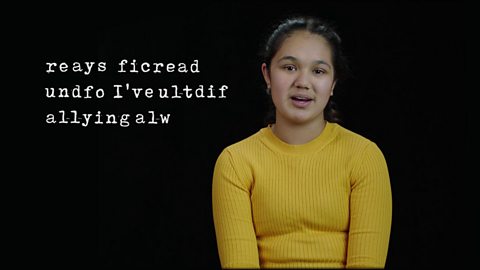
Maths. video
Children with dyslexia describe their difficulties with maths. The film offers tips and advice to help.
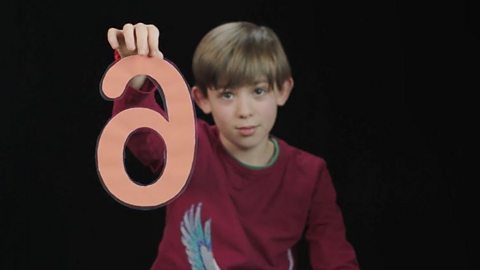
The classroom. video
Children with dyslexia describe their difficulties with classroom learning. The film offers a range of practical strategies to help.
Pupil perspective. video
Children with dyslexia describe how it affects their lives at school, and give their own perspective on what helps them.