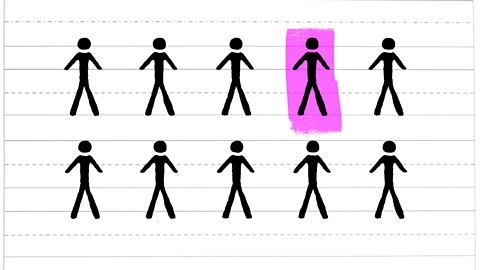
Lots of people have dyslexia. In fact, as many as one in 10 schoolchildren have dyslexia.
V/O: We asked pupils with dyslexia to tell us what school and learning is like for them and pull together some top tips and hints which will help them in the classroom.
Well, it's helped me to sit next to the teacher and it also helps me to…… well, also helps to sit on a quiet table because I can probably, you know, if someone starts talking. I'm going to obviously join in the talk.
The last table that I was on there was like low, they would always talk and I would like not be able to focus. So if I'm next to someone quiet I feel like I'll get more work done and everything.
V/O: Think about where people sit in the classroom.
I always say to my teachers, can I sit at the front because I did used to sit at the back and I felt, I'm not learning anything here.
What's it like copying off the whiteboard is tricky because all the letters are jumbled up. They're not, but in my brain, I can see the nerve?? flying everywhere and you've got to kind of focus on the letter to write it down the letter. Then you've got to write the next letter and it kind of just takes forever.
Reading it is okay but sometimes teachers move on too quickly, so I'll be halfway through writing something off of the board and then they'll skip to the next slide and I'll have to copy off one of my friends.
V/O: Do pupils need to copy off the board or could they get printouts instead?
Doing when I like look around the classroom and I see other people which are already on like question 4 and I’m there on question 2 like I don't understand what this means. Can someone help, please?
Lots of people would like hand their work to the teacher and then I'm like still working it out and it's just quite frustrating.
V/O:Break down information and instructions into chunks.
Well, a lot of instruction is quite hard because you do the first instruction and then you’re like what shall I do now? The teacher’s like ‘I literally just told you what you need to do’ and it's quite hard.
Don't give like a whole load of information at once, like split it up because it makes more sense in our minds
V/O: Numbered checklists can help keep pupils on task.
It was a project about polar bears and my teacher took me out of class and said, Alfie, you're not really trying. I felt a bit deflated sometimes when I had to stay in break to finish off my pieces.
V/O: Pupils shouldn't feel penalized for being slower. Give them extra time.
When I start the test and I write in blue or black pen and then when I get to the end of the actual test and it goes on to my extra time, I have to write in a green pen so they can see how much I actually do in my extra time.
I spent two hours on an essay once and then I thought it was like good and everything. I checked through it a couple of times, but then when I got it back, everything was just like circled and the whole page was basically red.
It's annoying if you get marked down for spelling when it's not really relevant to the subject because it's like but I know what you're trying to ask me that I know so why should I get marked down for it not being correct, for the spelling not being correct.
V/O;Keep the learning objectives in mind when giving feedback. Stay positive. All pupils like rewards.
We have this thing at our school called house points and you get that for doing good work.
So if I've got a house point, I know the teacher likes my work, but sometimes I've got a house point and I've got quite a few errors in there but my teachers know I'm really trying to get it done.
When like I get a piece of work back and it's got like good work on it, like a sticker or like just like some nice feedback, I'll be like, yay! Because like, it's like acknowledging that I have done good job in it and it's not all bad.
This series was first published in 2020.
Children with dyslexia describe their difficulties with classroom learning. The film offers a range of practical strategies to help.
They talk about focus, processing time, the role of the whiteboard, their peers, self-esteem and feedback. The film offers practical suggestions about how best to support them.
Minimising distractions within the classroom can be particularly important for children with dyslexia. "It's helped me to sit next to the teacher and it also helps me to… sit on a quiet table," says Cora.
Thinking about where pupils sit in the classroom is also important. For Alfie, sitting at the front of the class helps him to learn. He says: "I always say to my teachers, can I sit at the front, because I did used to sit at the back and I felt, I'm not learning anything here."
Numbered checklists can help pupils keep track of tasks, and breaking down information and instructions into chunks will help them to follow better as it avoids overloading them with information.
For Cora, this is vitally important as she needs information split up for it to make sense. She says: "A lot of instruction is quite hard because you do the first instruction and then you’re like what shall I do now?"
Giving pupils with dyslexia extra time will enable them not to feel penalized for being slower.
Similarly, keeping the learning objectives in mind when giving feedback will help them to stay positive.
Rewarding pupils can also reap benefits. For Amy, this is important in order to know that's she's doing well. She says: "When I get a piece of work back and it's got… a sticker or just some nice feedback, I'll be like, yay!"

More from this series
Writing. video
Children with dyslexia describe their difficulties with writing. The film offers ways to help with different difficulties.
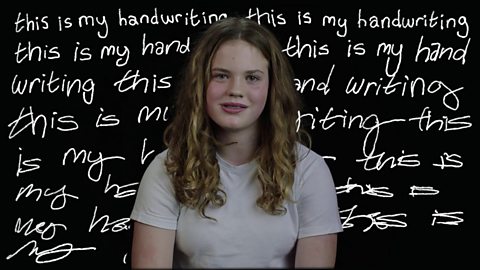
Reading. video
Children with dyslexia explain what reading is like for them, and the film gives tips and hints on how you might support them in school.
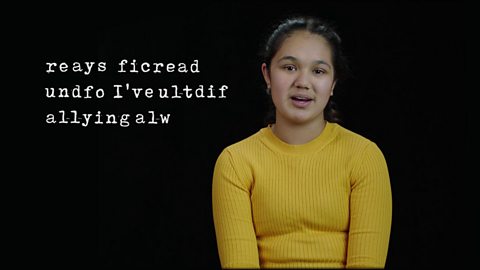
Maths. video
Children with dyslexia describe their difficulties with maths. The film offers tips and advice to help.

Pupil perspective. video
Children with dyslexia describe how it affects their lives at school, and give their own perspective on what helps them.