Lots of people have dyslexia. In fact, as many as one in 10 schoolchildren have dyslexia.
We asked pupils with dyslexia to tell us what school and learning is like for them and pull together some top tips and hints which will help them in the classroom.
Thought I wasn't as smart as everyone else and I thought I was a bit slower than everyone else.
At times of, I would say I'm a failure. I can't do anything and I really beat myself up.
I definitely think a few of my teachers definitely thought that I was just being lazy or I wouldn't put effort into the work.
At first I thought everyone like read like this and everyone struggled with it. Er but then when I found out like that, I had dyslexia and then when I researched it, I found that it made sense like for me.
V/O: The earlier dyslexia is diagnosed and specific support is put in place, the better the outcome for pupils.
I learned that I was dyslexic in year four. After that, my teachers and I have had a positive result as they give me more time to do my work and they try and suggest things that will help me.
I was like happy, I guess, to know that it's not just me being dumb. I was like, actually had a reason why I was slower than everyone else.
V/O: Diagnosis is just the start. Schools need to consider dyslexia in all decision making.
If I could give advice to teachers on how to help people who have dyslexia, I would say to maybe put them at the front of a class. Also give them the work like a day early because that really helps me.
Don't give like a whole load of information at once. Like split it up because it makes more sense in our mind.
It's like being a long jumper that's made to run a sprint race. It's not, it's not what you were trained almost in your mind to do. And but if you were able to get that training to be a runner, you'd be able to keep up.
Some teachers just don't understand that their just doing the same thing over and over again won't help us. They need to like realise that they need to change what they're saying or doing to us for us to understand it.
I could have probably done it, but if I just had a little bit more of time and maybe a little bit more. Yeah. Just because they're all telling me what the answer is and I'm like, oh, hold on a minute I can do that in a bit…You know just if you let me have the chance.
V/O: Pupils with dyslexia need support from their peers, too.
When other students and people make comments it’s like you didn't really have to say that.
Like, I know I struggle on it, you didn't have to point it out.
It's a bit almost embarrassing when someone points it out because you're like, I know that it's wrong, but did you have to say it?
And some people say as if it’s a really bad thing and it's like, but it's not that bad. It's just what I'm like.
Yes, it is a bit tough, but my teachers support me and my parents support me, so… I have friends that support me as well, so I really get a lot of support.
Dyslexia does have its pros and cons as in you…If you lose writing slower, you probably gain in other ways. For me, it's probably coding and maths and sciences, which I found make sense.
Because I think differently. I'll have different ideas and I'll do things in a different way.
V/O:Focussing on what pupils can do is important for their self-esteem.
I just think it's cool being dyslexic. I mean, you're different. That's nothing to worry about.
It just means I have to work a bit harder to get there but I can still do what anyone else can do.
I actually like being dyslexic. I mean, I would shout out the window, ‘I'm dyslexic!’
This series was first published in 2020.
Children with dyslexia describe how it affects their lives at school, and give their own perspective on what helps them.
The earlier dyslexia is diagnosed and specific support is put in place, the better the outcome for pupils. But diagnosis is just the start. Schools need to consider dyslexia in all decision-making.
Pupil Alfie learned he was dyslexic in Year 4: "After that, my teachers and I have had a positive result as they give me more time to do my work and they try and suggest things that will help me," he says.
The pupils featured in this film give a range of advice based on what has helped them.
"I would say to maybe put [children with dyslexia] at the front of a class. Also give them the work a day early because that really helps me," says Emily.
Amy thinks information overload makes learning harder. She suggests: "Split it up because it makes more sense in our mind."
Cora believes having a little more time to do tasks in class will enable her to learn better. She says teachers often start to tell her the answer, "and I'm like, oh, hold on a minute I can do that in a bit… You know just if you let me have the chance."
Pupils with dyslexia need support from their peers, too. "When other students and people make comments it’s like, you didn't really have to say that. I know I struggle on it, you didn't have to point it out," says Emily.
Focussing on what pupils can do is important for their self-esteem. Cora thinks it's cool being dyslexic and adds: "I mean, you're different. That's nothing to worry about. I actually like being dyslexic. I mean, I would shout out the window, "I'm dyslexic!"'

More from this series
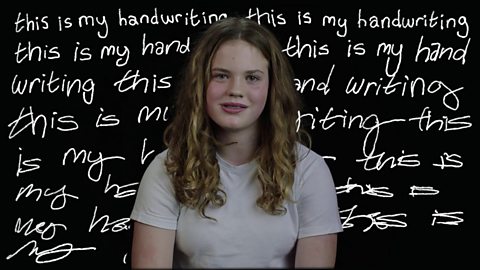
Writing. video
Children with dyslexia describe their difficulties with writing. The film offers ways to help with different difficulties.
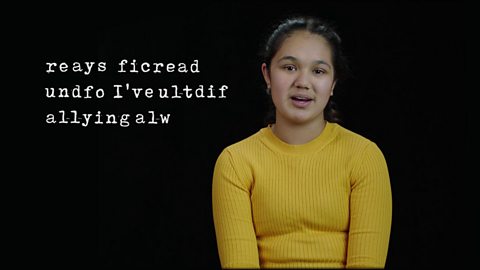
Reading. video
Children with dyslexia explain what reading is like for them, and the film gives tips and hints on how you might support them in school.
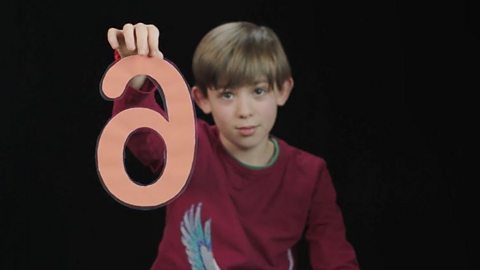
Maths. video
Children with dyslexia describe their difficulties with maths. The film offers tips and advice to help.
The classroom. video
Children with dyslexia describe their difficulties with classroom learning. The film offers a range of practical strategies to help.