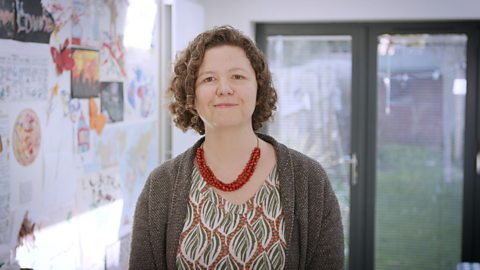
Effective grammar teaching
is really really important.
In our time-limited context in the classroom,
it's really important
that we teach the grammar elements
and that we teach them explicitly.
Through teaching these
grammar elements in this way,
students make far more progress
in the classroom by speaking, writing,
and also recognising grammar principles
through reading and listening.
There are some really successful strategies
that we can use to insure
that grammar is taught effectively.
Number one, make sure
that your grammar explanation
is short, succinct
and using English.
Now we're going to look at using the verb
'to do' and 'to make'
which is the verb that we've seen before.
And we've used the verb 'to do'
and 'to make' before.
So let's remind ourselves
of what this verb is and how it works.
When getting students to practise
the grammar points,
make sure that you pick a pair
of contrasting features
for them to practise with.
Make sure that if you're teaching a verb
for example you don't teach
the whole paradigm at once.
Just pick perhaps the infinitive
and the third person
or perhaps the first person and the second person.
It doesn't matter in what order
you get them to practise that grammar point,
but as long as they're just practising
two contrasting features.
So, we're going to be using the verb 'faire'
which in English means 'to do'
or 'to make', or 'doing', or 'making'.
So two meanings there that we can use it for.
We could also use it to say
'does' or 'makes'
or 'is doing' or 'is making'
by saying 'fait'.
So it's the shorten version.
And we might use that with a 'he' or 'she'.
So 'he' or 'she does' or 'makes'
or 'is doing' or 'is making'.
By doing this, this avoids cognitive overload.
So just targeting two points, two forms of a verb
is much much more effective.
The third point is making sure that grammar
is essential to complete the task.
So when setting activities for students,
it's making sure that
the grammar feature is isolated
and the students have to complete
that particular grammar feature,
in order to be successful in a task.
It's important first that tasks are set
which require students to listen to
and to read the language,
and that these are set
before their productive tasks
of writing and speaking.
Can you work out what this sentence
is saying and rewrite it?
This ensures that students are much more familiar
with the vocabulary and the grammar
prior to having to use it and produce the language.
Finally, it's really important the students
revisit this knowledge
and they practise these grammar points
at interspaced times and interspaced points
within a scheme of work.
They should revisit different grammar points
in a variety of different contexts,
not just, for example, talking about holiday
and using the past tense in this context.
Take it in turns to ask your partner,
'who does' different activities.
So, verbs are best taught initially
by teaching the infinitive
and one short stem form of the verb.
So perhaps that could be the infinitive
and the third person for example.
Those can then be practised in context
as an isolated pair of features,
but it's important that
the infinitive is taught first,
so the students understand and grasp
the meaning of that verb straight away.
Verbs and vocabulary in general
is best set as homework,
so that through flipped learning,
students then come into the classroom
and apply their learning
and that vocabulary and those verbs
in context straight away
and complete a number of different activities.
When teaching forms of verbs,
it's important not to teach
all different types of verbs at the same time.
So for example in French,
it's best not to teach '-er'
'-ir' and '-re' verbs all at the same time
when teaching the present tense for example.
Best just to stick with one of those types of verbs.
Can you see if you can write out the sentence again,
in French underneath on your sheets?
So we'd write in French: 'il fait la cuisine'.
Ok, right. Off you go then.
'Trois, deux, un, allons-y'.
Mastering grammar is essential for successful language learning, but teaching grammar can be difficult within the time constraints of a lesson.
As we learn in this short film, it is important to take the time to teach grammar well from the start, so that students learn to correctly recognise and reproduce grammar structures through understanding how the principles work, rather than simply work out the right answer to fill the gap in grammar exercises through contextual markers.
In this short film specialist languages teacher Joe Fincham explains what research has shown to be the most effective way of teaching grammar at KS3.
His tips include the most recent theories on how to initially introduce a topic, how to develop skills from recognition to formulation, and how to ensure the material is stored successfully in a student’s long term memory for retrieval in the future.
He explains the best way to structure your grammar teaching to ensure that the content is initially understood and is also stored in the student’s long term memory.
Through watching the film, you will learn:
What research has taught us about use of English versus the target language
How to simply and concisely introduce a new grammar point
How best to initially introduce new verbs and verb groups
How to avoid cognitive overload
How best to ensure that a student really has to actively use a grammar point by isolating the grammar point in a task
This film is part of a series of films designed to promote evidence-based best practice methods for languages teaching at KS2 and KS3.
For student resources that may help you integrate work on grammar into lessons or homework, please see:

More MFL teaching aids:
Making phonics an indispensable tool in language learning (KS3) video
This short film offers a guide to integrating phonics teaching into your lesson, and explains why doing so is important and beneficial for the learning process.
Promoting intrinsic motivation in students (KS3) video
This short film offers tips for how best to promote intrinsic motivation in languages students at KS3.
Foreign language acquisition through storytelling and story acting (KS2) video
This short film explores the techniques that Charlotte Ryland (Stephen Spender Trust) has developed to promote storytelling practice as a tool in language learning with younger learners.