Do I think phonics has a key place in the classroom?
Yes, in every classroom.
And there are so many different ways of bringing it in
to match the skill level of the students,
and to enhance where they’re going from.
In terms of where you would put phonics, in terms of priority in the lesson,
many would argue that we haven’t got time to do it.
In essence though it really is the fundamental building block of everything we do, do.
That’s why it’s so important that we make the most
of the precious time we do have,
and concentrate on getting some of these basics right
so that the students can then make much faster progress.
– 'Ist das Vielchen oder Veilchen?'
– 'Vielchen'… no 'Veilchen'!
– Veilchen! Why is it Veilchen not Vielchen?
– Who can explain? Sam, explain.
The children who might otherwise be…
less able to adapt to the curriculum
are really keen to get hold of the simple stepping stones.
And they are the ones whose motivation and whose achievement
has been massively boosted by having a constant focus,
not a huge amount of time but a constant regular focus
on phonics throughout the year.
I’ve learnt that using phonics
in a short, sharp but regular fashion,
the level of competence and confidence that’s built up is really really rewarding.
There’s no longer the fear of not saying a word because you’re afraid of getting it wrong.
In a typical lesson or a sequence of lessons,
we’d always start with the basic sound symbol correspondence
which could be a letter or a cluster of letters.
V oder W? Ff oder vf? Ok? You’re gonna get those sounds.
How do we pronounce those two options?
And we will use that letter to pronounce both the sound itself
and to show that sound in a series of words.
Ja gut, und mit ‘St’, mit ‘St’ Cesar?
– Stück – Stück - noch ein mit ‘St’?
There are so many ways in which
the students can then engage and practise it.
So, for example, with a listening exercise
we can read a series of sentences, or even individual words,
get the students to keep a tally chart about how many times that sound might appear.
You can go on more advanced from that and get them to recognise one,
a combination of sounds, or the difference between certain sounds.
You can then ask the students to think back
and recall words that have had that sound in.
You can also have them reading new words with that sound in.
Aber auf Deutsch schreibt man das mit ‘W’, ‘Wikinger’.
And you can then go on further, getting them to take down in writing
some of those things that you’ll be saying or for they themselves to practise reading
and writing what their partners are saying.
There are also flash card games you can get to,
where they pronounce different alphabet sounds or different diphthong sounds.
They really enjoy doing some detective work on that,
but it’s active, engaged, fun activities
which have a real purpose and the students understand.
Wer kann helfen? Ja?
Why is it Vater and not Vatter?
– Because it’s a long one. – It’s a long what? Well done, it’s a long…
– It’s a long vowel. – It’s a long vowel, it’s a long ‘a’.
Fantastisch, gut gemacht. Das ist perfect. Ok?
In the past I might have thought I‘d covered it correctly
by just introducing it in a few lessons at the beginning of Year Seven.
In practice, I’m finding that regular practice,
anything from five to ten minutes at the beginning of one lesson
and maybe even three to five minutes at a follow on lesson,
but doing it regularly really helps to drive home
and cement the sound-symbol correspondence.
And some of the basic phonic techniques are working wonders
with the accuracy and pronunciation in our Year Nine, Ten, and Eleven classes.
Not just for beginners, this works all the way through.
Practice makes perfect in every aspect, but this, like all the grammar learning,
all the vocabulary learning, cannot be overlooked,
and once the phonics is right the rest becomes easier.
Phonics is the first of three key principles being highlighted by NCELP and implemented by specialist language teachers across the country.
Phonics represent an indispensable tool for language teaching, especially for students who might otherwise tend to struggle.
This short film offers a guide to integrating phonics teaching into your lesson, and explains why doing so is important and beneficial for the learning process.
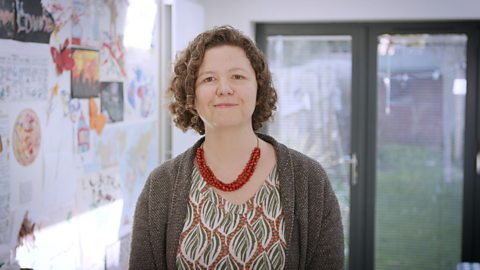
Phonics are the constituent sounds that comprise each word of a language, and Jenny Hopper, a specialist teacher at one of NCELP’s language hub schools explains and demonstrates how she employs phonics in her lessons.
We learn about:
Where to place the initial focus: highest frequency sounds first and increasing sound-symbol correspondence recognition
How using phonics can reduce foreign language anxiety and improve motivation.
How phonics help students to decode new vocabulary using cognates or near cognates and pronounce unfamiliar words
How to build phonics into your lesson:
By integrating 5-10 minutes of phonics practice at the beginning of each lesson, teachers can help to build the basics of a language.
In language hub schools (in partnership with NCELP) phonics are integrated into lessons in Years 7 to 11, with a 10-minute slot per lesson (2-3 lessons a week).
A new sound is explored each week, based on how frequently it appears in a language.
An example is given, followed by listening and reading (language inputs) and speaking activities (language output), as Jenny explains.
This film is part of a series of films designed to promote evidence-based best practice methods for languages teaching at KS3.
For student resources that may help you integrate phonics into lessons or homework, please see:

More MFL teaching aids:
Asking effective questions - grammar building blocks (KS3) video
In this short film specialist languages teacher Joe Fincham explains what research has shown to be the most effective way of teaching grammar at KS3.
Promoting intrinsic motivation in students (KS3) video
This short film offers tips for how best to promote intrinsic motivation in languages students at KS3.
Foreign language acquisition through storytelling and story acting (KS2) video
This short film explores the techniques that Charlotte Ryland (Stephen Spender Trust) has developed to promote storytelling practice as a tool in language learning with younger learners.