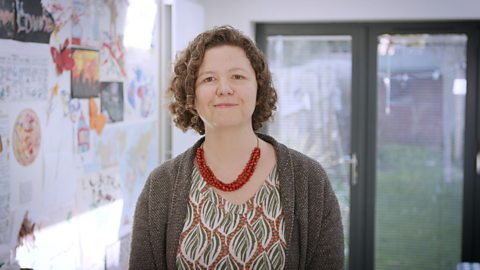
Languages here at Levenshulme High School have got quite a high profile within the school.
We teach French, German, Spanish, Arabic and Urdu.
We have a lot of students whose parents don’t speak any English.
Those students, they’ve got an innate sense of how important a language is,
because they’ve seen their parents struggle and they’ve been able to help them,
and they tend to work really well.
But we also have that proportion of students
who've never been on any of those kinds of journeys,
and for them, we have to work a bit harder
to create the motivation to do well in the language and succeed.
We try to make things motivating for our students,
creating real-life scenarios that they can imagine themselves into,
where there’s a very clear purpose to using that language.
A lot of our students want to go into medical careers,
so for example we talk about the links in the language through French, through German.
If you know a student’s personal interest, you can link in to that.
So, example, a student is really interested in horses,
we talk about where the best horses come from.
Some of them may come from Arabic-speaking countries
and that creates this purpose for them.
I have no problem trying to adapt lessons to what’s current at the moment.
Because that’s what gets the students involved, and it’s what gets them motivated.
Germany, who are massive fans of BTS,
are sending over a camera crew to come and film, okay?
They are gonna film Jungkook walking around your house
but because it’s a German camera crew you’re gonna have to speak German.
They need the praise and they need the encouragement,
and every little step that they take is success for them.
It doesn’t matter how small it might be compared to the rest of the class,
it matters to them and you need to show that it matters to you.
Bravo, das ist super - ok
Merit for you, Minar.
Sometimes long term rewards don’t work for students,
they need something that’s more instant, that gratification that comes straight away.
It might be a treat, it might be a little toy,
but you have to find the level that that student’s working at.
Bravo! Bravo! That would make an excellent Presidential speech.
We use a lot of target language in the classroom,
and from the second those students walk into the room,
you can start with that familiar language.
The more they hear it, the more it’s gonna become second-nature to them.
We have displays around the room,
that’s another way of promoting high frequency language.
But honestly just keep talking to them,
they will absorb so much more than you realise.
If I am doing a class activity and I’ve got some weaker students,
who I know are gonna find that activity difficult,
I will break it down into small chunks for them.
I might, for example, ask them to write a shorter amount,
or I might give them some structured vocabulary
that helps them to scaffold what they’re working on.
I look for ways to, not promote mistakes,
but to show that it’s allowed, to show that it’s ok.
I’m always very quick to hold my hands up when I make a mistake.
In some of my classes I have native speakers of French or of German
who will occasionally correct me on a missed accent or a spelling.
I’m not afraid to stand there and say
'do you know what I’m so sorry, but thank you for telling me.'
I don’t know - I’m a German teacher, why would I know that?!
Teaching resources are definitely important.
There are things that you will find that you don’t like
and you persevere with a few times, and find actually it works quite well,
and you’ll then come back to it over and over.
Your repertoire will extend as you go through your career,
and don’t be afraid to keep looking out for new resources and trying new things.
If you have a challenging class
who struggle to concentrate on things for more than a few minutes
then you need to have a range of different activities ready for them
so you can keep them moving and moving and moving.
Students tend to go off task and show poor behaviour when they’re bored,
when the tasks are inaccessible,
and when they’re not being challenged or stretched enough.
It’s important that you change the type of activity as well.
So not reading followed by reading followed by reading followed by reading.
Throw in a little game, throw in a stand up sit down activity,
look at some kind of quick vocab brain gym task.
Something that requires movement out of seats or from the seat.
There’s an absolute wealth of resources out there that are online and are very easy to find.
You need to know your students quite well.
It’s no good having a speaking competition and then inviting the quietest girl up
to come and take part, 'cause that’s gonna push her right out of her comfort zone
and you might find some reluctance.
So you just need to know your students well
before you start engaging that competitive element.
[GERMAN]
It’s all about getting the students to react with things,
and see that the language isn’t just confined to that one hour session
that you’re stood in front of them.
We use music, we use film, we use TV.
Be prepared to try new things and scrap the things that don’t work,
and adopt the things that do.
Be prepared to share resources with other people,
'cause you’ll have some great ideas as well that other people want to borrow from you.
And be prepared to get to know your students,
because that’s the only way you’ll build those great relationships up
and come down to their level.
In this short film, languages teacher Chris Allen gives his tips for how best to promote intrinsic motivation in KS3 language students.
He talks about giving students a sense of progression that helps them recognise their successes, building a rapport with his class and instilling students’ confidence in their own abilities.
He explains that feeling able to make mistakes is another important factor, as well as prioritising high frequency language to begin with, as being able to make active use of the words they have learnt early on gives the language a purpose for them.
We learn about:
How to make lessons seem relevant to a young audience’s interests, through pop culture, their hobbies and future careers
Giving a clear purpose to a task
The importance of building up a good rapport with students and creating a safe environment
Building competitive elements into lessons in a sensitive way
This film is part of a series of films designed to promote evidence-based best practice methods for languages teaching at KS3.
The other films in the series include “Making phonics an indispensable tool in language learning (KS3)”, “Asking effective questions - grammar building blocks (KS3)”.
For student resources that may help you in planning lessons or homework, please see:

More MFL teaching aids:
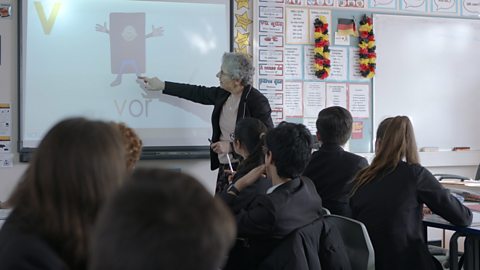
Making phonics an indispensable tool in language learning (KS3) video
This short film offers a guide to integrating phonics teaching into your lesson, and explains why doing so is important and beneficial for the learning process.
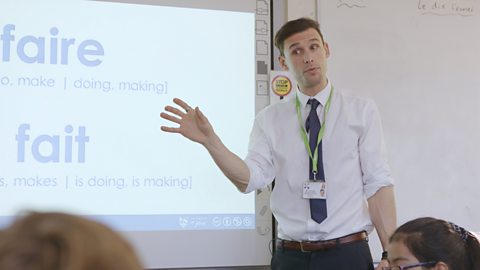
Asking effective questions - grammar building blocks (KS3) video
In this short film specialist languages teacher Joe Fincham explains what research has shown to be the most effective way of teaching grammar at KS3.
Foreign language acquisition through storytelling and story acting (KS2) video
This short film explores the techniques that Charlotte Ryland (Stephen Spender Trust) has developed to promote storytelling practice as a tool in language learning with younger learners.