In short...
Themes: World Oceans Day (8 June every year); caring for the environment; plastic pollution; climate change; takingresponsibility.
Summary: World Oceans Day happens each year and is primarily intended to raise awareness of the threats facing the marine environment, which include plastic pollution, rising sea temperatures linked to climate change, and over-fishing. The assembly is particularly suitable on, or immediately before, World Oceans Day; however, it can be used at other times of the year to celebrate the beauty of the ocean, raise awareness of environmental issues, and support curriculum objectives relating to the naming and locations of the five oceans.
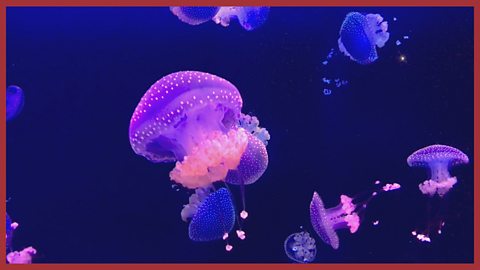
Resources: The assembly framework to download / print and an image of ocean life.

The video
From the air we breathe, to the water we drink, the Earth’s oceans play a vital role in our everyday lives.
World Oceans Day takes place every year on the 8th of June.
It’s a day to come together to think about the importance of our oceans and how we can protect them.
The day has been celebrated for more than 30 years, and today countries all over the world take part to raise awareness.
Every living thing needs water to survive. On Earth, water can be found in rivers, lakes, even underground, but most is actually found in the oceans.
Plus, if you take a deep breath, 50% of the oxygen we breathe comes from our oceans. And the oceans absorb some of the carbon dioxide in the atmosphere, which helps to reduce the causes of climate change.
The oceans cover over 70% of our planet and make up 97% of all the water in the world.
Whilst there is only really one big ocean, it is split up into five regions.
Known as the Arctic, Atlantic, Indian, Pacific and Southern Oceans.
Diving deep underwater reveals a magical, biodiverse, world.
From the smallest lifeforms, including tiny plankton, to the largest creature that exists, the blue whale.
80% of the underwater world remains unexplored, and scientists think there could be thousands of species living there, yet to be discovered.
In shallow waters there are coral reefs that are made up of tiny creatures that are actually animals, not plants.
They’re also home to many other types of animals such as colourful fish, sponges, molluscs and crabs.
The deepest waters are in the Mariana Trench in the Pacific Ocean where the water can be up to 11 kilometres deep!
Animals that live here have adapted to the cold, dark conditions.
But the wonderful wildlife of the oceans is at risk.
Rising water temperatures and pollution as well as overfishing, are all threats that are changing the marine environment.
Human activity, such as the burning of fossil fuels in cars, planes and power stations, is a major contributor to global warming.
This is increasing water temperatures, making it too warm for some living things to survive.
Plastic is a big problem too. It can harm animals as they can become caught in it or confuse it with food, which can make them unwell and can even kill them.
On World Oceans Day, there are mass beach clean ups and events to raise awareness of the issues facing our seas.
“Today we are looking for microplastics that have been left in the sea and washed up on our beaches. Fish will eat these and then it will end up in the food chain and then fish will die from it and then we will eat those fish and we will get ill because we have just ingested those plastics.”
So, what can we do to help make things better? We are part of the problem but can also be part of the solution.
“Anything from beach cleans, considering what you actually buy when you go into supermarkets, look for an item that has less plastic on it or less packaging on it.”
We can avoid using plastic by swapping to alternatives, like fabric bags, metal or paper straws and reusable water bottles,
But if we do use plastic, we can make sure we recycle it whenever possible.
Some people are helping by removing plastic that's already in the oceans, and turning it into everyday items, clothes, shoes, even art displays!
There are nearly eight billion people on the planet, and we all rely on the oceans, so we must look after our blue planet.
The ocean is beautiful, but most importantly it keeps us alive.
What will you do to protect our oceans this World Oceans Day, and every other day too?
World Oceans Day happens each year on 8 June. It’s an opportunity to consider the threats faced by the oceans and to organise activities aimed at improving the marine environment. The world’s oceans face a number of threats including plastic pollution and rising sea temperatures caused by climate change. On World Oceans Day there are activities such as mass beach clean-ups and we can all help reduce plastic pollution by avoiding single-use plastic whenever possible and by making sure that as much plastic is recycled as possible. The oceans are essential to all life on the planet, so we must take care of them.
Duration: 4' 38"
Final words: '…this World Oceans Day and every other day too?'
Please note: Since the publication of this video the United Nations has increased its estimate of the world's population to be in excess of 8 billion people.
Video questions
- How much of the planet’s surface is covered in water? (About 70%)
- How much of the planet’s water is found in the oceans? (About 97%)
- How are the oceans important for keeping us alive? (They create oxygen to breathe and absorb carbon dioxide, thus helping to reduce the causes of climate change; they provide food; etc)
- What are the threats facing the oceans? (They include plastic pollution including microplastics; rising sea temperatures; over-fishing)
Key links
Assembly framework (pdf) document
Download / print the assembly framework ready for use
Image: Ocean life. image
Click to display image full size
Suggested framework
1. Entry
Display the picture of ocean life and play your chosen music. You could prepare for today’s assembly by playing ‘Aquarium’ from Carnival of the Animals by Camille Saint-Saëns. There are several online versions that include footage of ocean creatures.
2. Introduction
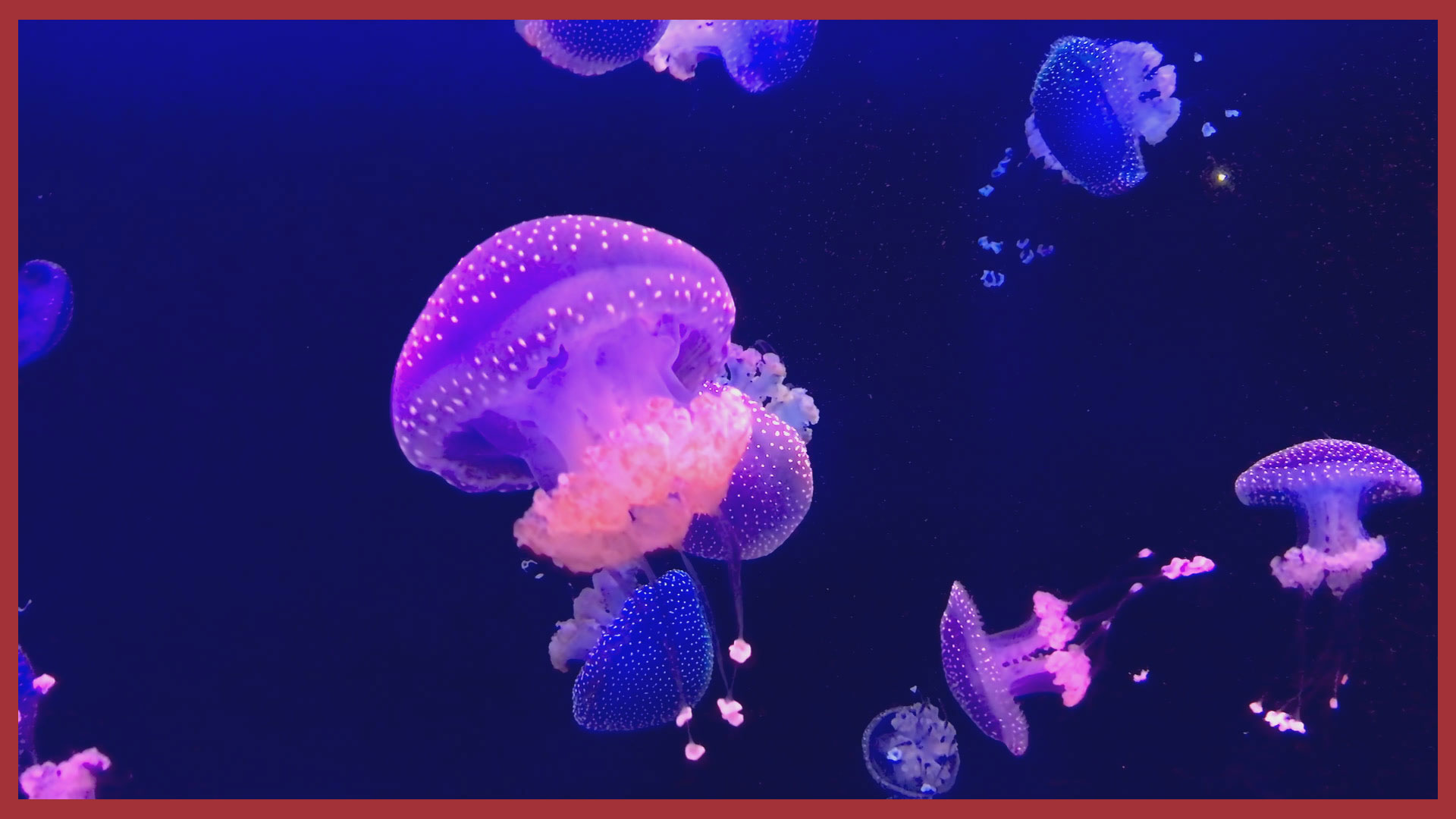
Ask the children to think about a time they have made a trip to the seaside. Ask them to describe what they did and what they most enjoyed. You could also display the image of the ocean and ask them to describe what they can see. If they had to describe the ocean in just three words what would those three words be?
Explain to the group that the oceans are vital to every living thing on Earth, but that they are also at risk due to a number of causes. World Oceans Day is one day a year when there is an opportunity to raise awareness of those issues and to consider that we can all do to help. While they watch the video, ask them to think about how our oceans would be different if we did nothing to protect them.
3. The video
Play the video. The duration is 4' 39" and the final words are: '…this World Oceans Day and every other day too?'
4. After the video - Time to talk
You could begin with the Video questions to aid children’s recall of the video and their understanding of it:
- How much of the planet’s surface is ocean?
- How much of the planet’s water is in the ocean?
- How are the oceans important for keeping us alive?
- What are the threats facing the oceans?
Then ask the assembly about the ways we can reduce plastic pollution and to share stories they have about caring for the environment at school or elsewhere. Make sure the children understand that although their actions may seem small they will still make a positive contribution.
Finally invite the children to: Turn to the person next to you and ask them what their favourite ocean creature is, and where it lives.
5. Opportunity to sing
Suggestions from BBC collections below.
6. Opportunity to reflect
Focus the reflection on the importance of our oceans to our survival on Earth.
Sit quietly…and think about how important the oceans are to all our lives…for water…for oxygen…for food…
And think about how the actions of humans have been affecting the oceans…and also the things we can all do to help reduce pollution…
Think back to the images we saw of underwater creatures…the ocean is their home…
World Oceans Day is an opportunity to celebrate the wonderful oceans of this planet and think about how to protect them.
7. Opportunity for prayer
Begin with your usual form of address ('Dear God', 'Dear Lord', 'Let us pray', etc) and:
We thank you for World Oceans Day, and the people who work to protect our oceans on this and every other day.
Help us to appreciate the wonderful variety and wonder contained within the oceans, and guide us in helping to protect them now…and in the future.
Amen.
Suggested songs
Song: 'All things bright and beautiful' (Come and Praise, no 3. Vocal version)
All things bright and beautiful,
All creatures great and small,
All things wise and wonderful,
The Lord God made them all.
Each little flow’r that opens,
Each little bird that sings,
He made their glowing colours,
He made their tiny wings:
Chorus
The purple-headed mountain,
The river running by,
The sunset and the morning,
That brightens up the sky:
Chorus
The cold wind in the winter,
The pleasant summer sun,
The ripe fruits in the garden,
He made them everyone:
Chorus
He gave us eyes to see them,
And lips that we might tell
How great is God Almighty
Who has made all things well:
Chorus
Song: 'You've got to move'. Come and Praise, no 107. Vocal version.
You’ve got to move when the Spirit says move,
You’ve got to move when the Spirit says move,
‘Cos when the Spirit says move,
You’ve got to move when the Spirit,
Move when the Spirit says move.You’ve got to sing when the Spirit says sing,
You’ve got to sing when the Spirit says sing,
‘Cos when the Spirit says sing,
You’ve got to sing when the Spirit,
Sing when the Spirit says sing.You’ve got to clap when the Spirit says clap,
You’ve got to clap when the Spirit says clap,
‘Cos when the Spirit says clap,
You’ve got to clap when the Spirit,
Clap when the Spirit says clap.You’ve got to shout when the Spirit says shout,
You’ve got to shout when the Spirit says shout,
‘Cos when the Spirit says shout,
You’ve got to shout when the Spirit,
Shout when the Spirit says shout.You’ve got to move when the Spirit says move,
You’ve got to move when the Spirit says move,
‘Cos when the Spirit says move,
You’ve got to move when the Spirit,
Move when the Spirit says move.
'For the beauty of the earth' (Come and Praise, no 11)
Related BBC Teach content
The Oceans of the World - a short film for KS1 identifying and exploring the five oceans
Geography KS1/KS2: The World - a short introduction to the continents and oceans of the world.
KS2 Geography: Ocean life - De-Graft Mensah finds discovers ocean life at a marine nature reserve.
The Regenerators: What is the problem with plastic? - an assembly exploring the issue of plastic waste and the need to recycle.
Recycle Week - another assembly framework focusing on the importance of recycling plastic.