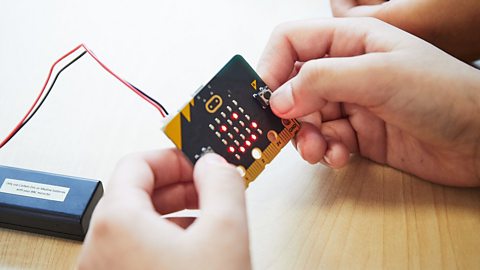
The BBC micro:bit is a pocket-sized computer that can be used to teach primary school children about coding.
The deadline for UK primary school teachers to sign up for a free classroom set of 30 micro:bits was Monday 18 December 2023 at 5pm. If you didn't register, micro:bits are available to borrow from some libraries - check with your local library for further information - and you can also purchase them for your school.
Watch our video below to learn more and read on to get further information about using the micro:bits with your class.
Please click here to access this page in Welsh | Cliciwch yma i weld y dudalen hon yn Gymraeg
Please be aware that some of the links on this page will take you away from the BBC
Join Maddie Moate as she explains all about the BBC micro:bit. Please note that registration for free micro:bits closed on Monday 18 December 2023.
In this video, I'm going to tell you allabout this little thing, the BBC micro:bit,and why it would be a great thing to have in your schooland how you can get a set of 30 for free.
I had you at free, didn't I?
The micro:bit is a tiny programmable devicethat helps pupils to understand how computers workand learn to code using the language of computers.
With coding being part of the curriculum across the UKThe micro:bit can provide a really fun, easy, and creative wayof getting pupils using code as well as empowering themwith digital skills and inspiring them for the future.
Now, don't worry if you're not much of a coder,I can explain.So let's take a closer look.
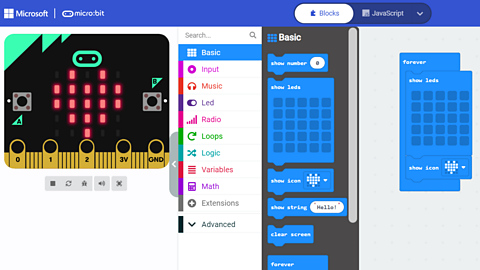
The micro:bit is a piece of hardware.It can only do something when you tell it to,and you do this by writing a computer program using codewhich is called software.Microsoft's MakeCode is one of the most popular toolsto program a micro:bit and it's completely beginner friendly
When your code is ready,transfer it from your computer to the micro:bit with a clickof a button and simple as that it's ready to go.
I've used my micro:bit to make an activity selectorto pick between six random generated activities.
We've made rock, paper scissors using micro:bits.Rock, paper, scissors, shoot.
I've made a wildlife tracker to record how many birdsand squirrels I see using my micro:bit.
Over the last few years, the micro:bit has also been used to programsome pretty epic large-scale stuff too.Things like rotating a telescope at Jodrell Bank Observatoryand turning on the lights at Blackpool Tower.
The BBC micro:bit was created backin 2015 when a million micro:bits were givento children in secondary schools.
Now, since then, seven and a half million micro:bitshave been made and around42 million children in over 60 countries have used one.
Now the micro:bit is launching in primary schoolsacross the UK, targeting eight to 11 year olds.
UK primary teachers can now register to receive a free packof 30 micro:bits to open up a whole new worldof learning and adventure through coding.
We want teachers to feel fully equippedand supported in using the micro:bit in your classroom.
There'll be free CPD available from the Micro:bit Educational Foundationand more bespoke training from partners across the nations.
And there are loads of easy coding projectsand lesson plans available from the Micro:bit Educational Foundation website.
As well as being a whole lot of fun, the micro:bits help teachersto meet specific curriculum objectives in computing and technology,such as working with inputs and outputs in code,developing debugging skills, and creating algorithms.
The micro:bit can also be used in cross-curricular lessons.You can find inspiration online and lots of easy projects to get startedon the Micro:bit Educational Foundation website,as well as some fantastic new resources on the BBC from September.
Okay, so how do you get your hands on someof these cheeky little coding machines?
Well, all you have to do is sign up via the link below to receive your packof 30 free micro:bits for your school.
Why not make your school a micro:bit school?
What is BBC micro:bit - the next gen?
The BBC micro:bit lets kids code their own way. The smart, pocket-sized computer has been designed to inspire children to explore creative ideas using real code and can be used for teaching computing across the curriculum. Its goal is to make coding fun, creative and exciting for pupils and teachers alike.
BBC micro:bit - the next gen is our campaign to empower primary school children aged 8 to 11 with the digital skills to understand the world around them and to shape their future.
The campaign’s lead partners are the Micro:bit Educational Foundation alongside Nominet, who have made the donation possible.
Whether programming it for useful functions such as a sunlight sensor or a step counter or using it for an exciting treasure hunt challenge, the micro:bit teaches practical computer knowledge in an accessible and authentic way. There’s also fun to be had with the opportunity for children to create everything from a rock, paper, scissors game to a cheeky cookie tin alarm.
Teachers can access training resources on how to use the micro:bit - both online and in-person - plus we have additional classroom resources to accompany some CBBC programmes.
Why do teachers love the micro:bit?
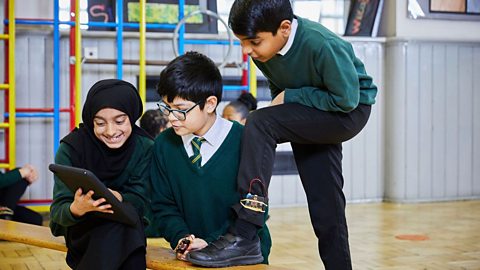
Matt Moore, Primary Computing Specialist at the Green Lane & Priestley Academy Trust, has been using micro:bits with his classes as part of a pilot scheme. He told us: “The children in my school love using the micro:bit. We’ve been using them in computing to create fun projects, as well as for other cross-curricular lessons including Geography, Science and PE where we’ve been using functions such as the step counter.
“For teachers who are new to the micro:bit or a bit of a technophobe, there really isn’t anything to worry about. There are loads of easy-to-follow tutorials and guidance on the website that starts off super easy. It’s a really low barrier to entry but with a really high output.”
For more information on how the BBC will be collecting your data, please read our Privacy Notice
More from BBC micro:bit - the next gen
Training resources for teachers
Find out about the free courses - both online and in-person - to help primary schools teach about the micro:bit.
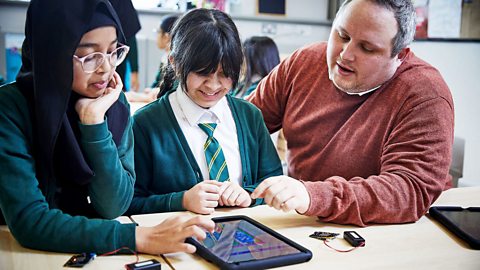
Classroom resources
Check out resources that will help you get ready once you receive your micro:bits.
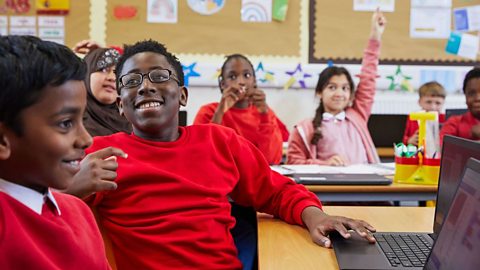
Quiz: Is your coding knowledge better than a primary school pupil's? quiz
See how you score in our fun quiz that's based around the primary school curriculum and beyond.
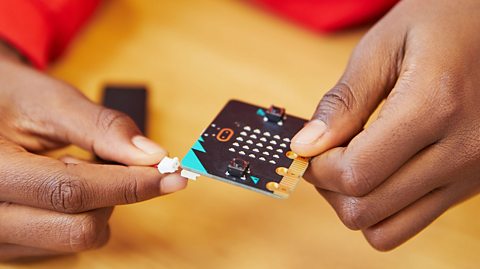
What's inside the micro:bit box? video
Watch an unboxing video and find out how to get coding in less than 60 seconds.
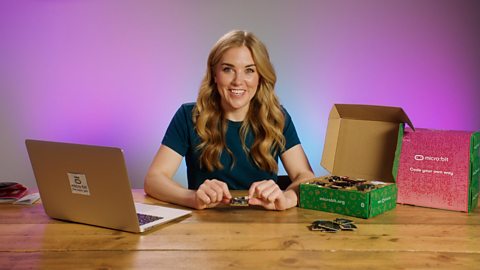
Surprise! Celebrities deliver micro:bits to primary schools
Find out what happened when celebrities including Blue Peter's Abby Cook surprised school pupils around the UK.
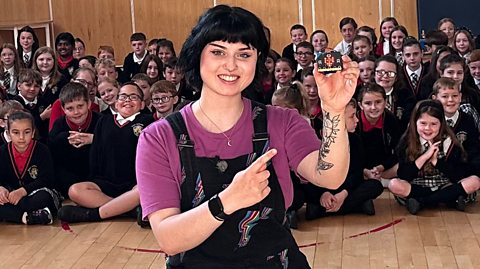
Behind the scenes of Blue Peter's micro:bit challenge
Blue Peter presenters Abby and Joel take part in an escape room challenge powered by micro:bits.
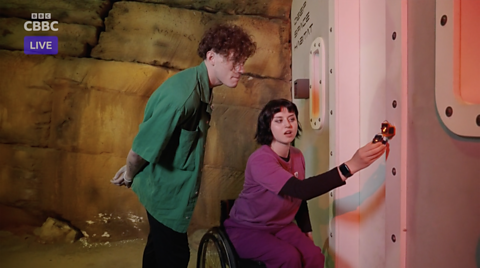
DanTDM on why coding is an important skill for young people
YouTuber DanTDM tells us why he wanted to take part in the BBC micro:bit - the next gen campaign.
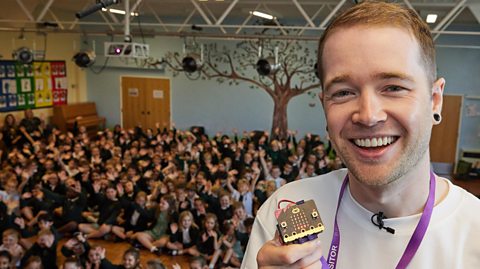
Coding made easy with the MakeCode platform
Find out more about using MakeCode and the training resources available to get you started.
'We need computer scientists and coders from all backgrounds'
TV presenter and EduTuber Maddie Moate on inspiring the next generation of coders.

About the micro:bit
Find out everything you need to know about the BBC micro:bit.
FAQs
Get the answers to all of your questions about the micro:bit.
Our partners
Find out more about the organisations supporting our micro:bit initiative.