CHILDREN: Herzlich Willkommen!
NIKLAS: Ich bin Niklas und das ist Sara.
SARA: Komm, wir müssen hereingehen, es ist schon 8:15 Uhr, der Unterricht beginnt gleich.
NARRATOR: 'Niklas and Sara go to a primary school in south Berlin. To cut down on cleaning costs everyone has to put on slippers as soon as they get inside.'
SARA: Wir müssen uns Hausschuhe anziehen, damit wir nicht alles dreckig machen im Klassenzimmer.
NIKLAS: OK. Das ist unser Klassenzimmer. Da ist mein Platz.
SARA: Und mein Platz ist da. Und das ist unsere Lehrerin, Frau Schmidt-Kohns.
FRAU SCHMIDT-KOHNS: Hallo!
NARRATOR: 'Today the lesson starts with German. After German they have social studies. Sachkunde.'
SARA: Montag haben wir zur ersten Deutsch, und zur zweiten Sachkunde. Zur dritten haben wir Mathe zur vierten und fünften haben wir Sport Zur sechsten haben wir Englisch und danach haben wir Schluss.
NARRATOR: '10:35 Uhr. Because they start early, they get a proper morning break: die Pause.'
NIKLAS: Oh, habe ich den Hunger.
SARA: Ich auch. Gehen wir zum Kiosk?
NIKLAS: OK.
SARA: Eine Schoko.
SERVER: Eine Schoko!
NIKLAS: Eine Wurst, eine Schoko.
SERVER: Eine Schoko, eine Wurst mit Ketchup?
NIKLAS: Ja!
SERVER: So, bitteschön.
NARRATOR: 'Schoko is chocolate milk, it is really popular. Now there are just ten minutes left before the end of break.'
NIKLAS: Wie spät ist es?
SARA: 10:45 Uhr.
NIKLAS: Da habe ich noch zehn Minuten Zeit um Fußball zu spielen.
NARRATOR: '10:55 Uhr. Die Pause ist vorbei. Back to lessons except for Sara and Niklas, they want to show us their favourite classroom.'
SARA: Hört ihr, das ist der Musikraum. Kommt wir gehen mal herein.
NIKLAS: Was macht ihr gerade?
GIRL: Wir machen eine Übung mit Rhythmusinstrumenten.
NARRATOR: '13:15 Uhr, jetzt ist Schluss. In Germany school finishes at lunchtime, if their parents are out at work, children can stay on, but most go home, like Niklas and Sara.'
SARA: Tschüss!
An introduction to the school day in Germany including lessons, timings and breaktime activities.
Two primary school pupils, Nikolas and Sara, take a tour of their school in South Berlin.
They show a typical German classroom and introduce their timetable, including the names of some subjects.
Next, it's time for some food and then breaktime activities. Times at which pupils do each activity are mentioned throughout the video.
This clip comes from the BBC2 series, Being German.
Teacher Notes
- This video can be used to compare school life in Germany and Britain.
- You could ask the pupils to write down statements about schools in Britain and in Germany in two columns guiding them with questions, eg: When does school begin? When does school end? Do pupils wear uniforms?
Curriculum Notes
This short film is relevant for teaching German at KS2 in England and Wales, KS2 in Northern Ireland and second level in Scotland.

More video clips on Living in Germany:
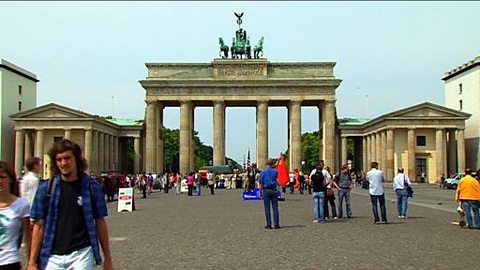
A tour of Berlin. video
A young German boy called Emil introduces his city - Berlin. He then shows where he likes to play football and takes a tour of various sights in the capital, including the Brandenburg Gate, the Berlin Wall and the Reichstag.
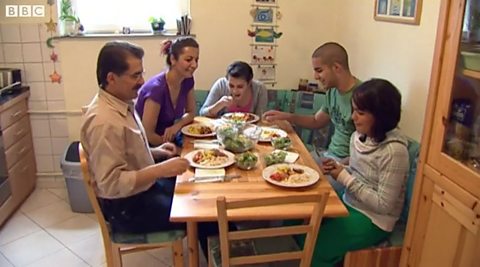
People living in Germany from other countries. video
Selin, a young girl who was born in Germany but has Turkish parents, lives in Kreuzberg, the Turkish part of Berlin. She shows her family's flats and introduces her family during their evening meal.
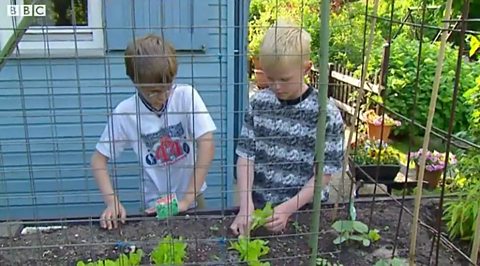
Allotments in Germany. video
An introduction to the issue of urban living in Berlin and the lack of green space. Jan and Sven's families have allotments instead of gardens. They take a tour of the small houses on the allotments and explain what activities they and their families do there.
Cycling in Germany. video
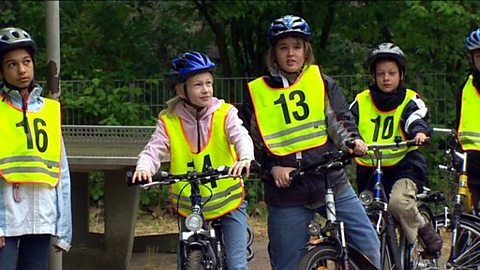
The topic of cycling and its popularity in Germany and Berlin in particular is introduced. In year 4, students have to take a cycling proficiency test. They demonstrate how to check a bike is safe, before practising for and taking their test.
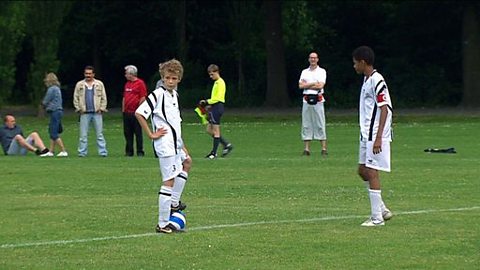
Football in Germany. video
Members of the Hertha Berlin youth football team talk about their ambitions for the future. They are training in preparation for a semi-final match and the names for the different positions are mentioned.