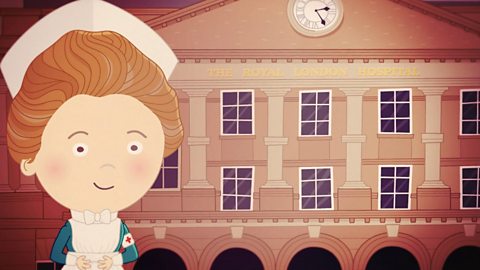
Narrator: At the start of World War One Britain was protected by the largest navy in the world. There hadn't been a war in Britain for over 150 years. So in 1914 my great-great-grandmother Lily felt safe.
This is her, she lived by the sea in Hartlepool. But one morning in December 1914 something terrible happened in Hartlepool. Afterwards, in school, Lily wrote all about it.
"I was walking to meet my friend when suddenly I saw flashes out at sea and through the fog I saw the shape of ships. There was a big booming sound, like thunder but louder. Then there was an explosion.
Now I knew that the ships I had seen were firing at us. At first I hid behind a wall. I could see the shells flying through the air, they made a swishing, whizzing sound.
I started to run as fast as I could. I was very frightened. I found my mum and she was crying when she saw me. My brother and I thought the Germans were invading.
People on the street started rushing everywhere. My mum held our hands very tight and we went through the town, trying to get inland, away from the sea. I thought that the battleships must be able to see us all running.
They hit the gasworks near where my dad was working, I really wanted to see him. Then the booming and the firing stopped. The ships had sailed away.
When we got back to our street my dad was waiting for us. Half the front of our house had fallen down. My bed was hanging over the street!
My mum was very quiet and she was upset, but I was happy that we had got away. In the street I saw pieces of broken metal. They were shrapnel, bits of exploded bombs. The shrapnel was still warm, I put it in my pocket.
Later that week, at school, our teacher told us that the Germans had not wanted to invade. They wanted to attack places that were important to the British war effort. The Germans also fired at people in Scarborough and Whitby that day. Over 100 people had been killed in our three towns.
Soon, like lots of men, my dad decided to join the army. He couldn't forget what happened. I didn't want to forget either so I kept the shrapnel in my pocket."
And now I have the shrapnel that my great-great-grandmother picked up, so I will always remember what happened to her on that day too.
After flashes out at sea and a booming sound in the fog, Lily realises the ships she spotted on her afternoon walk were firing on the small seaside town of Hartlepool.
People rushed inland away from the sea fearing a German invasion. After the attack, the family returned home to find their house almost destroyed.
The still warm piece of shrapnel was collected and has been passed down from generation to generation as a reminder of the terrifying event.
Despite Britain being protected by the largest navy in the world, sea attacks still took place as Germany tried to disrupt British industry as much as possible.
Teacher Notes
Pupils could write a letter or diary entry from the perspective of either Lily, her mum or her father about their thoughts and feelings about the attack from sea.
Students could research other attacks from sea and what the targets were intended to be.
Curriculum Notes
This animation is suitable for teaching History at Key Stage 2 in England, Wales and Northern Ireland, and at Second Level in Scotland.

Life in the trenches. video
A look at what life was like in World War One for soldiers on the front line and the conditions that they had to live in.
Animals during World War One. video
Animals were key to the success of World War One and this article explains why.
Methods of transport. video
This animation looks at why the various methods of transport were important and how they were used during World War One.
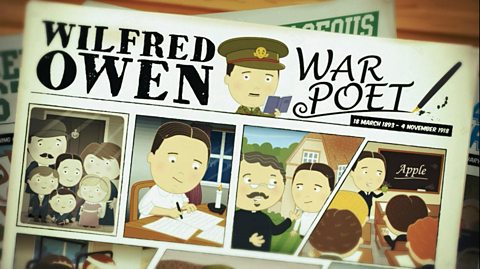
Wilfred Owen's poems. video
Explore the work of Wilfred Owen as a poet and why his writing is important in reflecting on World War One.
Edith Cavell. video
Find out about the life of Edith Cavell and how her bravery makes her a World War One hero.