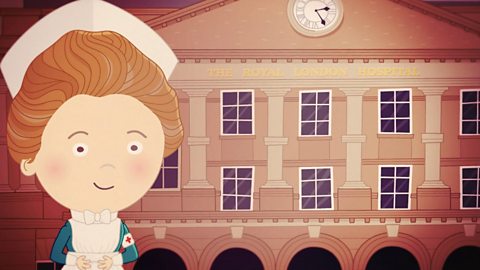
Today, my high street is really busy. It's full of people and traffic. But in 1900, instead of horns, I would've heard hooves. Hundreds of them. Because before World War One, horses ruled the streets. They pulled carriages, delivery carts, taxicabs, and buses. And just like our cars today, they needed places to park and refuel with food.
For longer journeys, you could travel by train. I could ride on the Flying Scotsman from London and be in Edinburgh in time for dinner. Trains were fast because they were powered by steam. People experimented with steam and petrol engines on the roads too. And the very first cars began to appear on the high street. Before 1896, a man with a flag had to warn everyone a car was coming, at the maximum speed of two miles an hour. But soon, the rules changed and so did the technology. Imagine seeing a car for the first time. Perhaps a beautiful handmade motorcar by Mr. Rolls and Mr. Royce. Or a new factory-rolled model from Mr. Henry Ford.
Some people exchanged their bicycles for motorbikes. And by 1910, people in London were using a fleet of buses powered by petrol instead of horses. In many cities, new tram systems were built, running on electricity and overhead wires. When World War One started, the streets became a bit quieter. Horses were needed to help in the fighting. Many new cars were taken over by the military and hundreds of buses carried troops out to the Western Front. But steam, petrol, and electricity were the future. Gradually, horses left the high street for good, and the sound of hooves was replaced with the sound of cars, motorbikes… and my bus home.
Today’s busy and noisy high streets were much quieter and safer 100 years ago. So before cars, what methods of transport ruled our streets?
Before World War One, horses were used for transporting both people and cargo.
For longer distances, steam trains whistled and whooshed as they chugged into stations to collect passengers and parcels.
Even though motor buses and electric trams had become popular ways to travel, the war effort meant that horses and carts returned to make many of the deliveries of letters, parcels, laundry, milk, coal, beer, bread and groceries.
Horse-drawn carriages or cabs were also used to carry passengers around town.
However, bicycles would always be popular.
Delivery boys still pedalled around town delivering parcels to homes and, when not patrolling the streets by foot, policemen cycled.
Teacher Notes
Using clips of streets from towns or cities at the time, pupils could write a commentary similar to the one from the animation.
You could ask your students to research and produce a timeline of transport inventions and changes.
Pupils could write a diary or commentary of a day in the life of a carthorse from the perspective of the horse or the person using the horse.
Curriculum Notes
This animation is suitable for teaching History at Key Stage 2 in England, Wales and Northern Ireland, and at 2nd Level in Scotland.

Attacks by the sea. video
An animation about an attack that targeted key parts of the British coastline and the impact it had on one town.
Life in the trenches. video
A look at what life was like in World War One for soldiers on the front line and the conditions that they had to live in.
Animals during World War One. video
Animals were key to the success of World War One and this article explains why.
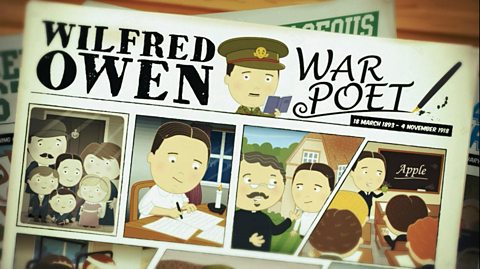
Wilfred Owen's poems. video
Explore the work of Wilfred Owen as a poet and why his writing is important in reflecting on World War One.
Edith Cavell. video
Find out about the life of Edith Cavell and how her bravery makes her a World War One hero.