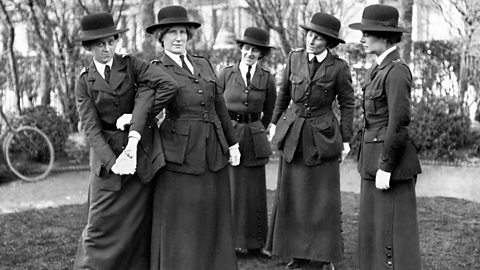
Machineguns and artillery in the 1st World War caused terrible injuries.
Wounded men were coming home in overwhelming numbers in urgent need of medical attention.
Britain’s small band of professional nurses, were joined by nursing assistants from the Voluntary Aid Detachment - the VADs.
Across the country, public buildings and private residences were offered up or commandeered for use as auxiliary hospitals.
In 1917, Lady Stamford offered Dunham Massey to the Red Cross. Her daughter, Lady Jane Grey worked here as a VAD.
It could be grisly work, with the operating table tucked in next to the Grand Staircase. Lady Jane remembered helping remove a bullet from a soldier’s brain.
I was given the job of shining a torch into the hole once they’d made the hole in the brain, and so I held the torch in front and saw the bullet being extracted by the surgeon. It was very interesting.
By 1918, more than seventy thousand VADs had played a crucial part in the war effort. In a man’s world, they were the perfect women - volunteers, not wanting equal pay, and not demanding a new kind of job. Theirs was the traditional caring role – they were non-threatening - plucky, but lovable. Women doctors, on the other hand, evoked a very different kind of response.
Before the war qualified female doctors treated only women and children… But the war gave two pioneering women the chance to change that Flora Murray; and Louisa Garrett Anderson, the daughter of the first woman to qualify as a doctor in Britain.
Together, they now founded the Women’s Hospital Corps.
After watching them successfully run hospitals in France, the British War Office gritted its teeth and offered them a large military hospital, with over five hundred beds, in Endell Street, London. They accepted immediately, and revealed their growing confidence by insisting it must be entirely staffed by women.
New staff were told that skill levels acceptable from a man would not be accepted from a woman. They had to do better.
Jennian:
They laid special emphasis on getting the men recovered psychologically from the traumas they’d seen. And every effort was made to make the atmosphere of these rather grim buildings congenial. The courtyard had flowers regularly tended by the gardeners; the wards had fresh flowers in them, changed regularly by a team of volunteers; there were sports days, there were demonstrations by champion boxers. It was a very varied programme of entertainment.
Kate:
The hospital did have the word suffragette attached to it…?
Jennian:
Yes it did, because Flora Murray and Louisa Garrett Anderson had been very prominent in Mrs Pankhurst’s organisation. Flora Murray was actually Mrs Pankhurst’s personal physician, and Anderson had spent time in Holloway, having thrown a brick through a window. So they were well-known, and many, many of their staff were also supporters of the suffrage movement.
But these women had shown themselves capable of running a hospital, a large military hospital; they’d shown themselves to be capable of treating really very serious medical and surgical problems; and of successfully treating male patients, and this was something that had not been proved before. And what is more, they had shown it would happen without civilisation collapsing.
Kate:
More than twenty-six thousand men were treated at Endell Street Military Hospital, many needed major surgery.
In 1917, in recognition of their pioneering work, both Flora Murray and Louisa Garrett Anderson were awarded CBEs.
The legacy of Endell Street is that men could be treated by women doctors. Only one patient ever said he wouldn’t be treated by a female. And after a few days, he changed his mind, and asked his mother if he’d be allowed to stay a little longer. “The whole hospital is a triumph for women”, wrote another patient home, “incidentally, it is a triumph for suffragettes”.
Video summary
Kate Adie explores the rising demand for medical services as a result of the machine gun and artillery wounds from the war and the creation of the Voluntary Aid Detachment (VADs).
Kate visits the private residence of Lady Stamford who transformed Dunham Massey into an auxiliary hospital.
Another societal change was the opening of Endell Street Hospital run by Flora Murray and Louisa Garrett Anderson, who kept an all-female staff.
The hospital’s success reflects the breakthrough in social attitudes to female medical professionals treating men in particular.
Both Flora Murray and Louisa Garrett Anderson were rewarded for their efforts with CBEs.
Teacher Notes
Pupils could design and create a medal and testimonial for a female nurse or doctor.
The testimonial should highlight and recognise the women for their range and depth of work helping wounded troops from the front.
This clip will be relevant for teaching History at KS3, KS4/GCSE, in England and Wales and Northern Ireland.
Also at Third Level, Fourth Level, National 4 and National 5 in Scotland.
This topic appears in OCR, Edexcel, AQA, WJEC, CCEA GCSE and SQA.
How the suffragette movement changed at the start of WW1. video
Kate Adie examines how the suffragette movement shifted focus at the outbreak of World War One.
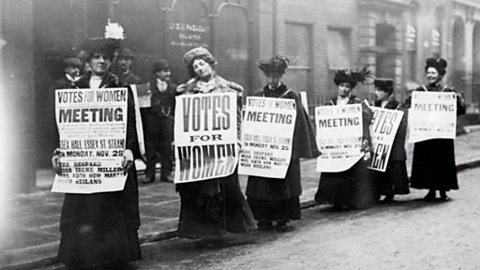
How the first women gained the right to vote in 1918. video
Kate Adie discovers how the Representation Act gave some women the right to vote at the end of Word War One.
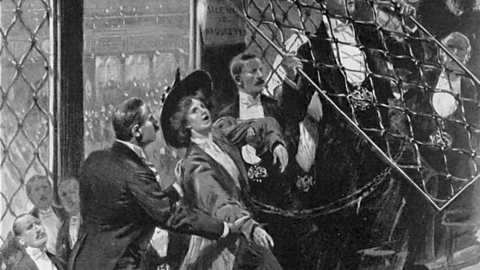
How women joined the war effort in World War One. video
Kate Adie explores how women of all classes joined the workforce overseas and on the Home Front.
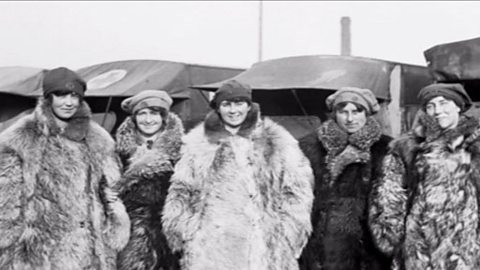
How women's football thrived in World War One. video
Kate Adie explains how women's football teams, such as The Blyth Spartans and star player Bella Raey, thrived in WW1.
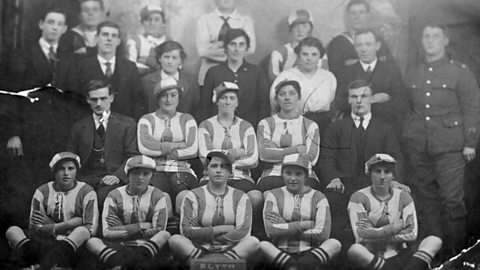
The rise of the girls' night and the first women's police force in WW1. video
Kate Adie explains the story of Margaret Damer Dawson, the Women's Police Service and the rise of the girls' night out in WW1.