Naomi Wilkinson and her young helpers find out how plants grow.
NAOMI: The plants around us are all at different stages in their life cycle. Some are just beginning to grow, some have grown leaves, flowers or fruit and some have been living for a long time and have grown really, really big.
CHILD: I've found found a new plant.
CHILD: I've found a massive one.
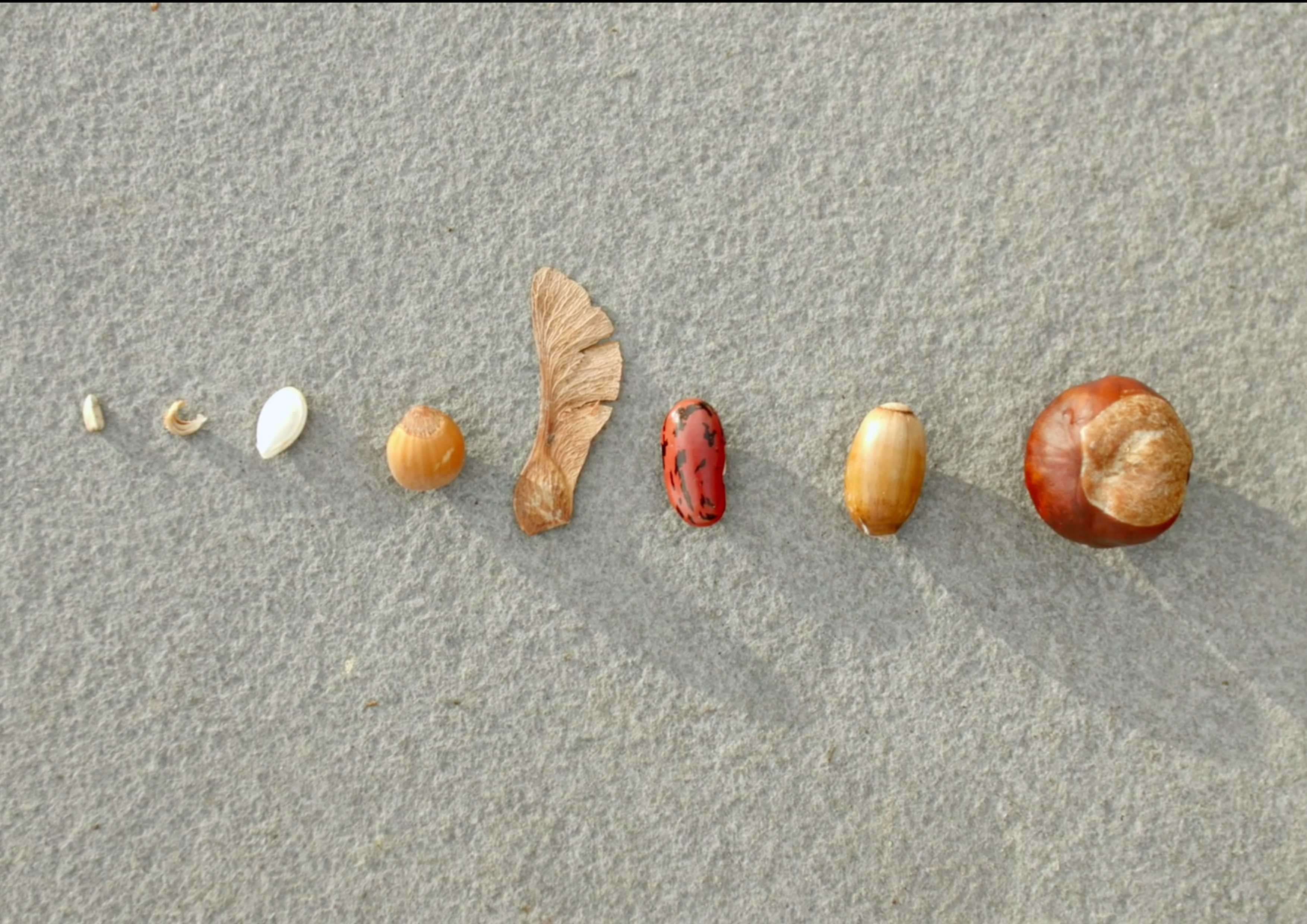
NAOMI: Most plants start as seeds. Seeds come in many different shapes and sizes. But all seeds have an outer shell that protects a baby plant and some food for it that are inside the seed.
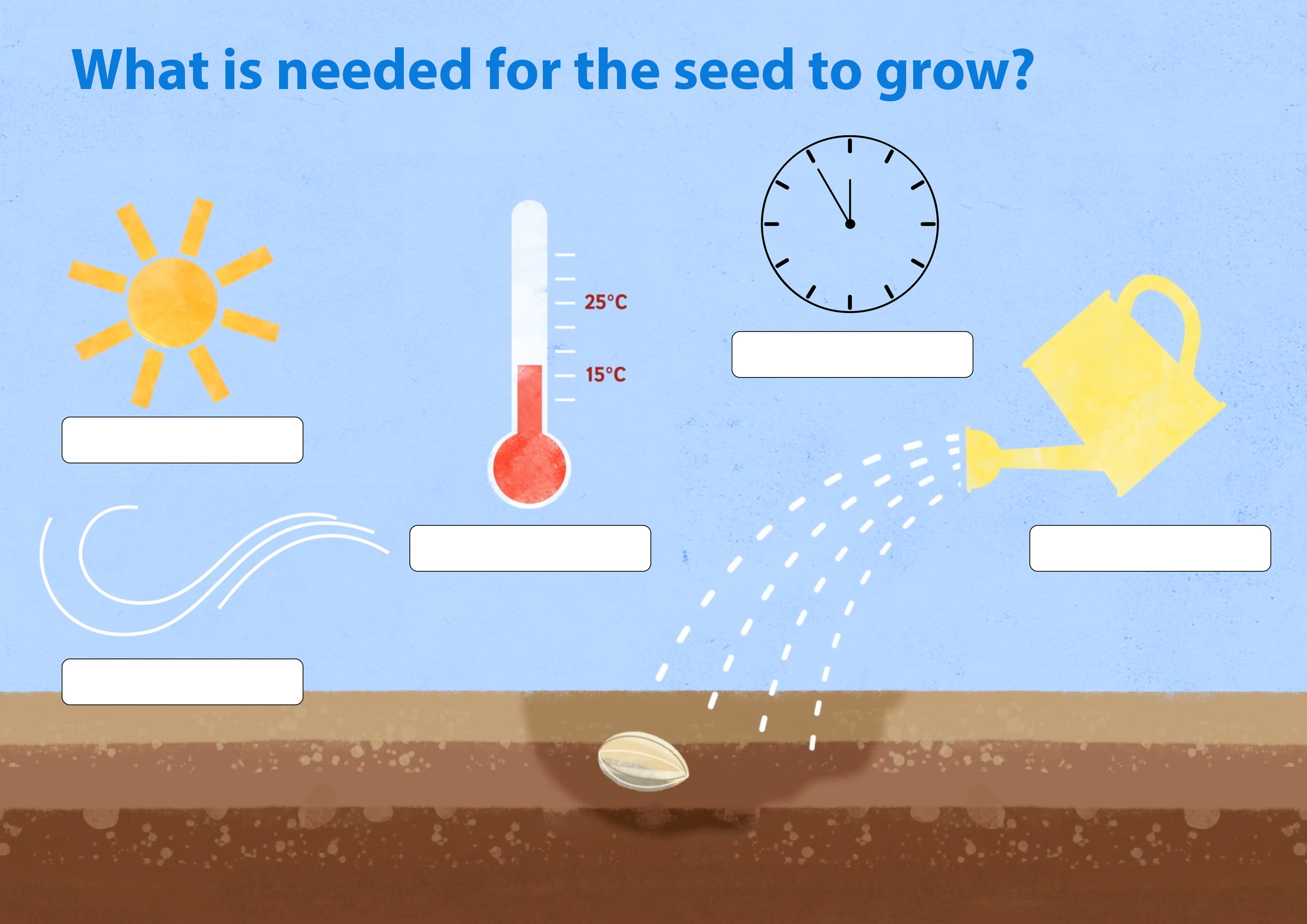
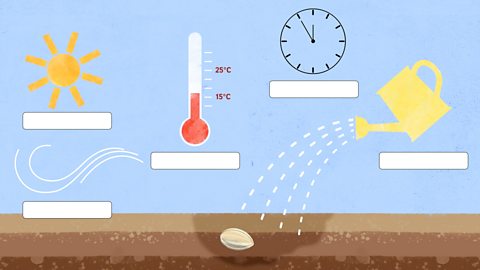
The baby plant will stay inside the seed until it gets the things it needs to grow - water, light, air, the right temperature and time.
Let's find out more about how seeds in the earth grow into plants. If they have the right temperature and the right amount of water, light and air, soon things will start to happen.
These are roots, they grow downwards into the soil. They help keep the plant firmly in the ground and pull water and nutrients up into the seed. These nutrients make the plant strong enough for a shoot to push up through the soil, a stem sprouts upwards and the plant grows leaves. Every part of the plant has a job to do and the job of the leaves is to use water, sunlight and a gas from the air, called carbon dioxide, to make food for the plant.
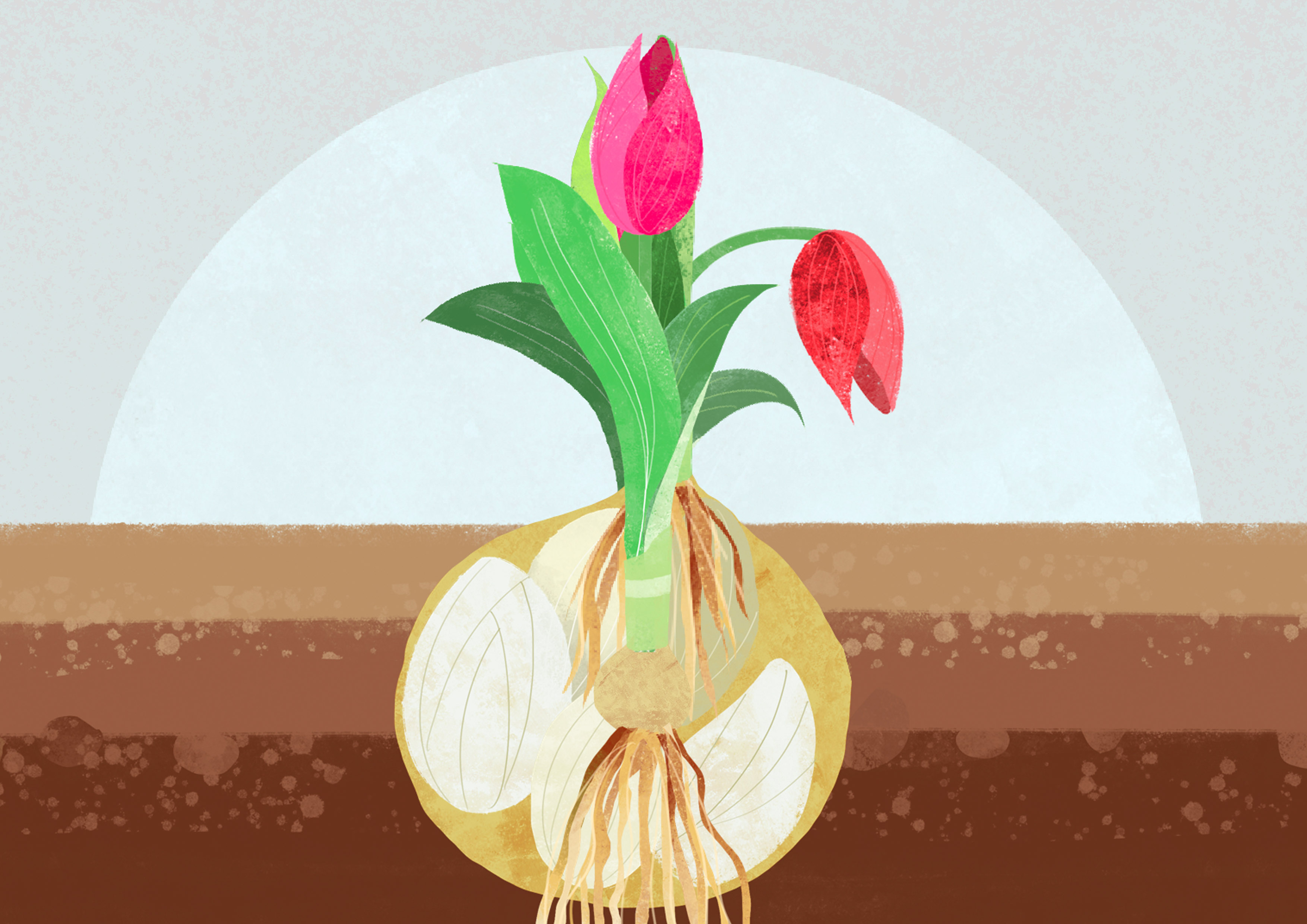
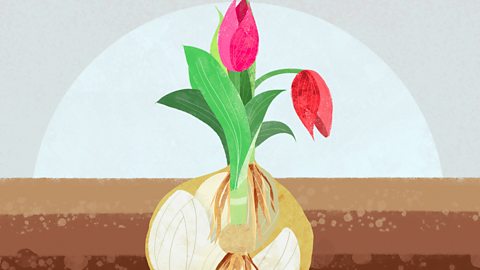
Now the plant has everything it needs to grow big and strong. Some plants grow first from a seed and then develop a bulb that stores their energy under the ground and helps them grow back year after year. Each year the bulb gets bigger and stronger and so does the plant.
So now we know how plants grow, can you tell me where plants grow?
CHILD: Gardens.
CHILD: Farms.
CHILD: At the beach.
CHILD: Inside.
CHILD: Forests.
CHILD: On a roundabout!
CHILDREN: Everywhere!
NAOMI: It does seem that plants grow everywhere, but there are a few places that plants might not grow so well can you think of any?
CHILD: In the dark?
NAOMI: Yep! Plants will find it hard to grow in the dark because they don't have all of the the things they need to grow.
Differentplants like different conditions and temperatures to grow in. Some plants like windy conditions.
Other plants like warm conditions, so in cold places they need to be grown indoors, in a special building called a greenhouse.
Let's see what our Nature Explorers have found out about the plants that grow where they live.
ANEESHWAR: Hi, my name's Aneeshwar and here's my dad. We are looking for plants that grow in the streets.
NAOMI: Woah, what have you found there?
ANEESHWAR: These are tree guards.They help young trees grow big and strong!
ANEESHWAR: The grass has found a way to grow in the cracks. I wonder how it got there?
NAOMI: That looks interesting.
ANEESHWAR: There are some new shoots of plants starting to grow over here.
ANEESHWAR: What plants can you find where you are? Bye!
NAOMI: Thanks, Aneeshwar!
Your bell is light and tinkly like a young leaf. And your drum is heavy and thick like a big old tree.
What sound do you think you could make for a seed? How about roots going down into the ground, or shoots rising out of the earth? What sounds can you make? Maybe your class could make a soundscape of a plant growing! Oh, I wonder what that could sound like?
How do plants grow?
This video explores the life cycle of plants - from seed, to baby plant, to mature plant, and back to seed again. It examines what conditions are needed for a seed to successfully germinate and what germination looks like. It also covers those plants that develop bulbs to grow back year after year and the conditions that are needed for plants to grow successfully - such as the right temperature, light conditions and air.
At the end two children continue their exploration through music, creating sounds to represent how different seeds or plants grow.
Points for discussion:
- What is a plant?
- What does germination mean?
- What conditions are needed for a seed to germinate?
- How important are roots? What is the job of roots?
- What is the job of the leaves on a plant?
- Can you name places a plant would find growing difficult and explain why?
Suggested activities:
Pupils can explore music, dance and drama to match the varying phases of plant growth. Can they create a soundscape as a class or group to represent a plant growing?
Following the video, pupils can explore how seeds germinate in different locations. What factors impact germination and what factors impact plant growth? What observations can the pupils make of seeds and plants as they grow in different conditions? Use a variety of methods - eg graphs - to record your results.
When undertaking a walk in their local area, can pupils find plants at different stages of their life cycle? Is there a place that younger plants appear to grow better than other places? Why do the pupils think this is?
Undertake a ‘scavenger hunt’ in the autumn. What seeds can pupils find? When back in school, how do these grow and develop? (Ensure appropriate clothing - including gloves - is worn throughout and be mindful of any allergies that may exist in the class).
Curriculum Notes
This film is relevant for teaching Science within the National Curriculum KS1 in England and Northern Ireland and 1st Level in Scotland as well as the Science and Technology Area of Learning and Experience within the Curriculum for Wales.

Further resources
What is needed for a seed to germinate? image
Click to download / print the image.
Examples of seeds. image
Click to download / print the image.
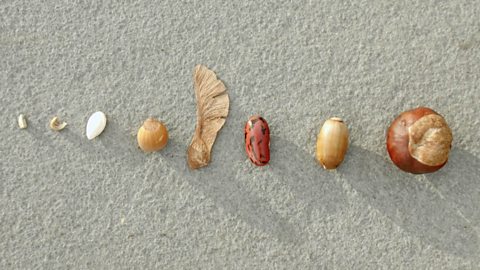
Diagram of a tulip bulb. image
Click to download / print the image.
What is a plant? video
Exploring what a plant is - how to identify them and how to categorise them.
How do plants make new plants? video
Exploring pollination, cross-pollination and seed dispersal.