India:
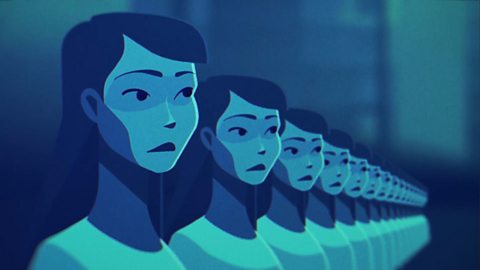
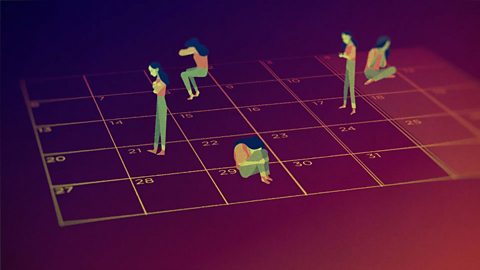
When I first started at secondary school, it was daunting, it, it was exciting, it was sort of every single emotion at once. I think it was sort of an identity crisis, I didn't really know who I was. And I wanted to be someone. I had to wear a certain type of clothing, I had to listen to certain music, I had to do the same things. I cut my hair really short. I thought I wouldn't care how other people thought. People used to tease me about what I looked like, how I acted. It sort of niggled away at me a little bit, and that tiny little niggling kind of made me really insecure. And I wasn't happy with who I was. I didn't like the way I looked. I was worried about how smart I was, I was worried about my friendships. I thought they'd see someone who was different, who was ugly, who was not friendship worthy. I had episodes where I'd get really, really upset. I didn't know how to deal with it, so I'd end up hiding, I'd spend a lot of time in the toilets. It was a square, I was in the square, nothing can happen in the square. It was an area I could be in control as everything else felt like it was spiralling in a massive clump of unnecessary worries, about what'll happen on the school bus tonight, or did anyone see me eating that at lunch, or, oh no, I just said that in class and I didn't mean to say that and people are laughing at me now. I don't wanna go back there, in case something happens. The scared feeling sort of became uncontrollable. Everything was intensified, so lights would become lighter, darkness would become darker, sounds would get noisier, so the teacher talking on the other side of the room would suddenly be screaming at me. My chest felt really tight, like both my lungs were expanding but I couldn't get any air into them, as if they were filling up with the water. It was a constant worry. Yeah, it was constant and inescapable feeling of what if, how, what's going on, what if this happens? It was strengthened at school, but it was there a lot.
India:
My friend, she went through a difficult time, and her methods of coping almost rubbed off on me in a way. And in the middle of a French lesson she said we need to go to the bathroom, and so she left five minutes, then I left five minutes later. And she said, India: , I need to tell you this, and she just lifted up her sleeves, and I was like, what's that? And she said, this is what I do to myself. They were cut and scratched and burned and penned, and everything, it was like a crime scene on skin. Cause I was so concerned with this one particular friend, cause she was hurting herself, I just surrounded myself with her, and her problems, and my problems, and it was… suddenly the whole world became a lot darker, and I ended up picking up some of those mechanisms, and I ended up scratching myself, which went up to cutting myself. The pain wasn't in my chest anyone, it was… on my arms, on my legs, so which I could deal with, I could put a bandage on.
India:
Both me and this person had negative coping strategies, and neither of us tried to help each other in a positive way, so we were just spiralling and making ourselves feel more upset. And it just made it worse. My parents found out about my self-harm. They found out on my mum's 40th birthday, which… was horrendous. It was just a very, very sad day. But… it was a very important day, because that was the start of my recovery journey. If they hadn't found out, I don't know what would've happened. I was referred by my GP to go to CAMS Child and Adolescent Mental Health Service. My therapist was a really lovely person who I trusted. Well, she taught me how to be able to talk to people without worry, and that was really important, the fact that I could now talk to people meant that I didn't have to hide away from people. I s-- almost completely stopped self-harming. I'm dealing with it a lot better, and I'm getting stronger, and I don't think it's ever gonna go away but I've reduced my self-harming to almost nothing. My relationships with people are better, and I can be much more social, and I'm a happier person because I know how to deal with things in a positive way. Now I know how to help myself, I can also do that to help other people, and that makes me feel good. I like helping other people.
Video summary
A powerful animated documentary relating the story of India, a young woman who began self-harming as a response to anxiety caused by being bullied and low self-esteem.
India struggled to fit in at secondary school which she sees as the root of her insecurities.
She found it hard to make friends, felt like she didn’t belong and was bullied.
She soon experienced high anxiety and panic attacks.
Unable to see where help might be sought, India turned to her only friend who was also struggling with their mental health.
Her friend was using self-harm as a way to process her feelings.
Unaware there were other options, India copied this coping mechanism, and began cutting herself as a way to control her emotions.
This spiraled out of control.
She sought help after her parents noticed the marks on her arm. She was referred through her GP to CAMHS (Child and Adolescent Mental Health Services).
Through this, India was referred to art therapy and counselling, and was ultimately equipped with durable and positive coping strategies which meant she was able to stop self-harming and control her anxiety.
India’s story touches on aspects of life that affect many young people at school, from being teased, having low self-esteem, being unsure of your own worth, experiencing anxiety and feeling like you don’t fit in.
This animation provides key information in the channels of help there are in the UK (initial conversations with the GP, referral to CAMHS and specialised help), but also highlights forms of therapy some students may be unaware of.
It aims to dispel myths on why people turn to self-harm and act as a springboard to wider discussions about managing your mental health and the importance of that.
It also allows people who haven't experienced mental ill-health an opportunity to understand what it might feel like - the relentlessness of it, the physical effects of it, the emotional drain, and the routes available to get the right help.
Due to the sensitive nature of the subject matter, we strongly advise teacher viewing before watching with your pupils.
Teacher Notes
Key Stage 3
This short film looks into how unmanaged emotions and feelings can spiral out of control.
Pupils could discuss the feelings she was experiencing, such as anxiety and insecurity.
Pupils could draw a line, a continuum. At one end, under the line, they write the mildest manifestation of anxiety someone could experience e.g. worried or nervous, and above the line a possible trigger for that feeling e.g. not completing homework on time.
Do the same at the other end of continuum with the most intense manifestation of anxiety e.g. suicide and above the line possible triggers for this.
Fill in the continuum from mild to intense manifestations placing India’s situation on the line.
Make the point that we all experience anxiety at some level at some point as this is a human emotion, and that we can all learn ways to manage this, preferably while it is at its mildest.
Can pupils list strategies they already know/use to intervene when they feel anxious? E.g. mindfulness, exercise, talking to friends.
Invite students to brainstorm where India or anyone else in her position could turn to seek help both in school and out of school. Research in more details CAMHS and the work they do.
Key Stage 4
The continuum exercise in KS3 will work equally well for KS4 pupils and will help them identify their own triggers for anxiety and give ideas as to how to manage these emotions as they arise, rather than allowing them to get out of control and lead to self-harm etc.
Sharing the techniques and strategies they already use is positive and empowering but it is important that they also discuss and are given information as to where to get help both in and out of school.
Self-harm is a complex manifestation of anxiety and has many manifestations. It is wise not to unpack all these but rather to focus on the positive methods of alleviating anxiety.
India was really helped by talking therapy, as well as art therapy, but other people connect with different forms of help, from equine therapy, mindfulness, CBT, behaviour, group therapy etc - why not discuss different counselling and therapies on offer and how they might work and be suited to different people.
This short film is suitable for teaching PSHE at KS3 and GCSE in England, Wales and Northern Ireland and Modern Studies at National 4 and 5 in Scotland.
Dealing with an eating disorder - Jack's Story. video
Jack’s story explores what it can be like to battle with an eating disorder in school.
Addiction - Chloe's Story. video
Chloe’s story explores how neglect and abuse led to an addiction to drugs.
The effect of being bullied - Ryan's Story. video
Ryan’s story explores how being bullied at school and feeling alone in his family triggered serious problems with his mental health.
Anxiety - Aneeka and Sam's Story. video
Aneeka and Sam’s story explores what it is like when you are battling anxiety and the different reasons it can develop.
Depression - Eleanor’s story. video
Eleanor’s story explores what it can be like to battle with depression and suicidal thoughts and the effect it can have on your life.