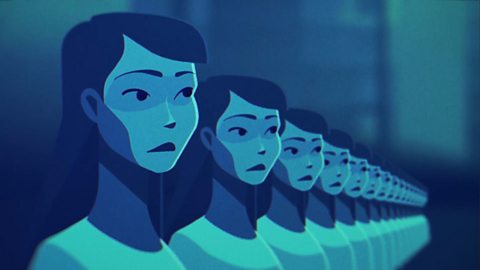
Jack:
I was a normal kid, I was playing football, rugby, cricket all of the sports you know under the sun that I could get my hands on to. If there was a ball involved I was pretty much there. But things changed when my parents split up, which was when I was 11 years old. And that's when my head started to just question things that I would not have questioned if that situation did not occur. But I thought it's my fault.
Jack:
I was chubby, quite a large kid. I got bullied in primary and secondary school for being fat. I came home numerous times crying. I think these two things together, the parents splitting up and being bullied, I started to isolate myself.
Jack:
When I then eventually moved house that's when I decided that I'm going to lose weight. And when I got home to that other house, I remember it so vividly because we had pizza there. And that was the first time that I restricted myself, and this is my new start. This is my fresh start, this is the new Jack. Because the old Jack was left behind in the old house.
Jack:
I started running, and I can remember my road was very long, so I just went up once and then came back down. I then went swimming. Running and swimming were my two main things that I used to lose weight. So one night run up once, came down and went to swim. Next evening, run twice, went to swim. Then probably a couple of days passed three times, swim. Four times, swim. Five times, swim.
Jack:
Food, I cut everything that I categorised as bad out. I just felt so determined, nothing was going to stop me, I was going to do this.
Jack:
I remember saying to one of my mates when I was walking out of the gate at school, I'm going to be skinny Jack. And he said, "I can't imagine a skinny Jack." I said, "Just watch me."
Jack:
My relationship with food and exercise I took that, but went way too far with it. So I isolated myself from everyone.
Jack:
I remember going on a holiday to Spain, and that was a big wake up call for my mum. I think that's when my mum realised that there's something seriously wrong, because I'd have panic attacks after dinner, I would have just these weird mood swings. I was so uncomfortable in myself and what I looked like and how I felt. Anorexia is like a cloud flooding your brain. You're just thinking about numbers, calories, exercise, what you're eating today, what you're eating tomorrow, what you can cut out, what can you do more to push yourself.
Jack:
I wasn't present. I am now skinny Jack, and I am that person that I turned myself into. I just became very weak, I just felt empty. So I couldn't, I couldn't even run anymore. Everything had stopped.
Jack:
And I was in bed by 6:00. There was no way I was staying up any later because I couldn't physically stay up. I was so tired and drained.
Jack:
By November time I was struggling to walk to school. I used to go to school, go straight to the medical room and tell them to call my parents to pick me up because I couldn't, I couldn't walk home.
Jack:
At this point I wanted to be ill. I wanted to feel bad. I wanted to feel horrible. I wanted to feel sick. I was so far gone in my head that I was, you know I wasn't even Jack. I had turned into a completely different person. And I just wanted to be in that bubble by myself.
Jack:
I remember one distinct day when my dad picked me up, my dad was crying because he saw my eyes, they were black, I was tired, you could see I was deteriorating. And I did have a complete breakdown.
Jack:
And when I did have that breakdown, that's when I did ask for help.
Jack:
I went to my GP, we did get a referral to CAMHS. When I finally got there two weeks later, the nurse, she must have done my heart rate and blood pressure first, and I remember just the machine just beeping.
Jack:
My heart rate was 35 beats per minute, and my blood pressure was 70 over 40, or something insane. I said, "Am I going to die?" And she said, "We need to go and speak to your dad."
Jack:
They took me up to the ward, and they took me upstairs and I walked past and I just remember looking to my left and there being just children my age and maybe a bit younger and older, and they were being fed by tubes.
Jack:
And I remember just walking and thinking I'm going to start now, I have to do this. And that was the day I started my whole meal plan, on that day.
Jack:
Things started to look up because I had structure again.
Jack:
So I'm studying towards my GCSE's, I've got my meal plan, I'm an outpatient at CAMHS, so I'm going once or twice a week to get weighed, my heart checked, everything, you know, just get checked and checked up.
Jack:
And that's the thing, I took control of my own recovery. Because no one can help you, you have to help yourself.
Jack:
A counsellor or psychologist can only bring you to water, they can't make you drink it. You have to actually want to do it yourself.
Video summary
Narrated in first person, this film explores what it is like to battle with an eating disorder.
Jack’s testimony is open and honest, and creates an intimate portrait into how it can feel to be coping with an eating disorder like anorexia and the root causes behind it.
For Jack, he understands these as a combination of being bullied at school and the tensions and upheaval at home as his parents went through a prolonged divorce - something he felt he was to blame for.
These experiences were emotionally draining and unsettling, and he sought weight and food control as a way to improve himself, his image, and regain some stability.
He explains how wanting to simply lose weight through diet and exercise soon spiraled out of control, to a point where he felt totally lost to the illness.
From extreme calorie restriction and compulsively exercising, Jack pushed himself to the point where he didn’t have the energy to walk home from school or to stay up past 6pm.
Jack’s story touches on the reasons behind developing an eating disorder, the symptoms, both mental and physical effects of it, as well as the impact on his parents in seeing him in such a fragile state.
Jack's recovery began with an appointment with his GP which lead to a referral to CAMHS - which is Child and Adolescent Mental Health Services.
For him, the referral was poignant as he saw the weakened and fragile state of other young people with anorexia at a hospital appointment.
Along with the formal help from CAMHS, Jack also speaks passionately about his own drive which was crucial in his own personal recovery.
It provides key information about where to seek help when you are feeling particularly bad.
This animation will be particularly useful for teachers in discussion about understanding others, how to deal with bullying and self-image, and how damaging mental health problems can be on your physical health.
Due to the sensitive nature of the subject matter, we strongly advise teacher viewing before watching with your pupils.
Teacher Notes
Key Stage 3
You could start by exploring pupils’ relationship with food, so they understand we all have different relationships with food, which are usually more than just eating for energy and nutrition.
Do they like food? Do they enjoy the process of eating? Do they enjoy feeling full, feeling hungry?
What does food give them: nutrition / social time with friends / emotional comfort / enjoyment / reward or treats etc.
Can they see the link between food and their emotional connection to it?
Can they start to see that sometimes food and eating is used to meet needs other than nutritional needs e.g. if you feel empty and emotionally insecure you might eat certain foods to give you a feeling that makes up for feeling insecure.
It is important to discuss how important a healthy relationship with food is and what that might look like (not using it to compensate for emotional needs for example).
Ask pupils if they have heard of anorexia and eating disorders before and know what they are.
This could be an opportunity to discuss other eating disorders which affect people, from binge eating disorder (BED) bulimia, and other specified feeding or eating disorder (OSFED).
This could be used to help pupils understand how to get help.
Key Stage 4
Might be suitable to begin to draw the links of low self-esteem, isolation, depression to how and why that might manifest in an eating disorder (sometimes this is trying to achieve a type of body people see in the media, or a way to gain control if there are things around them out of control, or a way to allow themselves to be temporarily out of control e.g. binge eating if everything around them is tightly controlled, or a way to draw attention to themselves, a cry for help, or a way to punish themselves).
These reasons are not prescriptive, but there may be the space in class to start exploring the complexity of eating disorders - as there is not a common ‘one size fits all’ cause.
It is essential to emphasise that there are many causes of eating disorders and that we need to stay aware of our relationship with food and know there are many ways to manage difficult feelings like anxiety, loneliness, depression etc. without allowing food to have a part in this process.
We need healthy bodies to support us when we are dealing with emotional issues.
This could be used to help pupils understand how to get help.
This short film is suitable for teaching PSHE at KS3 and GCSE in England, Wales and Northern Ireland and Modern Studies at National 4 and 5 in Scotland.
Addiction - Chloe's Story. video
Chloe’s story explores how neglect and abuse led to an addiction to drugs.
The effect of being bullied - Ryan's Story. video
Ryan’s story explores how being bullied at school and feeling alone in his family triggered serious problems with his mental health.
Anxiety - Aneeka and Sam's Story. video
Aneeka and Sam’s story explores what it is like when you are battling anxiety and the different reasons it can develop.
Self-harm - India's Story. video
India’s story explores what it can be like to battle with severe anxiety and self-harm.
Depression - Eleanor’s story. video
Eleanor’s story explores what it can be like to battle with depression and suicidal thoughts and the effect it can have on your life.