Sam:
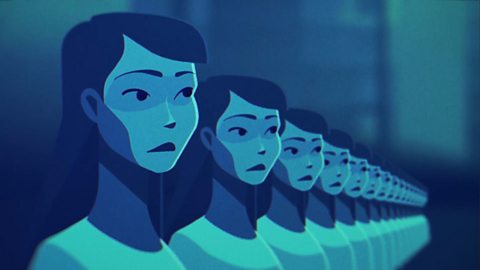
I'd spend a lot of time on my own. So, I got used to it. I'd just be sat there on my computer, either playing video games or reading articles online. I became rather withdrawn. I had next to no friends. I started to get almost a fear of people, I suppose.
Aneekah:
I couldn't really speak to people properly. I couldn't-- I didn't have any confidence. I couldn't articulate my thoughts very well. I was very quiet and I was quite, like, paranoid about the people around me. And when we were playing team games, they'd pick me last. That was an awful experience. I felt like there was something very wrong with me, and I couldn't figure out what it was.
Sam:
There's so much peer pressure. Oh, have you got this new bag or this new phone, or have you heard of this, have you seen that? And, obviously, I'm still not into half the things that normal teenagers are into today. So, I felt that pressure of I'm a complete outsider. Interacting with people was very difficult. I hadn't really had experience with, just, having a normal conversation with someone. I don't know what to say, I don't know what to do. I am constantly thinking, "Do they think I'm an idiot? Do they think I'm weird? Do they think I'm strange?" All sorts of things.
Aneekah:
When I moved to the grammar school, I found that I wasn't actually at the top. I was more towards the bottom. I wasn't as good as them. They were so much better than me. And it brought on a lot of anxiety. So, I describe it like the reactions inside the sun. Because it was so intense, and I didn't know what it was. It was very scary, and I remember being with my friends. I just wanted to escape; I just wanted to walk out the room, detach myself from the environment, and everything going in slow motion. Finding it hard to breathe sometimes. I was in my maths lesson, and I was sitting in the middle of two or three people. I couldn't hear the things around me anymore. I could hear them, but I didn't feel like I could process anything. I was looking down at my paper and looking up, and looking down again. It was like everything was just quite far away.
Sam:
I think one of the worst times that I felt most anxious was in English class. So, having to stand up and read this book, I felt so anxious I just completely froze. And I just couldn't get the words out physically. Like, they were on the end of my tongue, but they were stuck. So, I stood there for about two minutes. So, I just sat down and for the next half an hour of that lesson, I was just stuck in my own head in that classroom. I physically felt sick. I felt like I was in a sauna as well. I started sweating. My heart was going 70,000 miles an hour. It physically hurt.
Aneekah:
At first it started happening, like, maybe once every so often. Then it started increasing to once a week, until… Until I got to the point where it was happening every day. I was feeling like that all the time.
Aneekah:
Actually, a lot of people didn't believe me. Or they thought I was just being a teenager, this is normal. It got worse after that. And I, I withdrew from my GCSEs and didn't do them, due to, like, the severity of the mental health.
Sam:
So, I just had this overwhelming feeling of "I'm really alone right now. This is absolutely awful." And it all just built up and built up. Physically wound me up. I almost felt like a jack-in-the-box sometimes. And how someone's slowly winding the handle slowly and slowly and slowly, and I'm just gonna pop.
Aneekah:
And I thought that I don't really deserve to live, because I felt stressed out when I just looked at the books. I feel like a terrible human being. And then I took an overdose.
Aneekah:
I got a fast rec into CAMHS, and then things started changing for the better. First, I saw a key worker who I think did an assessment on me. And then I got to see a psychiatrist. And then for over the next few months, I got to see both of them. At first it was weekly, then it was once every two weeks, and then it was once every month or so. That actually helped a lot, because I felt supported. I felt like I could talk about things. Like I could, just letting things out, you know, just a release of emotions. People were listening to me. I felt like I was allowed to be unwell. And it got me to the state where I could start doing things again. Or could start making my own choices and helping myself get better.
Sam:
It helped just be able to talk to somebody. I could sit there and talk for the hour. I was just trying to explain to her how hard it was. I have very few friends, I feel like I'm near enough terrified of people, and it's incredibly hard. All the emotions and all the thoughts and everything constantly whirling around. At some points, I just felt, you know, when you're physically dizzy. While I was talking, those normal fears of being scared and being worried about people, I didn't feel any of that anymore. I could let all this out 'cause there was someone that not only was there, but wanted to be there.
Video summary
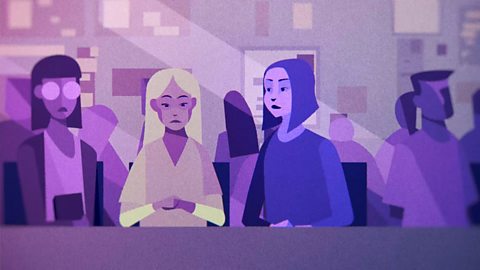
Narrated in first person, this film explores the impact of anxiety and how it can affect your life.
Aneeka and Sam’s testimony is open and honest, and creates an intimate portrait into what it is like to live with severe anxiety, and what might cause it.
Aneeka traces the root of her anxiety to her lack of confidence with people and at school; which affected her communication.
Her treatment from peers at school pushed her further into herself and she became more reclusive.
However, it was moving to a grammar school which badly affected her mental health, as she suddenly felt not good enough.
Aneeka’s deteriorating mental health meant she missed sitting her GCSEs, but it wasn't until she attempted an overdose that she received professional help.
Sam sees the link between his isolation at home and at school which caused him to feel like a complete outsider.
Exaggerated by his different interests to the rest of his year group, he just felt like he never fit in.
Slowly, his emotions and anxieties built up with no healthy outlet.
It wasn’t until he found professional help through CAMHS (Child and Adolescent Mental Health Services) that he found he could open up - and the weight was lifted.
Both Aneeka and Sam discuss the physical symptoms of anxiety.
Their testimony highlights how overwhelming the experience of panic or anxiety attacks can be and gives an insight for those who may never have experienced them.
This film also highlights and takes students through the channels of help which may be available to them if they are experiencing similar feelings as those described in the film, including breaking down the processes within these channels.
This may help students who may see them as daunting or intimidating environments.
Due to the sensitive nature of the subject matter, we strongly advise teacher viewing before watching with your pupils.
Teacher Notes
Key Stage 3
Pupils could discuss the different causes of anxiety for Aneeka and Sam. Why are they different? What are their similarities?
Are they connected to owning your own identity i.e. being an individual, and not comparing yourself to others? How do you know/find out who you are? How do you like and respect who you are?
Pupils could use this to research into local and national support networks which may be available to students, especially going into more detail of CAMHS - Child and Adolescent Mental Health Service.
Key Stage 4
Aneeka found the social and academic pressures at school really hard.
She felt excluded and this affected her sense of self-worth to the extent that she started closing down (detached, slow motion, couldn’t process).
Jack felt he was alone and like a Jack-in-the-box, keeping everything in but slowly being wound up until he felt he would pop/explode.
Students could discuss the sort of school environment that allows these things to happen and write a Charter for the school to ensure people are all afforded respect, kindness and empathy i.e. How do we all need to agree to behave so everyone can feel safe and happy and therefore be given the opportunity to learn, have friends and enjoy school?
You could ask your students to make a Charter with no more than six points that the whole school can agree on e.g. respect each others’ individuality/zero tolerance to bullying/right to pass etc.
What sort of support systems would you like to see in all schools to ensure help is always available?
This short film is suitable for teaching PSHE at KS3 and GCSE in England, Wales and Northern Ireland and Modern Studies at National 4 and 5 in Scotland.
Dealing with an eating disorder - Jack's Story. video
Jack’s story explores what it can be like to battle with an eating disorder in school.
Addiction - Chloe's Story. video
Chloe’s story explores how neglect and abuse led to an addiction to drugs.
The effect of being bullied - Ryan's Story. video
Ryan’s story explores how being bullied at school and feeling alone in his family triggered serious problems with his mental health.
Self-harm - India's Story. video
India’s story explores what it can be like to battle with severe anxiety and self-harm.
Depression - Eleanor’s story. video
Eleanor’s story explores what it can be like to battle with depression and suicidal thoughts and the effect it can have on your life.