We all live with computers… but getting the most out of them… getting them to do what you need… can be kind of difficult.
But if you can understand how they process things, a computer can be the most useful housemate you’ll ever have.
The world wide web is full of amazing information. But it comes from all kinds of sources and all kinds of people. Some are more reliable than others.
Ada:
What’s the weather like today?.. Great!
Voice over:
Sometimes….they just get things plain wrong!
Ada:
Typical!
Voice over:
Which means you can’t trust everything you read on the World Wide Web!
Ada:
Ah, there’s nothing to eat.
Voice over:
Computers and the internet are pretty good at helping you find things you need, how to make things and, if you’re careful, making good decisions about what to buy.
When seeking reviews or opinions you need to be careful!
Man on computer:
I took my wife, Marjorie, to Fred’s Fried Fish takeaway - the food was absolutely fantastic!
Voice over:
When you’re looking for reviews online, you need to watch out for bias.
Wife:
Fred? You need to put some chips on!
Man on computer:
Can’t you see I’m busy! I’m on the computer writing our review.
Ada:
Next.
Voice over:
Biased information is when someone has their own reasons for saying something. Like it’s their restaurant! You also have to make sure you know the difference between opinions and facts.
Woman on computer:
I went to Take Mai Thai on the high street last night. And I have to say the dishes were all way too spicy! Then again, I don’t really like spicy food so I don’t know why I went.
Voice over:
If it’s just someone’s opinion, you may want to ignore it as you may think differently!
Teenager:
I got some takeout from “Eat my Sombrero” last week and the food was totally rad.
Voice over:
You also have to watch out that the review or website is up to date!
Teenager:
Best place I’ve been to in 2005!
Voice over:
Information that is out of date can’t be relied on. If information can’t be trusted then look for more sources before making any important decisions.
Delivery man:
Take Mae Thai - food delivery.
Voice over:
Opinions and reviews on the internet can be useful. But only if they’re reliable. If they’re not up to date, unbiased or from a source you can trust… Then you may get a nasty surprise.
Bias and reliability - just because it’s on the web, doesn’t mean it’s true.
Video summary
The concept of Bias is explained through everyday activities.
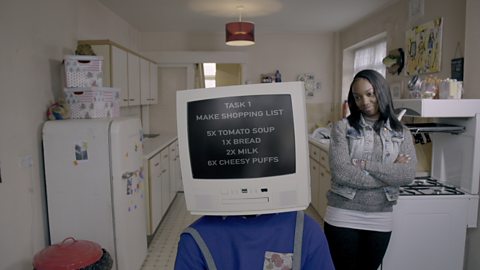
A teenage girl Ada asks her friend CH (Computer Head) an everyday question which is open to Bias.
She then looks at the results obtained from Search engines and how some sites can be biased.
This clip is from the series How to Think Like a Computer.
Teacher Notes
You could use this clip to discuss what we can look for when using the web/internet to find out if sites are reliable, for example, copyright, up to date information, verifiable on other reliable sources etc. This could also be a way of discussing false information that is without evidence.
Discuss the contributions of women in IT, such as Ada Lovelace, as the main character is called Ada.
This clip will be relevant for teaching Computer Science at KS3 and KS4 in England, Wales and Northern Ireland and National 4 and 5 in Scotland.
What is decomposition? video
A teenage programmer discovers how decomposition works through trial and error.
Checking your algorithm. video
A teenage programmer tests a set of instructions she has written to get her computer to mop the floor.

Bias & Reliability. video
A teenage programmer (Ada) asks her computer friend an everyday question to test any bias from the search results offered.