I'm Rochenda Sandall. I play one of the Mangrove Nine in Steve McQueen's series of films Small Axe. I'm here to tell their true story.
In March 1968, an all-night restaurant, The Mangrove, was opened by Trinidadian Frank Crichlow. The place was dimly lit and dotted with black leather furniture.
Hey Frank! What's happening? Oh, so my brudda gone all bourgeois in de ghetto. You want a cappuccino? Cappuccino! Hey Frank, listen, eh, to de Mangrove. A fresh thing! A fresh thing, yes! I'll drink to that!
STEEL BAND PLAYS
The restaurant was on All Saints Road, Notting Hill, London. When the Windrush generation moved from the West Indies to the UK, between 1948 and 1971, many settled in Notting Hill. The area became a battleground between the Black community, racist white youth, and the police. Despite being considered British citizens, they faced prejudice when they arrived. 11 members of Parliament wrote to the government after the arrival of the Windrush complaining about "the coloured immigration". They were often denied employment, housing, and turned away from churches and pubs.
The restaurant became a home from home for the black community. It attracted artists, musicians, and activists from around the world. Bob Marley, Marvin Gaye, Jimmy Hendrix, Nina Simone, Diana Ross, and the Supremes all congregated at the Mangrove to enjoy Caribbean food. But the Mangrove Restaurant became a target for the police.
PC Pulley. Yes, how can I help you? I want to talk to the manager of this fancy new… What is it? It's a restaurant, and I's the owner, not the manager. Aren't you the golden goose? Yeah. And we close right now. So it was complete harassment on this restaurant. Complete harassment on a Black business. And they end up by destroying it. Destroying it because they would raid on a Friday night which is the busiest night and people got fed up and stopped coming.
Crichlow operated a zero-tolerance drugs policy. But this didn't stop the police raiding it 12 times between January 1969 and July 1970. Each time they found nothing. Frank asked for help from the Black community, namely the anti-racist Black British Panther group. Who were the British version of the Black Panthers. They set up a committee to protect the Mangrove, and they organised a protest against the police due to the harassment of the restaurant in August 1970.
Before protesting they wrote a letter to the Prime Minister, Edward Heath. "This protest is necessary as all other methods have failed to bring about any change in the manner the police have chosen to deal with Black People." But the letter was ignored. Frank was talking to a member of Parliament in the House of Lords about how the police were raiding the restaurant. And they kept saying, "Frank, you have no proof. How can we go to the House of Lords or Parliament with this? There is no proof." So I sat listening to this, and a young terror he was. After they left I said, "Frank, let's have a demonstration."
ROCK MUSIC
What our mother country seeks to do is not just close down a restaurant, but close down what they see as a space where black people can put up some kind of resistance to day-to-day harassments by the police.
ROCK MUSIC
The 150 protestors were outnumbered by over 700 police. What was meant to be a peaceful event soon turned violent.
CROWD SHOUTING
Nine protestors were arrested, including writer Darcus Howe, the owner of the Mangrove restaurant Frank Crichlow, and the leading Black Panther Altheia Jones. They became known as the Mangrove Nine. The trial took place at the Old Bailey and would change British history forever. Darcus Howe and Altheia Jones represented themselves in court which gained more attention in the press, and Howe's request for an all-Black jury to make the trial fairer was rejected. It's reported that 50 witnesses were brought by the prosecution and 100 by the defence. All the defendants were acquitted of the main charges of incitement to riot. But it was the judge's closing comments that would remain in the history books. Regrettably, what this trial has shown is that there is evidence of racial hatred on both sides. Most importantly, this was the first judicial acknowledgement of entrenched racism in the Metropolitan Police. Sadly, this wouldn't be the last.
Video summary
Rochenda Sandall, who plays one of The Mangrove Nine in Steve McQueen's Small Axe, tells the true story of this significant event in black British history.
The Mangrove restaurant was opened in March, 1969, by Trinidadian Frank Crichlow. The restaurant became a home from home for the black community in Notting Hill.
It attracted artists, musicians and activists from around the world. Bob Marley, Marvin Gaye, Jimmy Hendrix, Nina Simone, Diana Ross and the Supremes, all congregated at the Mangrove to enjoy Caribbean food.
But the Mangrove restaurant became a target for the police, which ended up destroying it.
An organised peaceful protest against the police ended in violence and the arrest of nine protesters, including writer Darcus Howe, the owner of the Mangrove restaurant Frank Crichlow and the leading Black Panther Altheia Jones.
All the defendants were acquitted of the main charges of incitement to riot. But it was the judge's closing comments that would remain in the history books, as his was the first judicial acknowledgement of entrenched racism in the Metropolitan Police.
Teacher Notes
This short film is suitable for teaching KS3 and KS4 students. However, it raises issues of racism, unfair police treatment and resistance and therefore might be more suitable for older KS3 students. Teacher review is recommended prior to showing your class. It can be used alongside the other Small Axe BBC Teach films or independently.
It could fit as part of a KS3 history curriculum when looking at ‘social, cultural and technological change in post-war British society.’ For example, it could be integrated into an enquiry or scheme of work looking at migration to Britain or black British history.
At KS4, the film could be used to illustrate the experiences and treatment of migrants to Britain after World War Two as part of the AQA ‘Empire, Migration and the People’ course, the OCR ‘Migrants to Britain’ course or the forthcoming Edexcel Migration course.
Before watching the film:
Prior to this lesson you may want to introduce students to other relevant events in post-war black British history to provide context. For example:
- the arrival of the Empire Windrush in 1948.
- the 1948 British Nationality Act, which conferred equal citizenship status to people in Britain and her colonies.
- the Notting Hill riots in 1958 and murder of Kelso Cochrane in 1959.
- the establishment of the Notting Hill carnival from 1959 onwards.
You may also want to elicit from the students what they already know about the relationship between the police and the black community. The students may provide more contemporary or American examples e.g. the murder of George Floyd.
You could also ask students to consider why there was unfair police treatment in the late 1960s and early 1970s.
During watching the film:
Depending on the focus of your lesson, you may want to pause the video at certain points to check for understanding asking such questions as:
- What impression is the film giving of the Mangrove restaurant?
- What impression does the film give of Notting Hill in the 1950s and 1960s?
- Why did the police raid the Mangrove on multiple occasions?
- Who did Frank Crichlow contact? Why might he have done this?
- How did the Mangrove Nine resist?
- What was the outcome of the trial?
- Why do you think director Steve McQueen have chosen to make the Mangrove Nine part of his Small Axe collection of films?
Following on:
You could ask students to summarise the key points of the video. This could be done in various different ways, through storyboarding the key points, bullet points etc. The Mangrove Nine case could then act as a case study/example as part of a GCSE course.
Another potential avenue is introducing students to primary source material related to the Mangrove Nine. The National Archives and the Black Cultural Archives hold a range of source material from a variety of different perspectives. The Ansel Wong collection at the BCA includes many grassroots pamphlets and newspapers. The National Archives contains police reports on ‘black activism’, witness statements and seized Black Panther campaign material. Students could be asked to analyse how a particular source could be useful to a historian wishing to research more about the Mangrove Nine.
If your focus is more comparative, you could introduce students to another example of injustice or police mistreatment. This could either be from the same time period but a different location (i.e. one local to your school) or it could be from a later time period (e.g. Stephen Lawrence and the Macpherson Inquiry)
Blues Parties. video
Micheal Ward, who plays Franklin in Steve McQueen's Small Axe, explores the eruption of Blues parties in London between the 1960s and 1980s.
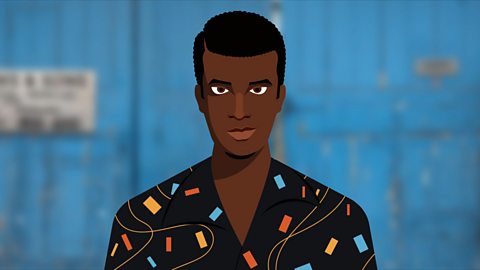
Alex Wheatle and the Brixton Uprising. video
In his own words, this is the story of Alex Wheatle MBE, who grew up in a children's home and later became an award-winning writer of books for children and young adults.
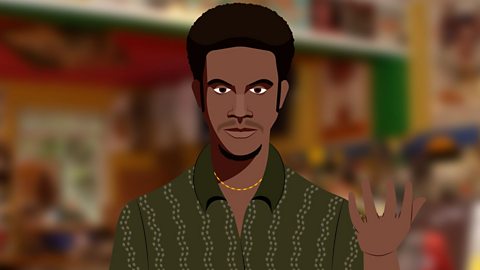
Educationally Subnormal Schools. video
Kenyah Sandy, who plays Kingsley Smith in Steve McQueen's Small Axe, tells the story of how hundreds of children were taken out of mainstream schools and sent to Educationally Subnormal Schools (ESN schools) in the 1970's.

Leroy Logan and the Metropolitan Police. video
In his own words Leroy Logan MBE, one of the few black police officers in the Met when he joined in 1983, narrates and shares his experiences of prejudice in the police force as portrayed in Steve McQueen's Small Axe.
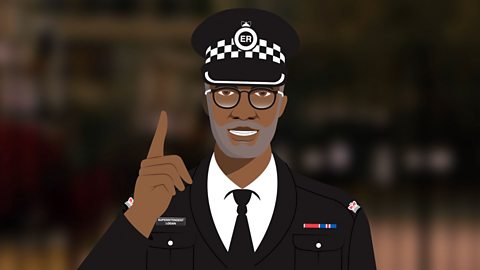
Black Power - A British Story of Resistance. video
This short film for secondary schools looks at the Black Power movement in the 1960s in the UK, surveying both the individuals and the cultural forces that defined the era.

