Hey, I'm Micheal Ward and I play Franklin in Lovers' Rock, one of the films in Steve McQueen's series Small Axe. Franklin loves a Blues party, and I'm here to tell you why they were the best nights in town. Many black people were turned away from existing venues, so blues parties erupted all over London and other cities, including Manchester and Birmingham, between the 1960s and the 1980s. They were a place to meet, dance, and just have a good time. The amazing thing is you get people dressing up like… I mean, Hollywood stars coming to Blues dance. The organisers would clear out a flat, or house, and set up huge speakers that took over entire rooms. Once word got out a party was happening, it wasn't long before people were queuing to get in. These parties were part of the sound system culture many West Indians brought with them to the UK. The tradition of Blues parties began back in the West Indies, principally in Jamaica in the 1950s. With the advent of amplified sound systems, and the access to the American Blues music scene, Blues dances came into their own.
Ahwoar!
LAUGHING
You look nice. Hey, you look great! Yeah man. Thank you, ahh! Freedom! Me never was sure you would make it. Wait, wait. What? I think I… Me shoes, dem scuffed? No man, you're cool. Er, don't tell me you climbed down drainpipe in them? No sir, I throw them out the window, innit. When West Indians came to Britain, not surprisingly, they wanted to bring that tradition of Blues parties with them. Count Suckle was one of the first DJs, or Soundmen, to organise such functions in London. Well I actually started Blues parties myself in the '50s I remember you could go on Somerleyton Road on a Saturday night and find eight Blues dance. On each side of the street.
SIREN
Let me know what's going on, woah!
NEW SONG PLAYS
Ska, rocksteady and reggae the DJs played reflected the music coming from the West Indies, which often spoke of the hardship felt by those who lived in the shanty towns. Reggae music is being about the freedom of the masses, not only black people. You know, all people. There's views, they don't want to be known. This resonated with the West Indians who felt rejected by the society they had moved to. Reggae is about the political expression coming out of the West Indies that captures the fact that we are West Indian people because it's the only one to capture the mood of West Indian people at this time. The Windrush generation, who arrived from the West Indies, saw Britain as the mother country. Thousands migrated after the Second World War with the promise of jobs to help rebuild the economy. Although considered British citizens, they often faced a colour bar which meant they were denied skilled employment, housing and turned away from churches and pubs just because of the colour of their skin. Name's Franklin. And this is my key spar, Reggie. Martha. Patty. Come, come. These Blues parties were a chance to escape the reality of life in Britain and the prejudices they faced everyday. After paying a small entrance fee, partygoers could enjoy traditional food, drink and dance all night, sometimes until 6am the next morning. There's nowhere like, for them to go and enjoy themselves so… they got to make Blues party to enjoy themselves. Hey, listen, yo, we gots to big up to the birthday girl, Cynthia.
CHEERING
They were unlicensed events that were held in residential areas, so noise was often complained about by the neighbours. The open air Blues dances of the West Indies where people had the space to let off steam didn't translate easily to London's residential streets. In the West Indies, we had what we had. But in England we came into something that somebody else had. The structure of the houses are different. And this neighbour-to-neighbour relationships are quite different. They would sometimes get shut down by police, causing tensions to rise between them and the wider community. Quite a few people have been, er, hassled. Been into court, and they've been fined. I've seen those people, they're the same people, they've kept up the parties again. That goes to show that it will continue no matter how much pressure they put on them.
SLOW MUSIC PLAYS
The organisers might be fined, but it wouldn't stop them. The following weekend they would just find another empty building and do it all over again.
POUNDING MUSIC
After the Government brought in the 1974 Control of Pollution Act, it became much harder to hold these events without getting arrested. Eventually, they just stopped. But the stories, relationships, music and communities they helped to build would last forever.
Video summary
Micheal Ward, who plays Franklin in Steve McQueen's Small Axe, explores the eruption of Blues parties in London between the 1960s and 1980s.
Many black people were turned away from existing clubs and bars in London, Manchester, Birmingham and other cities in the 1960s. Which led to the creation of Blues parties, a tradition that began back in the West Indies in the 1950s, were black people could meet, dance and have a good time.
Organisers would clear out a flat or house, and set up huge speaker systems for a DJ to play a mix of ska, rocksteady, and reggae.
The music reflected their West Indian roots and spoke of the hardships of those who lived in the shanty towns before migrating to Britain as part of the Windrush generation.
They were unlicensed events that were held in residential areas, so noise was often complained about by neighbours. The organisers might be fined, but it wouldn't stop them. The following weekend they would just find another empty building and do it all over again.
Eventually, it became harder and harder to hold an event without being arrested and they stopped, but the stories and relationships they helped to build were vital.
Teacher Notes
This short film is suitable for teaching KS3 and KS4 students. It can be used alongside the other Small Axe BBC Teach films or independently.
It could fit as part of a KS3 history curriculum when looking at ‘social, cultural and technological change in post-war British society.’ For example, it could be integrated into an enquiry or scheme of work looking at migration to Britain or black British history.
At KS4, the film could be used to illustrate the experiences and treatment of migrants to Britain after World War Two as part of the AQA ‘Empire, Migration and the People’ course, the OCR ‘Migrants to Britain’ course or the forthcoming Edexcel Migration course.
Before watching the film:
You may want to introduce students to other relevant preceding events in post-war black British history to provide context. For example:
- the arrival of the Empire Windrush in 1948
- the 1948 British Nationality Act, which conferred equal citizenship status to people in Britain and her colonies.
- the Notting Hill riots in 1958 and murder of Kelso Cochrane in 1959
You may also want to elicit from the students what they already know about the Caribbean. You could offer prompts such as ‘Different islands’, ‘History’, ‘Food’, ‘Music’ and ‘Link to Britain’.
You could also ask students to consider why people who had moved from the Caribbean (who often referred to themselves as West Indians) might have held their own house parties. Students here might suggest a desire to have fun, to hang out with people who were similar to them, to temporarily escape from the challenges they faced in British society. You could capture their ideas and return to them once they have watched the video.
If looking at the films as interpretations of the post-war West Indian experience, you may want to introduce the students to Steve McQueen and his motivations for creating the Small Axe collection of films. There are a number of newspaper interviews that might be helpful in providing insight.
During watching the film:
You may want to pause the video at certain points to check for understanding. Alternatively, you could wait until the end and pose questions such as:
- What were Blues Parties?
- Where did they originate?
- Why does the actor Micheal Ward say that people went to Blues Parties?
- What could Blues Parties reveal to us about the experience of West Indian migrants to Britain?
- Why did they come to an end in the 1980s?
- Why do you think director Steve McQueen has chosen to make this film as part of his Small Axe collection of films?
Following on:
You could return to the students’ initial ideas about why people went to Blues Parties. Is there anything they could add to them? If so, you could add what they picked up from the film in a different colour.
At KS4 this short film may serve as a case study or a way to illustrate experiences in a lesson about West Indian migration to post-war Britain.
However, there are several other potential avenues. The video could be used as a way in to exploring the ska, rocksteady and reggae music played at the parties. The exploration of music could then open out into looking at the post-war history of the Caribbean, perhaps with a focus on Jamaica.
Alternatively, you could keep the focus on Britain. One option here is to use look at the changing attitudes to the Caribbean presence in the UK through the lens of music. For example, the rise of ska and reggae and the creation of Two-Tone.
Another option is to look either at other interpretations of the West Indian experience or at contemporary source material. There are contemporary documentaries that you could play short sections of to deepen students’ learning or to draw a comparison with McQueen’s interpretation of Blues Parties. The National Archive and British Film Institute have a variety of different visual sources you could use in the classroom. There is also a range of oral history from the Windrush Generation exploring their experiences of living in Britain.
The Mangrove Nine. video
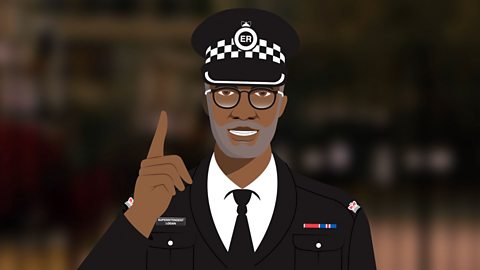
Rochenda Sandall, who plays one of The Mangrove Nine in Steve McQueen's Small Axe, tells the true story of this significant event in British history.
Alex Wheatle and the Brixton Uprising. video
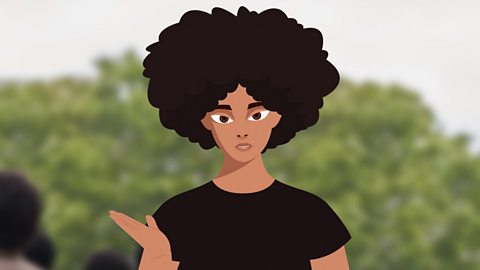
In his own words, this is the story of Alex Wheatle MBE, who grew up in a children's home and later became an award-winning writer of books for children and young adults.
Educationally Subnormal Schools. video
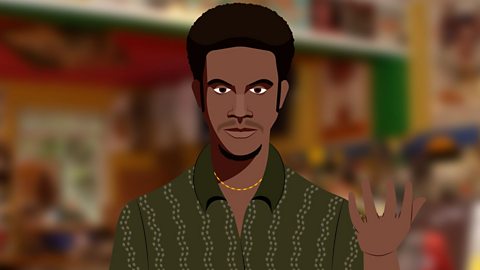
Kenyah Sandy, who plays Kingsley Smith in Steve McQueen's Small Axe, tells the story of how hundreds of children were taken out of mainstream schools and sent to Educationally Subnormal Schools (ESN schools) in the 1970's.
Leroy Logan and the Metropolitan Police. video
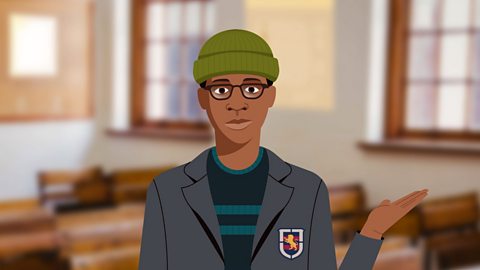
In his own words Leroy Logan MBE, one of the few black police officers in the Met when he joined in 1983, narrates and shares his experiences of prejudice in the police force as portrayed in Steve McQueen's Small Axe.