When the war started, lots more soldiers were needed.
Not everyone wanted to go to war.
Conscription came in 1916.
At first, conscription meant that all fit, single men had to join the army whether they wanted to or not.
This was then changed to include married men as well.
This gave Britain two and a half million more soldiers
But conscription made life hard for a lot of people.
Elizabeth Draycott. Housewife, widow and mother. Forty five years old. I don’t have good handwriting but I bought a new pen and I tried my best. This is a copy of the letter I sent to the War Office.
She reads from her sheet of paper.
November 16th 1916
Dear Sir,
I am writing on behalf of my son, Stanley Edward Draycott. Stanley is eighteen years old and he’s the youngest of my three boys. My two older sons, Arthur and William – they volunteered in 1914 and joined the 1st Hertfordshire Regiment.
For the past two years Stanley has worked alone on our small farm in Hitchin and he has – he’s done his best to keep it running. Last year William – he was badly wounded at Loos. He lost an arm and although he is home with us now he is unable to do much useful work so we rely on Stanley, because Arthur is still at the Front.
This letter came telling us that Stanley is to be conscripted. He has to report for duty in three weeks. I am now very worried because I do not know how we will manage if Stanley has to go. Without Stanley it will be impossible to keep running this farm and I know no other way in which we can continue to earn a living.
Sir, I am proud that two of my sons have served their country but I appeal to you to please exempt Stanley from this conscription and spare us further pain or hardship.
Yours sincerely
Elizabeth Draycott
Letter came yesterday. They rejected my appeal. Stanley has to report for duty next week. “How will we survive now?”
Video summary
This short film is for teacher use and contains potentially upsetting content; teacher review is recommended before use in class.
Newsreel and commentary describe how Britain introduced conscription in 1916.
The measure boosted troop numbers by two-and-a-half million, but had a huge impact on family life.
A dramatic monologue introduces Elizabeth Draycott, housewife, widow and mother, who tells us how her life has been affected.
Her appeal against the conscription of her youngest son has been rejected and she fears for the survival of her family.
This clip is from the series WW1 A to Z.
Teacher Notes
Pupils could discuss the impact they think conscription had on families.
Do they think conscription was a fair measure? A necessary one? What do they think the consequences of not introducing conscription might have been?
The class could work together to draft a reply to Mrs Draycott’s letter, explaining why her appeal has been turned down.
This short film is suitable for teaching history at Key Stage 2 / Second Level or above.
B is for Battalions. video
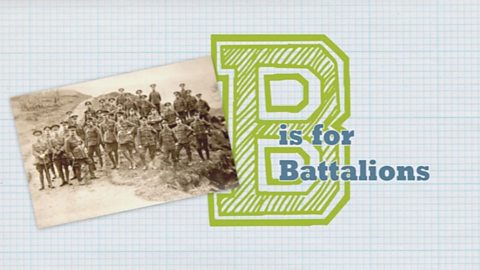
Newsreel and dramatic footage illustrate how the British army recruited groups of friends and neighbours to fight together.
D is for Diary. video
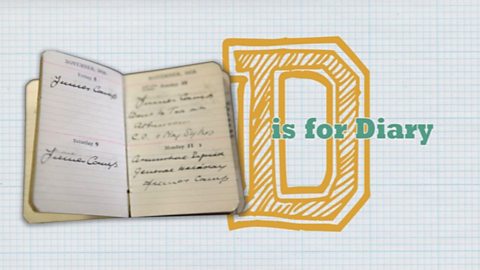
Pupils examine wartime diaries and discuss the value of first-hand accounts. In a monologue, a war widow reads from her husband’s diary.
E is for Empire. video
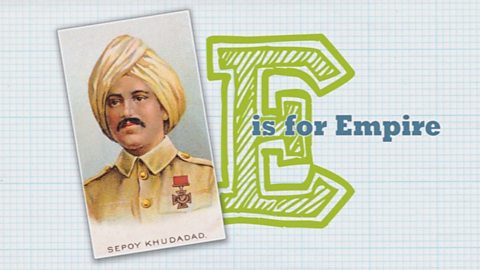
Newsreel and commentary explain how the British Empire helped in WW1. An Indian soldier describes his brave actions in battle in a monologue based on a true story.