RINGING
ALEJANDRO: Hola.
ASHLEIGH: Hola Alejandro. Weren't we going to have a chat after lunch?
ALEJANDRO: Lo siento. Me he echado una siesta.¿Qué hora es?
ASHLEIGH: ¿Qué hora es? Son las seis.
ALEJANDRO: ¡Las seis! Oh no voy a llegar tarde. ¡Siempre llego tarde!
ASHLEIGH: ¿Por qué? ¿A dónde vas?
ALEJANDRO: A la fiesta de Javier. Comienza a las siete.
ASHLEIGH: ¿A las siete? Javier's party is at seven. Oh you better hurry. ¡Corre! Take me with you. Hmm so where do you need to get to?
ALEJANDRO: Tengo que ir a la Calle Comercio.
ASHLEIGH: A la calle Comercio. No sé.
ALEJANDRO: ¿Me ayudas?
ASHLEIGH: Sí I have a map here.
ALEJANDRO: Yo estoy en el Paseo de la Rosa.
ASHLEIGH: Sí Cruza el puente."
ALEJANDRO: Entonces ¿adónde voy ahora? ¿A la izquierda a la derecha orecto?
ASHLEIGH: Todo recto.
ALEJANDRO: Vale vámonos.
ASHLEIGH: Cruza la calle y a la derecha. Ahora izquierda.
ALEJANDRO: Izquierda. ¿Qué hora es?
ASHLEIGH: Ah let me see. Las siete y media.
ALEJANDRO: Bueno ¿izquierda o derecha? Derecha.
ASHLEIGH: Mm right. I'm getting a bit worried now. We don't seem to be getting any closer.
ALEJANDRO: ¿Qué hora es?
ASHLEIGH: Son las ocho. Maybe turn left. Izquierda. ¡Cuidado! Maybe you shouldn't have gone that way. ¡Derecha! No - ¡izquierda! I don't know where we are any more. It's 8:45 now Alejandro. Son las nueve menos cuarto. This looks familiar maybe.
ALEJANDRO: Esta es la casa de Sara. ¿Adónde me traes?
ASHLEIGH: Sara's house. Ah lo siento Alejandro. I'm sorry.
ALEJANDRO: Pues entonces ¿ahora qué? ¿Todo recto o a la izquierda?
ASHLEIGH: ¿A la izquierda? Oh this map really isn't helping.
ALEJANDRO: ¿Qué hora es?
ASHLEIGH: I'm not sure if you want to know. Son las nueve y cuarto. Va ánimo Alejandro. Intenta a tu izquierda. Your left. I think we're there. Son las diez menos cinco. Yikes!
ALEJANDRO: Esto ha sido por tu culpa así que lo explicas tú.
ASHLEIGH: Sí yo se lo digo. Don't worry I'm sure he won't be annoyed.
JAVIER: Pero ¿qué horas son éstas? Lo siento es culpa de ella.
ASHLEIGH: Lo siento. Son las diez. Es mi culpa que llega tan tarde. It's my fault.
JAVIER: No no son las diez. Son las once.
ASHLEIGH: It's 11? But my clock says 10.
JAVIER: Que no son las diez que son las once. En Inglaterra van con una hora atrasada.
ASHLEIGH: Oh yeah. When it's 10 in the UK it's 11 in Spain. D'oh. Lo siento Alejandro. Maybe we should call your dadto get you home.
Video summary
English schoolgirl Ashleigh calls her Spanish friend Alejandro using her tablet.
When he asks ¿Qué hora es? (what time is it?) and she replies “son las seis”(it’s six o’clock), Ashleigh discovers that he is late for a party as his ‘siesta’ was longer than planned.
Alejandro speaks only Spanish so Ashleigh repeats and explains key vocabulary.
She tries to help him find his way by giving him instructions in Spanish, using a map of Toledo.
Time passes and he is completely lost.
He finally arrives at 10pm according to Ashleigh but it’s 11pm in Spain and Javier is not impressed despite their apologies.
Teacher Notes
An assault course could be made or a street marked out on the ground. Pupils could then work in groups navigating the course/ street, perhaps using blindfolds. They could use phrases from the clip ‘¡cuidado! (careful) and ¡lo siento! (I’m sorry) as necessary.
Using a map of a Spanish town the children could compare it to their own, what are the similarities and differences? Then in pairs they could take it in turns to give directions to an undisclosed destination for their partner to guess.
Alternatively they could draw a fantasy town map to direct each other around.
This clip is suitable for teaching Spanish at Key Stage 2, Level 2, or beginners in Spanish of any age.
Spanish KS2: Introductions in Spanish. video
British school girl Ashleigh learns how to introduce herself in Spanish.
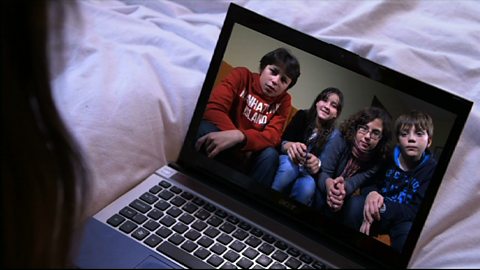
Spanish KS2: Meeting a Spanish family. video
Ashleigh talks to her Spanish friend Cristina via a tablet about the festival of Reyes (kings), and compare the traditions with English Christmas.
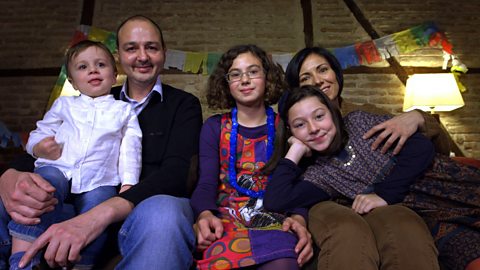
Spanish KS2: Playing sports and music. video
An English schoolgirl called Ashleigh talks to her Spanish friends about sports and music.
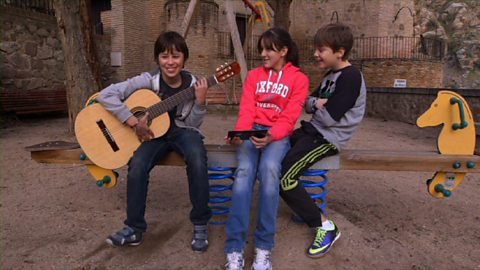
Spanish KS2: Shopping, cooking and preparing food. video
An English girl watches her Spanish friends, Javier and Sara, via a tablet as they shop for the ingredients of a paella.
Spanish KS2: A song about 'Don Quixote' video
A song in English and Spanish that tells the story of Don Quixote, Sancho Panza and Dulcinea based on the book 'Don Quixote' by Miguel de Cervantes.
Spanish KS2: A song in Spanish about days of the week and activities. video
A song in Spanish and English to practice the days of the week and typical Spanish activities.
Spanish KS2: A song about the gender of nouns in Spanish. video
A song in Spanish and English to practice the gender of nouns in the language.
Spanish KS2: Painting and colours in Spanish. video
Ashleigh practices colours and adjectives in Spanish by talking to her friends in Toledo as they paint portraits.
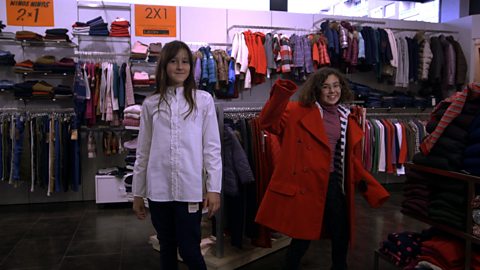
Spanish KS2: Shopping for clothes in Spanish. video
Ashleigh, an English school girl, talks to her friends Sara and Cristina in Spain using a tablet.