Narrator:
We all have to follow rules, like ‘no pushing in’. But what if the rules are unfair? Should everyone still follow them?
Emily Davison didn’t think so. Neither did Rosa Parks. They both fought to change what wasn’t fair.
Emily Davison was born in London in 1872. She worked as a teacher when she was a young woman. At that time, women weren't allowed to do many other jobs. And she didn’t think that was fair.
She found out about a group of women who were trying to change things. They were called the Suffragettes, and they wanted women to be allowed to vote, just like men could. Emily Davison joined them.
To try and make people pay attention, they decided they’d have to make a lot of noise, and even cause trouble. With other women, Emily marched, and demanded to see the Prime Minister… She was arrested and put in prison, but she didn’t give up.
Lots of people started talking about the suffragettes and asking questions.
‘But why aren’t women allowed to vote?’
In June 1913, Emily took part in a daring protest. At the Epsom Derby, a famous horse race, she ran out in front of the King’s horse. She might have been trying to attach a suffragette banner to it. The horse hit her at full speed, and she died.
That same year, Rosa Parks was born in Alabama, in the USA.
Growing up, she began to see that life in Alabama was very different for black people, and white people.
The rules said that they always had to be kept apart, and that white people were always more important. Black children weren’t allowed to go to the same schools as white children.
Black people even had to use different toilets!
When she was an adult, Rosa got the bus to go to work every day.There were rules on the buses too. Black people were only allowed to sit at the back. And if the bus got full up, and a white person got on, a black person had to give them their seat.
One day in 1955, Rosa Parks decided that she’d had enough of the unfair rules. When a white person told her to give up her seat, she refused. She wouldn’t move.
The bus driver told her she had to get up. But she said ‘no’ – and the police came and dragged her off the bus.
Soon, everyone was talking about what had happened. Seeing one person say ‘no’ made a lot of others realise that they could say it, too.
The next day, people began to protest. They marched, and refused to take buses - so the bus company lost lots of money.Newspapers wrote about it, and people started asking questions.
"It's not fair!"
"Why do they think they can treat us like this!"
Rosa Parks had to go to court. But the protests continued for over a year.
The year after Rosa Parks’ protest, the courts in Alabama decided that anybody - black or white - should be allowed to sit anywhere on a bus.5 years after Emily Davison died, the law in Britain was changed, and some women were allowed to vote.
In both places, lots of people thought the rules were unfair. Emily Davison and Rosa Parks protested. And what they did led to change.
Video summary
This animated film compares the lives of Emily Davison and Rosa Parks, two activists from different times and places, who both successfully protested against unfair rules.
Born in 1872, Emily Davison joined the Suffragettes in early 20th-century Britain to advocate for women's voting rights. Decades later, in 1955, Rosa Parks challenged racial segregation on buses in Alabama, pioneering a significant civil rights movement.
Both women's protests stirred public discourse and led to legal changes, as the courts in Alabama went on to desegregate buses and British women gained voting rights.
Teacher Notes
Themes in the film include:
- How individuals and their communities can bring about national and international change.
- How information is shared
Additional notes
- Universal Suffrage
The film references how “some women” were allowed to vote five years after Emily Davison’s protest in 1918. However it was only women over the age of 30 who owned property that were included. This changed 10 years later, in 1928, when all women received the same voting rights as men.
Before the video
Establish any prior knowledge pupils might have about Rosa Parks. Show Rosa Park’s black and white mugshot and explain that this photo was taken just after she’d been arrested.
- What do you think she’s been arrested for?
- Do you think she looks sorry for what she’s done?
Explain three bits of key vocabulary they’ll be hearing:
- Vote
- Protest
- Prime Minister
During the video
00:39 - What did the suffragettes want? (For women to be able to vote)
01:02 - What did Emily and the suffragettes do to get people asking questions? (They marched and made noise. They demanded to see the Prime Minister. They ‘caused trouble’.)
01:25 - Where was Rosa born? (Alabama in the United States of America)
02:00 - In Alabama, which two groups of people were treated very differently? How were they treated differently? (White people and black people were treated differently. White people were treated as more important and there were rules that kept them separate)
02:20 - What did Rosa do when she was asked to move? Why did she do that? (She said no and refused to move, because the rule was unfair)
02:42 - Why did the bus company lose lots of money? (People refused to take the bus, as a protest)
After the video
- If you could travel back to the past, what questions would you ask Rosa Parks about her protest?
- How are Emily Davison's and Rosa Parks' stories similar? How are they different?
- Do you think it's fair that some people couldn't vote?
- What does it mean to be brave? Were Emily and Rosa brave?
- How did Emily change things for women? How did Rosa change things for black people in the USA?
Ask pupils to create a fact file about either Rosa or Emily.
This film is suitable for teaching History at KS1 in England, Wales and Northern Ireland and 1st Level in Scotland.
More from this series:
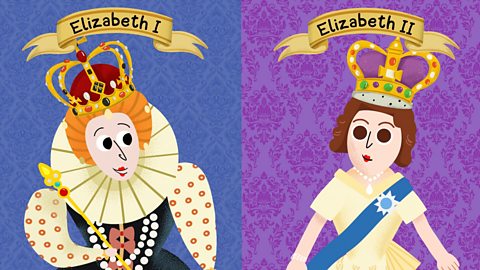
Queen Elizabeth I and Queen Elizabeth II. video
This animated film compares the lives and different time periods of two of the most famous British monarchs of all time, Queen Elizabeth I and Queen Elizabeth II.
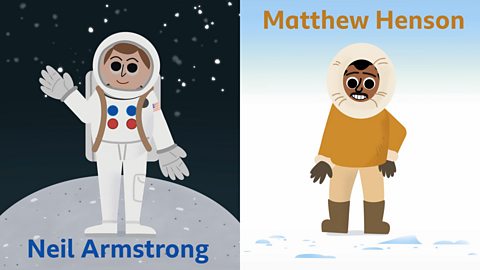
Neil Armstrong and Matthew Henson. video
This animated film compares the lives and adventures of two different explorers, Neil Armstrong and Matthew Henson.
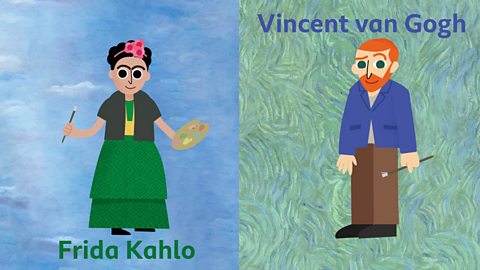
Vincent Van Gogh and Frida Kahlo. video
This animated film compares the lives of Vincent Van Gogh and Frida Kahlo, two famous artists from different time periods, who both found passion and purpose through their unique painting styles.
William Caxton and Sir Tim Berners-Lee. video
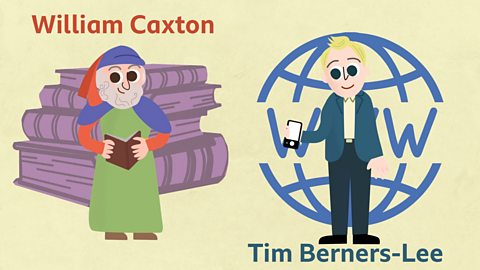
This animated film looks at the big ideas of William Caxton and Sir Tim Berners-Lee. Both changed how we share information today, even though they lived over 500 years apart.
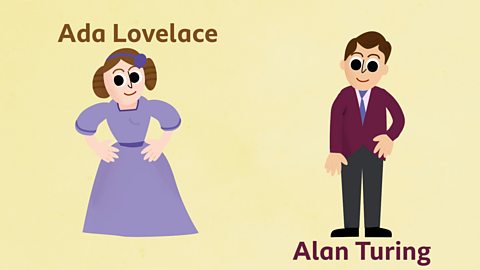
Ada Lovelace and Alan Turing. video
This animated film compares the lives of Ada Lovelace and Alan Turing, two mathematicians from different eras whose bold and creative ideas helped develop the first computers.