Narrator:
In 1472, William Caxton's ship arrived in the port of London. It was carrying a strange machine that nobody in England had ever seen before.
‘What is it?’
William Caxton was sure that the printing press he’d bought was a great idea. But he didn’t realise that it would change the world.
Five hundred years later, in 1989, Tim Berners Lee had an idea. He wondered if he could invent a better way for computers to link up and share information.He thought it might be useful for a few people who used computers. But he didn’t realise that his idea would change the world.
William Caxton had always been interested in books. When he travelled to Germany, he met people who had a whole new way of making them: the printing press.
Before then, the only way to make a copy of a book was for someone to write out every word by hand. That took a long time and meant that books were very expensive.
But when Caxton started up his print shop in London, people were amazed to see that once he had slotted together the letter blocks for each page… he could quickly make lots and lots of copies of a book.
He started by printing and selling books of poetry, and stories about knights.Soon, other people began setting up their own printing businesses. More and more books appeared – and the first newspapers.
Suddenly, the country was abuzz with new ideas - and big questions.
Who should be in charge? What did the Bible really say about God, and Jesus? How did the natural world really work?
These questions led to more and more books being written and new ideas just kept flying out of all of Europe’s print shops.
They led to lots of changes, and new inventions.
When Tim Berners Lee had his big idea, he was using a network that allowed people around the world to link up their computers called the ‘internet’.
It wasn’t easy to use, though. At that time, different types of computer couldn’t connect to each other properly.
Berners Lee’s idea was a bit like William Caxton’s book business - it was a way of sharing information. He called it the ‘World Wide Web’.Anyone who had a computer that connected to the internet could make a page on the world wide web.Each page had its own, unique address, a bit like the way every house has its own address.
And that completely changed how the internet could be used. With the World Wide Web, anybody could make a web page - and everything on the web could be found by using a search engine.
Caxton’s books and Berners Lee’s web pages had one thing in common. To begin with, only a few people read them. But quickly, more and more started using the new technology.
Today we’re surrounded by so many books that nobody could ever read them all! And we use the world wide web for, well… everything to do with information, even watching this video.
They didn’t plan it, but their ideas really did change the world!
Video summary
What do William Caxton and Sir Tim Berners-Lee have in common? This animated film looks at the big ideas of two people who both changed how we share information today, even though they lived over 500 years apart.
In 1472, William Caxton introduced the printing press to England, revolutionising how books were produced. Before then, each book was painstakingly written by hand, making them rare and expensive.
Caxton's printing press allowed him to create many copies quickly, sparking a surge in books and newspapers - and in ideas. A whole diverse range of information and theories could be shared quickly, and reach a larger audience of readers than before.
Five hundred years later, Tim Berners-Lee's invention of the World Wide Web made it easier for computers to connect using the Internet. This revolutionised how people share information globally.
Today, both Caxton's books and Berners-Lee's web pages have become integral to our lives and shape the way we communicate.
Teacher notes
Themes in the film include:
- How technology has changed over centuries, and how it impacts our daily lives
- How we share and learn information
Additional notes
- Literacy rates
When William Caxton arrived in London with his printing press in 1476, literacy rates weren’t high. This was partly due to the expensive nature of books. The printing press and the works created provided an impetus for people to learn and it’s reported that between 1500 and 1800, literacy rates increased drastically.
How to use the video in your KS1 lesson planning
Before the video
- What do you think a machine that makes lots of copies of books would look like?
Encourage pupils to draw their version of the machine or create them as a group activity.
Show a clip of a modern day printing press, for example the mass printing of newspapers. Show a photograph of an early, wooden printing press.
- What differences can you see between the early printing press and the ones we have now?
Explain three bits of key vocabulary they’ll be hearing:
- Printing press
- Internet
- Web page
During the video
00:26 - Who had their idea first, William or Tim? (William Caxton. Tim had his idea 500 years later)
01:04 - Why did books take so long to make before Caxton’s machine? (They were written by hand)
01:18 - How many copies of a book could Caxton’s machine make? (Lots and lots of the same book, by using letter blocks)
02:00 - What did Caxton’s books lead to? (Lots of changes and new inventions)
02:23 - Why wasn’t the internet easy to use when it was first invented? (In 1989, the Internet was new and computers struggled to connect to each other)
02:47 - On the world wide web, what did every page have? (It’s own address, like a house)
After the video
- If you could travel back to the past, what questions would you ask William Caxton about his printing press?
- Apart from books and newspapers, what are other ways we share information with each other?
- When Caxton's books and newspapers were printed, people had big questions about the world. What questions do you have about the world?
- What types of books do you like reading?
Use these Bitesize resources to set homework, independent study tasks or to consolidate learning for your pupils.
- KS1 Computing / Digital Literacy How do we communicate online?
- KS1 Digital skills / Digital Maker What are digital photos and videos?
This film is suitable for teaching History at KS1 in England, Wales and Northern Ireland and 1st Level in Scotland.
More from this series:
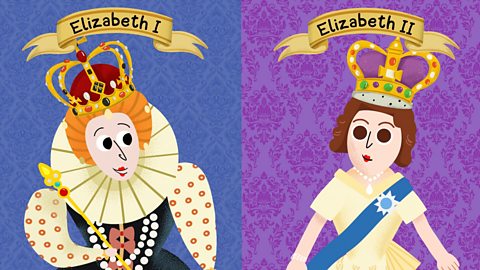
Queen Elizabeth I and Queen Elizabeth II. video
This animated film compares the lives and different time periods of two of the most famous British monarchs of all time, Queen Elizabeth I and Queen Elizabeth II.
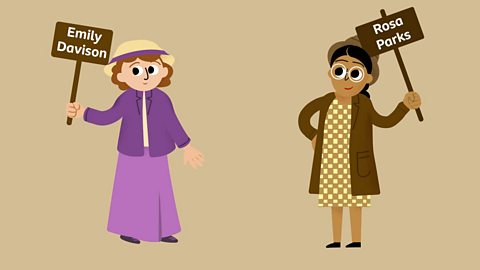
Emily Davison and Rosa Parks. video
This animated film compares the lives of Emily Davison and Rosa Parks, two activists from different times and places, who both successfully protested against unfair rules.
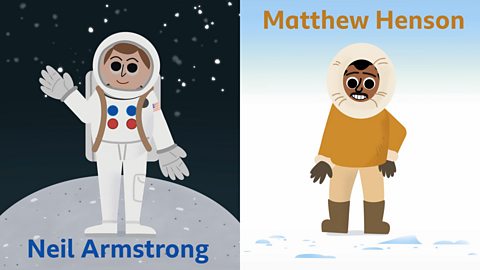
Neil Armstrong and Matthew Henson. video
This animated film compares the lives and adventures of two different explorers, Neil Armstrong and Matthew Henson.
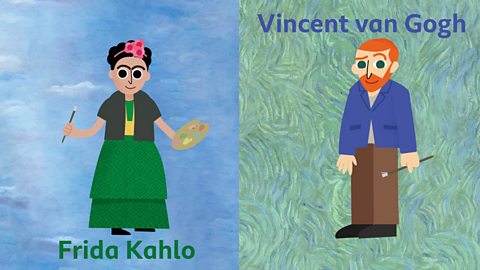
Vincent Van Gogh and Frida Kahlo. video
This animated film compares the lives of Vincent Van Gogh and Frida Kahlo, two famous artists from different time periods, who both found passion and purpose through their unique painting styles.
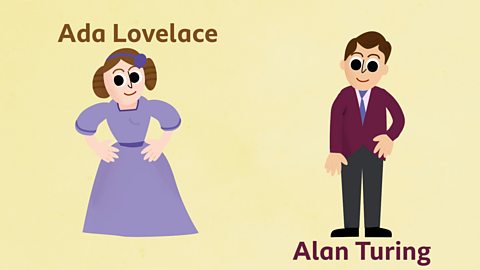
Ada Lovelace and Alan Turing. video
This animated film compares the lives of Ada Lovelace and Alan Turing, two mathematicians from different eras whose bold and creative ideas helped develop the first computers.