Video
Plants are amazing! Especially when we look at their life cycle, from first growth to reproduction.
It all starts with a seed that cracks open and starts to grow when it has the right amount of water, warmth and nutrients in the soil. That's called germination. And this is where the growing process begins. The new shoots and leaves are green because of the chemicals within the plant. Those chemicals work with sunlight to produce the food that the plant needs to grow.
Next, the plant produces flowers with stigma and stamen. These help the flowers to reproduce.
Insects are also important. They move pollen around from one plant to another, helping the flower to form new seeds.
Nature has some clever ways to make sure that seeds are carried far away from the mother plant, giving them a better chance to grow and spread.
These birds will carry seeds with them when they fly away and the seeds from berries, eaten whole, will come out in the birds' poo, giving them their very own fertiliser!
And as flowers like this one die, the seeds are released and carried by the wind. Oh, look! They even have a little parachute to help them fly and land gently.
When they settle on the ground, the seeds will crack open and germination can start all over again. Now that is smart.
Video summary
This short film explains how plants change over time, as well as the clever ways they reproduce.
It explores common plant life cycles, showing how a seed becomes a plant and how new seeds are made.
It looks at life cycle stages, explaining how plants change and develop as they move through their life cycle.
Teacher notes
This short film is an ideal tool to help pupils to explore what a plant life cycle is and how these change over the course of a plants life.
From this film, pupils can explore and develop their own investigations into plant life cycle ideas to show different environmental factors, such as warmth, light and water, can impact on an plants ability to grow and reproduce.
Pupils can also use the film as a discussion tool to explore what changes in plants over time and why they think this happens.
Points for discussion:
· What is a life cycle?
· Can you describe the life cycle of a plant?
· How are seeds made?
· What happens to a plant if you give it too much water?
· What happens to a plant if it has no light?
· What happens to a plant if it is in too cold an environment?
Suggested activities:
Pupils could carry out investigations, making predictions as to how they think plant life cycles change based on environmental factors.
Pupils can predict and then investigate how water, light and temperature all impact on plant growth throughout the life cycle.
Can pupils compare the life cycle of a plant to their own life cycle and how these are similar and different?
Pupils can develop life cycle sketches or diagrams to help them to explore this further.
This short film is relevant for teaching science at KS1 in England and Wales, Foundation and KS1 in Northern Ireland and Early and 1st Level in Scotland.
More videos from this series
The human body. video
This animation takes KS1 pupils through the five senses and all the organs of the human body, showing how we are all different and yet the same in many ways.
Keeping my body healthy. video
This animation explains the importance of eating well, drinking water, and getting enough exercise and sleep.

Animal life cycles. video
This animated film shows the life cycle of a butterfly and a frog, and takes us through the human life cycle.
The food chain. video
This short film for KS1 pupils describes food chains, explaining what consumers and producers are, and what can happen if a food chain is disrupted.
Conductors and insulators. video
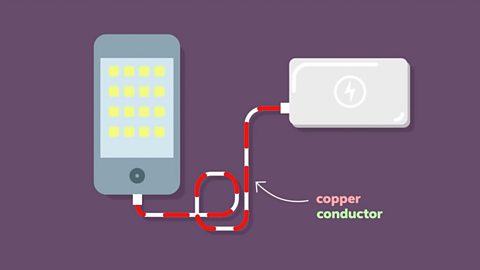
This short film introduces pupils to conductors and insulators. It investigates how heat and electricity are transferred or not through different materials and illustrates the role that molecules play in this process.
Solutions. video
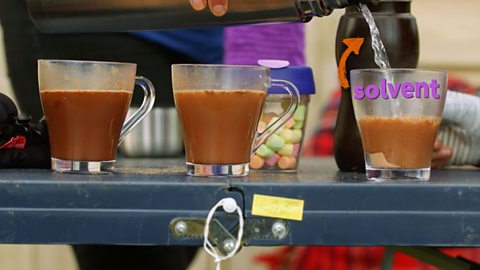
In this short film we investigate solutions and how they are formed. We explore how two substances combine to form a solution and what their properties are.
How does sound travel? video
This short film explains how sound travels through air. We investigate how sound is transferred through materials and the role that molecules have in this process.