Sometimes we want to heat things up - like these beans.
Oh, wait. Hang on. You need to put the beans in something first. But what should it be made of?
Wood? Plastic? Or metal?
The metal saucepan is the best choice, because metal is a conductor of heat.
Conductor is the term used for a material that transfers heat. That means heat moves through and around it.
Molecules are tiny things that come together to make all the things that are around you.
Just like this pan! As the molecules in the metal are heated up, they start to move around. This movement produces energy which makes heat, which then moves or transfers into other parts of the saucepan. The heat also moves into whatever is inside the saucepan, heating the beans up too.
Mmm, those look good!
Metal is the best conductor.
But, there are lots of other things you use every day that are also good conductors.
The metal part of this saucepan is still hot, but the handle isn't hot because it's made of plastic, and plastic is an insulator.
An insulator is a material that stops heat transferring from one thing to another. It does this by reflecting the heat, pushing it away. The molecules in an insulator hardly move at all when exposed to heat, so the heat doesn't transfer, or transfers very slowly, making it possible to hold it.
Arjun - Great! We're all out of beans.
Cara - Pizza anyone?
All - Yeah!
Cara - Ah. I've no battery.
Rio - I've a charger.
Lucky for this lot, electricity moves through metal too.
Electricity, conductors and insulators work in a similar way. Copper allows electricity to pass through it quickly. It's a conductor. And rubber or plastic stop electricity passing through them. They're insulators. This is why electrical wires are often made of copper and plugs are made of plastic. Cara's charger has copper wire inside it. The plastic around the outside insulates the wire to stop the electricity giving her a shock.
All they need now is somewhere to plug it in.
Video summary
This short film introduces pupils to conductors and insulators. It investigates how heat and electricity are transferred or not through different materials and illustrates the role that molecules play in this process.
After investigating how heat can be transferred effectively, the film moves to explore insulators and how these can shield the heat transfer.
Central to these concepts is the role of different materials, and this is also explored in the film.
Teacher Notes
This short film is an ideal tool to support pupils in discussing what a conductor and insulator is.
Pupils can discuss and explore how the movement of molecules happens through watching the film, and then think about how this can be transferred into other situations.
Pupils can discuss how they can find out more about conductors and insulators through planning a science investigation themselves.
Points for discussion:
- What is a conductor?
- What is an insulator?
- How can heat be transferred from one material to another?
- How can we stop or reduce heat being transferred?
Suggested activities:
After watching the film, you could work with pupils to investigate conductors and insulators in the context of your classroom.
Can pupils plan and carry out an investigation to find out how they can increase of decrease the ability of heat to travel from one material to another?
To do this, they will need to consider equipment needed and also make predictions to then find out if they were correct.
This short film is relevant for teaching science at KS1 in England and Wales, Foundation and KS1 in Northern Ireland and Early and 1st Level in Scotland.
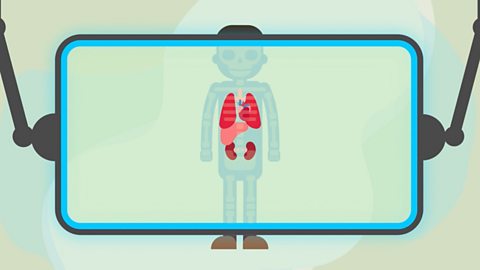
The human body. video
This animation takes KS1 pupils through the five senses and all the organs of the human body, showing how we are all different and yet the same in many ways.
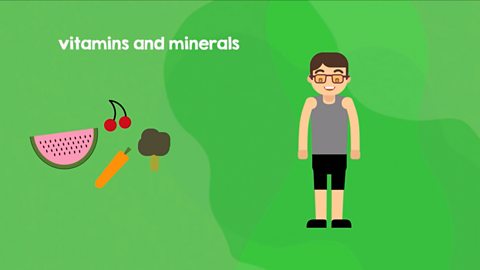
Keeping my body healthy. video
This animation explains the importance of eating well, drinking water, and getting enough exercise and sleep.
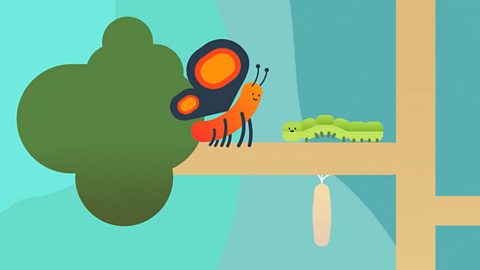
Animal life cycles. video
This animated film shows the life cycle of a butterfly and a frog, and takes us through the human life cycle.
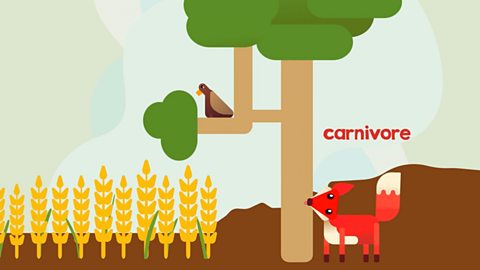
The food chain. video
This short film for KS1 pupils describes food chains, explaining what consumers and producers are, and what can happen if a food chain is disrupted.
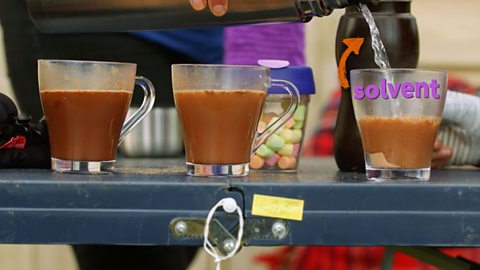
Solutions. video
In this short film we investigate solutions and how they are formed. We explore how two substances combine to form a solution and what their properties are.
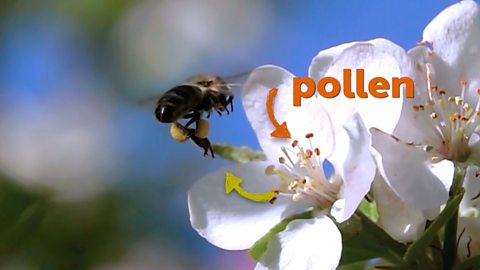
Plant life cycles. video
This short film explains how plants change over time, as well as the clever ways they reproduce.
How does sound travel? video
This short film explains how sound travels through air. We investigate how sound is transferred through materials and the role that molecules have in this process.