This film explains tertiary and quaternary industries: what they are and how they fit into the global economy.
All industry is part of a chain that starts with primary industry: the production or extraction of raw materials, like agricultural products or mining; and secondary industry: the processing of these raw materials into usable products.
Next in the chain come tertiary and quaternary industries, also known as the service industries. Tertiary and quaternary industries tend to be more important in more economically developed countries.
The tertiary sector includes the selling of the goods that have been produced in the primary and secondary sectors. This might be in shops or online.
Tertiary industries also include the selling of services and skills, for example financial services, legal services, health services, hospitality services and also the transportation of goods and people.
The most recent types of industries are the quaternary industries which support and develop the service industries and often involve information, technological and digital services.
This sector really grew in strength during the latter half of the twentieth century.
Examples of quaternary industry include computing, consultancy, project management, education and research and development.
Digital products, like the new game everyone's downloading or the latest phone, are all developed in the quaternary sector.
In the past, primary and secondary industries were the biggest employers in the United Kingdom. But towards the end of the twentieth century, the manufacturing sector here greatly declined and the digital revolution saw new industries and ways of working come to prominence.
Today, most jobs in the United Kingdom are found in the tertiary and quaternary sectors which employ over three quarters of the workforce. They tend to focus around big towns and cities. It's thought that future economic growth in the United Kingdom will focus around this sector.
Video summary
Download/print a transcript of the video.
A short film for secondary schools explaining tertiary and quaternary industries: what they are and how they fit into the global economy.
It covers the development of the service industries and, more recently, that of skills to support the service industry through the development of new technologies.
It meets the requirement of the Key Stage 3 Geography Curriculum with regard to:
- human geography relating to: population and urbanisation
- international development
- economic activity in the primary, secondary, tertiary and quaternary sectors
- the use of natural resources
Teacher Notes
This short film is an ideal tool to help students understand the changes to the industrial footprint of more economically developed countries as tertiary and quaternary industries replace primary and secondary industries.
It can be used to prompt discussion around the importance of both tertiary and quaternary industries and how the development of these industries has changed over time and how they have, in turn, impacted on primary and secondary industries.
As the film progresses, students can think about how their lives would be different without the service industries and how these industries have impacted on the digital revolution.
Points for discussion:
What is a tertiary industry?
What is a quaternary industry?
How do these industries connect?
How have these industries changed over time?
How have these industries impacted on primary and secondary industries?
Suggested activities:
After watching this short film, you could ask students to carry out studies of industry in their local area.
What are the main types of industry and how have these changed over time?
Students could carry out fieldwork to explore land use and begin to allocate this to the four industry types.
Through debate and further research, students could explore how they believe the footprint of industry will change again in the future.
Can pupils begin to consider the reasons for the change in industries and how this links to industry overseas?
They could begin to consider the role of more and less economically developed countries.
This short film is relevant for teaching geography at KS3 in England and Northern Ireland, 3rd and 4th Level in Scotland, and Progression Step 4 in Wales.
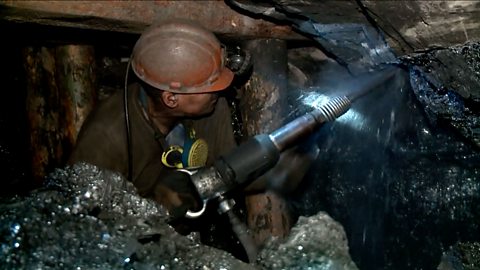
Primary and secondary industries. video
A short film for secondary schools explaining primary and secondary industries.
Erosion. video
A short film for secondary schools explaining the various types of erosion and illustrating the dramatic effect the process has had on landscapes across the world.
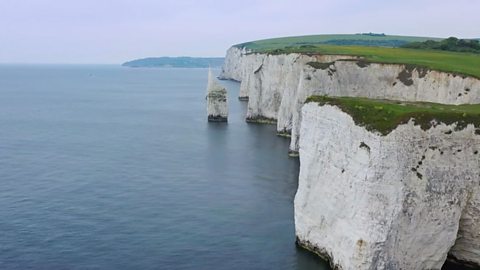
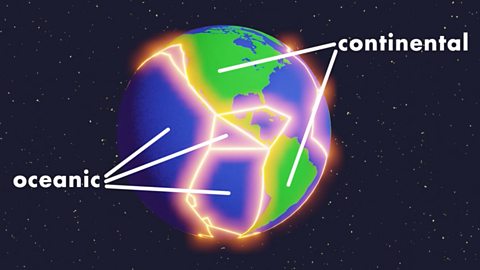
Plate tectonics. video
A short animated film for secondary schools detailing tectonic plates, their movement and boundaries, and what this means for Earth.
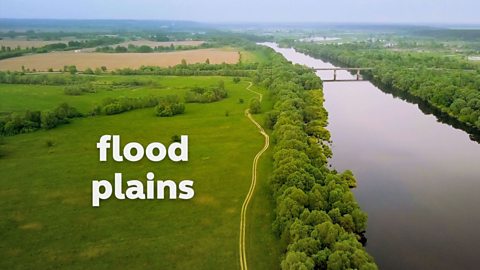
Responses to flooding. video
A short film for secondary schools explaining the common responses to flooding and the methods employed to prevent and reduce flooding. Footage shows examples of hard and soft engineering techniques.
Glaciation. video
A short film for secondary schools explaining glaciation: what it is, how it shapes the land and the effects of climate change on the world’s glaciers.
Rapid urbanisation. video
Investigates how rapid urbanisation impacts on both urban and rural areas and the challenges this presents.
Coastal flooding. video
Illustrated with case studies, this short film for secondary schools explains the causes and results of coastal flooding, focussing primarily on instances in the UK.
River flooding. video
A short film for secondary schools offering explanation of the causes and effects of river flooding. Footage shows examples of case studies of river flooding in the UK and across the world.
Climate. video
A short animated film for secondary schools describing the factors that determine the climate of a country and the main climate zones of the world.