Introduction
This series of videos taken from Operation Ouch! link to the statutory relationships and health education guidance, and the non-statutory PSHE programme of study.
The videos are presented for teachers to use in the classroom. Please ensure you watch the films prior to using in class, to ensure they are suitable for your pupils and in line with your school's policy for PSHE.
They can be used as a part of a planned, progressive approach to your schools’ provision for PSHE and health education to introduce topics, prompt discussion, explain concepts or reinforce learning.
Some videos can be used to support KS2 science lessons. You may also wish to draw cross-curricular links between topics and other relevant subjects.
The videos cover the following topics:
- Mental wellbeing: grief; anxiety and stress
- Physical wellbeing: food; a healthy heart; the immune system; vomit; diarrhoea
- Puberty: spots and sleep
The videos
Grief. video
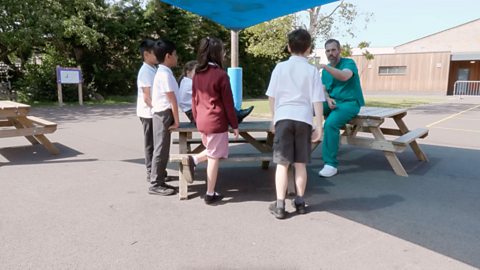
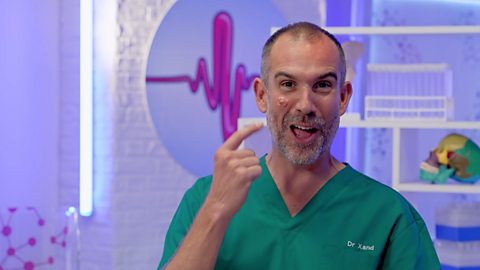
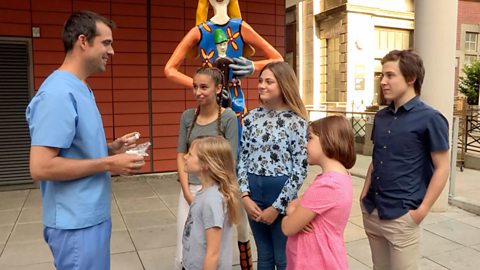
Dr. Chris and Dr. Xand discuss the topic of grief with a group of schoolchildren.
Anxiety. video
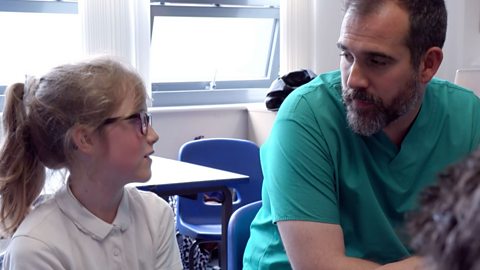
Dr. Xand and Dr. Chris discuss anxiety with a group of schoolchildren.
Stress. video
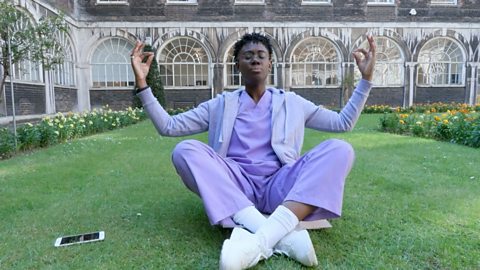
Dr. Ronx tries out some stress-busting techniques with schoolchildren.
Immune system video
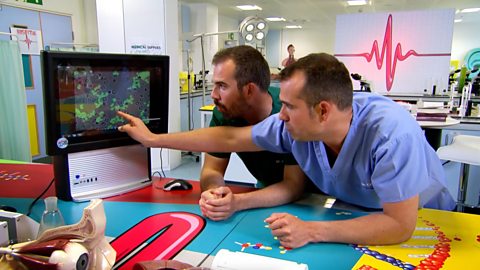
Dr. Xand and Dr. Chris investigate how our immune systems work.
Vomit. video
Dr. Xand and Dr. Chris look at the biological process of vomiting.
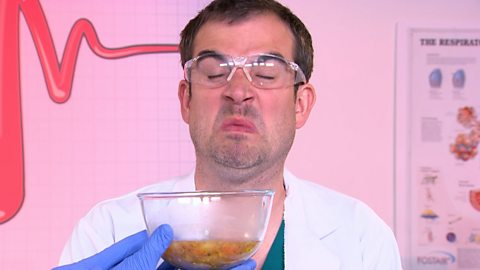
Diarrhoea. video
Dr. Xand and Dr. Chris look at the causes and symptoms of diarrhoea.
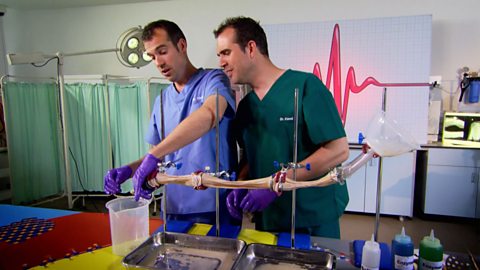
Food. video
Dr. Xand and Dr. Chris test the energy values of different foods.
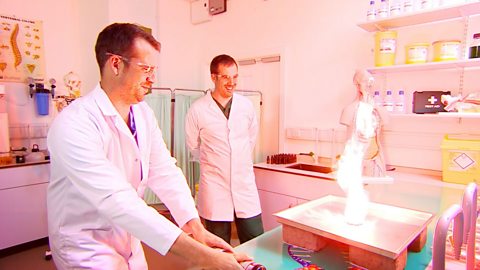
Healthy heart video
Dr. Ronx teams up with a group of schoolchildren to explore how to keep the heart healthy.
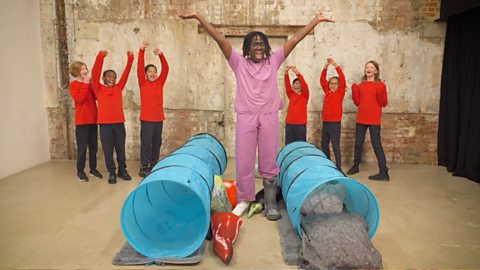
Spots. video
Dr. Xand and Dr. Chris explain why we all get spots.
Teacher guidance
As with all PSHE-related content,a safe teaching and learning environment should be established before class viewing. It is important to watch the films before viewing, to ensure they are suitable for your pupils and work within your curriculum planning. Ensure a safe environment for use by doing the following for each lesson in which the films are used.
Create or revisit ground rules
Remind pupils of any existing ground rules you might already use or agree ground rules with them before the lesson. Examples could include:
- Be sensitive towards others when making comments
- Nobody has to talk about personal experiences unless they want to
- Make judgements and comments based on what people say, not on who they are
- Discuss the situations and experiences shown in the film clips
Encourage and respond to questions safely
Encourage questioning within class and respond appropriately so pupils do not feel self-conscious about asking what they need to. In addition, using an anonymous question box or sticky notes can help pupils to ask questions privately and help you to prepare responses to questions you may not immediately be able to answer, or identify any potential safeguarding issues or disclosures.
Be sensitive to individual pupils
Pupils may have lived experience of topics explored (e.g. grief or anxiety), or may be sensitive or phobic to bodily functions such as vomiting. You may want to discuss films with these pupils ahead of a session. In addition, no-one should feel pressured to discuss their own experiences – any personal information or experience shared should be done so voluntarily and willingly.
Always work within your school’s safeguarding and confidentiality policies and procedures
This is especially important if a student makes a disclosure. If you are unsure of the procedures, seek advice from your Designated Safeguarding Lead. Signpost students to sources of additional information or support if they need it, including named adults within school. The Bitesize Information and Support page contains links to support organisations.
Using the videos
The videos can be used flexibly to suit your teaching needs, depending on your cohort, scheme of work, subject/topic area, learning objectives etc. You can choose how to view them in class, whether one or more in a lesson, over a series of lessons, or all at the same time. You should allow time for related activities, questioning and discussion, and you may also want to build in some reflection or formative assessment time at the end of the lesson.
Discussion and activities
These notes are suggestions for ways to structure discussion around the videos as a whole, or develop further opportunities for learning and understanding. With each video there are additional questions or considerations specific to that video content.
As a way in, or a recap on a topic about health and wellbeing, ask pupils what they think is meant by ‘health’ and ‘wellbeing’. Do they know the difference between physical and mental health? What helps us be healthy?
A good way to gauge understanding for any age group is to ask pupils to draw a picture of ‘A healthy person’ in the middle of a piece of paper. Around the outside of their drawing they should write or draw all the things that make someone healthy (note: some may only think of ‘health’ as being physical), with no input (other than special needs support where required) from the teacher.
After viewing the videos or when coming to the end of the programme of work, give pupils back their drawings and using a different coloured pen, ask them to add anything that they have learnt about what makes someone healthy. This can also help with your own assessment of understanding after a topic. For example, if pupils now understand ‘health’ in a more holistic sense.
Further links
How are babies made? is a series of Operation Ouch! films that cover some elements of Relationships, Sex and Health Education.
