JOLOMO: My favourite word in Scots is 'bumfle'.
NARRATOR: John Lowrie Morrison, aka Jolomo, is one of Scotland's best-loved artists.
JOLOMO: Bumfle means to fold or crease or tousle up a piece of paper or a sheet, or clothing, or you might even say you bumfle somebody's hair. But it's a kind of soft messiness. And, of course, if you do that, I'm bumfling up the word. Bumfle is a really nice expressive word, and I just use it all the time, and all the family use it.
The time of day I love painting most is the gloaming. It's just wonderful, because it takes away a lot of the detail you can get caught up in, and as an expressive painter, I'm not really interested in too much detail. I prefer just expressing the colour and the textures in a very expressionistic way.
NARRATOR: The braw and bonny west coast of Scotland has always been his inspiration.
JOLOMO: This is where, for forty years, I've had my inspiration for most of what I paint, and in Scots parlance, this is a glourin', lourin' day. At its best, or worst, whatever way you want to do it. There's everything here that a painter would want.
NARRATOR: In contrast to his present surroundings, John's family hail fae Glasgow. As a wee lad, he remembers visiting his aunt in Maryhill.
JOLOMO: I can remember the first time hearing my aunt Ruby saying, "Oh, the cludgie's out the back."And I went, "Cludgie? What's a cludgie?"And, of course, a cludgie's a toilet.
TOILET FLUSHES
JOLOMO: The close she stayed in was on the ground floor. There was a gas lamp at the beginning of the close, but at the back, where the cludgie was, there was no light at all, and you had to feel your way and make sure you got the right spot to perform in. But cludgie is just a wonderful word, and to add 'clarty' to that is even better. 'Clarty cludgie'!
The artist Jolomo, or John Lowry Morrison, explains how Scots words are often ideal to use when he is trying to explain the ideas behind his Expressive Art.
Jolomo contrasts the soft words he uses to describe the coasts and countryside with the more guttural words he associates with his childhood in industrial Glasgow.
These clips are from the BBC Series, Blethering Scots, first broadcast in 2011.
Teacher Notes
This can be used as a starting point for autobiographical writing.
Students can discuss possible meanings for the words 'bumfle’ and 'cludgie’ then watch the clip.
Students could explore how the language is the trigger for childhood memories then choose two examples of language to write about which were significant to them when they were younger. Can also be used as an illustrative example as part of a lesson on dialect.
Curriculum Notes
This video clip will be relevant for teaching English at KS3 in England, Wales and Northern Ireland and at third level in Scotland.

More videos on the Scots language:
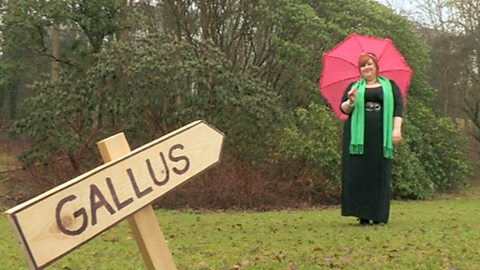
Scots words for weather. video
Presenter and singer Michelle McManus describes the weather in Scots.
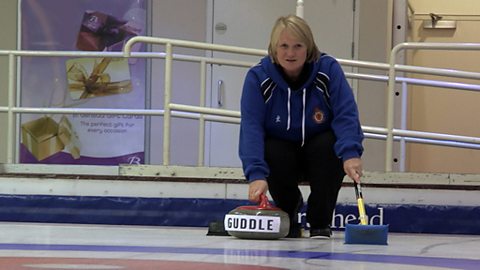
Scots words in the world of curling. video
Rhona Martin, Olympic Gold Medalist and former curler, uses Scots words to describe curling.
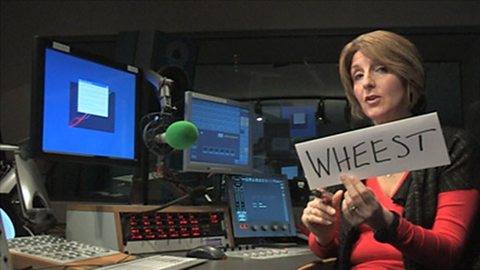
The news in Scots. video
Broadcaster Catriona Shearer compares modern official use of English with the 16th Century uses.

Retaining Scots words in our everyday lives. video
Poet Mark Thomson comments on the words and sounds of Scots language.

The power of Scots words. video
Journalist and TV presenter Kaye Adams describes her experiences of using Scots in her professional life.
Scots language traditions. video
How poet Rab Wilson writes, speaks and makes his living from the Scots language.