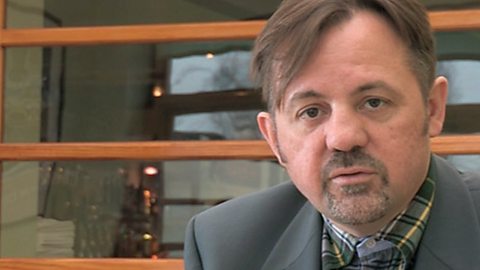
KAYE: I'll tell you a word that I really, really like but I very seldom get an opportunity to use. And here it is. What I'm much more likely to do is this, to 'blether'.
RADIO: 'Call Kaye on BBC Radio Scotland.'
KAYE: Good morning, good morning. I hope I find you well even though it is a guy 'dreich' day out there. Never mind.
NARRATOR: It's Kaye Adams' job to talk, and as a broadcaster on both radio and television, language is her business.
KAYE: I really enjoy using the Scots language. I get a kick out of these words and sometimes dropping them into conversation, knowing that the people that I'm with won't have a clue what I'm talking about. But I absolutely feel that we should be sharing them and sending them out there and making them part of a great big mix.
RADIO: '0500 82 95 00. Call Kaye now.'
KAYE: It's so enjoyable actually using these words and as I think about it, I realise that I censor myself, because when you're in a professional situation, for some reason, you think you've got to be proper. I shouldn't really, should I? There's so many words that are just so expressive. You 'bampot'. You clype. 'Tumshie'. You 'eejit'. You 'blethering skyte. You cheeky besom'.
I remember on one occasion talking within Loose Women and it got very passionate and heated and I said something like, "This is a ridiculous 'stooshie'." Everyone just stopped because they didn't have a clue what I was talking about. So I had to kind of back play a little bit there. So I suppose it goes back to the time that I was brought up.
You know, you had a posh voice, you had a telephone voice, you had to speak properly if you wanted to get on in the world. Frankly, we don't have that feeling quite so much now because we all travel so much more as people, and generally enjoy language. Most people enjoy language, enjoy playing with it. Any time that I have been outside Scotland and I've used words that are very Scottish, whether it's dreich, or even the word 'wee, tiny wee, toatie wee' word. Used all over the world and interestingly, most usually used in just the right sense, because it means more than just size. 'Wee' has got a whole kind of atmosphere to it as a word. It's incredible how people of all different nationalities click right into it.
'Argy bargy' is another one. One of those words that has just transcended a nationality. Everyone uses it, so everyone enjoysit, which is a great thing.' Minging.' Perhaps not such an attractive word, but Scottish originally, but now happily used by anyone and everyone. Minging.
Kaye Adams discusses the use of Scots in a broadcasting context. She comments that she tries hard to include Scots words in her broadcasts.
Kaye focuses on how Scots words add to the mix and notes that most people enjoy playing with language. She laments the fact that she seldom gets an opportunity to speak in Scots.
Kaye confesses that she has worried that Scots words may not be seen to be ‘professional’ enough. Her favourite words are 'wheesht' and 'blether'.
Kaye believes that the sounds of some Scots words are very descriptive. Words like 'eejit', 'bampot', 'clype' and 'tumshie' add much to the language.
These clips are from the BBC Series, Blethering Scots, first broadcast in 2011.
Teacher Notes
Students could create word banks of words which have come from other languages (most dictionaries will include details about the origins of words).
The students could then script a short radio play in Scots which could be broadcast on the school website.
Teachers could encourage scripts that showcase some of the expressions in this clip, like ‘bletherin skyte’ and ‘cheeky besom’.
Curriculum Notes
This video clip will be relevant for teaching English at KS3 in England, Wales and Northern Ireland and at third level in Scotland.

More videos on the Scots language:
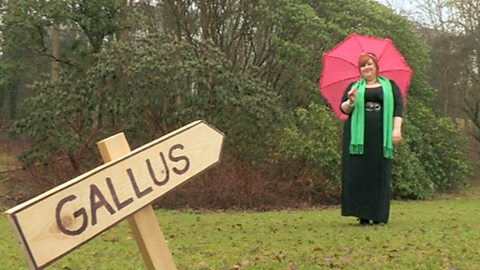
Scots words for weather. video
Presenter and singer Michelle McManus describes the weather in Scots.
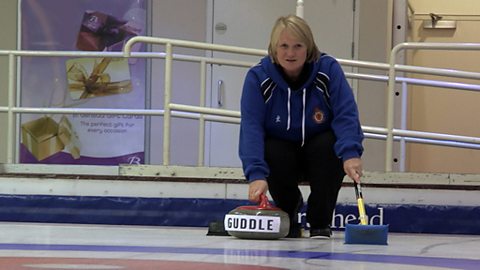
Scots words in the world of curling. video
Rhona Martin, Olympic Gold Medalist and former curler, uses Scots words to describe curling.
The news in Scots. video
Broadcaster Catriona Shearer compares modern official use of English with the 16th Century uses.

Retaining Scots words in our everyday lives. video
Poet Mark Thomson comments on the words and sounds of Scots language.

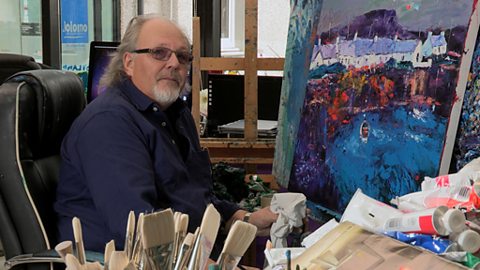
Scots words to describe expressive arts. video
The artist Jolomo explains how Scots words often sums up his thoughts about a landscape.
Scots language traditions. video
How poet Rab Wilson writes, speaks and makes his living from the Scots language.