The Zionists thought Britain's position was a betrayal of Balfour's promise. Many felt the only way to oppose the white paper was with force. So now it was the turn of the Jews to rebel against British rule. Jewish underground groups defied the British restrictions on immigration by smuggling people into the country. But as Jewish unrest intensified, terrible events in Europe were changing the whole landscape.
As the British restrictions on Jewish immigration held firm, Zionist guerrillas took action.
ARCHIVE NEWS: "After a bomb explosion caused by terrorists on the British headquarters of Jerusalem, one entire corner of the King David Hotel, a building of seven storeys, was razed to the ground." The attack on the King David left more than 80 dead: British, Arab and Jewish civil servants. It was a dramatic escalation of the Zionist revolt. With hostilities growing between Jews and Arabs and between the Zionist militias and the British army, Britain decided it was time to relinquish its mandate and get out of Palestine. It handed the problem over to the newly-formed United Nations.
In 1947, after a special investigation, the UN's General Assembly recommended dividing Palestine into Jewish and Arab states, with Jerusalem under UN control. This was seen by the Jews as a great victory. They'd been striving for over 50 years for world recognition and for world support for a Zionist state and here at last it was embodied in a formal decision of the world community. The world was supporting the Zionist venture and was not accepting the Arab opposition to a Jewish state. Zionist leaders broadly accepted the UN's Partition Plan. It wasn't everything they wanted but it was better than nothing. But the proposal was rejected by the Palestinian Arabs and by the surrounding Arab states. Arabs were bitterly resentful. They felt Britain's interwar policy of allowing Jewish immigration had strengthened the Zionist hand.
They could never have imposed themselves on the Arabs without the medium of British bayonets. Inconceivable. Without the greatest power of the age forcing the Arabs to accept these things by main force, Zionism could never have established itself successfully in Palestine, in the way it did.
Fighting began between the Palestinians and Jews days after the adoption of the UN Partition Plan.
The country slid into civil war. The fighting became increasingly vicious with claims of atrocities on both sides.
Palestinians have claimed there was a policy to push them off their lands to rid the country of its non-Jewish inhabitants. Palestinians fled because they were expelled by Israeli forces or about to be attacked or had been the subject of a whispering campaign that convinced them, by Israeli agents deliberately planted, that they were about to suffer massacres and atrocities such as they had heard of occurring in other places in Palestine such as Deir Yassin and elsewhere.
MORRIS: There was never any policy of mass expulsion or blanket expulsion. It was never annunciated, it was never carried out. The important thing was the Israeli government's decision not to allow them to return. This was the policy decision. It understood these refugees were part of a people who had fought against Jewish statehood, who were trying to destroy the Jewish state. Were they allowed back, they could act as a fifth column and therefore couldn't be allowed back otherwise they would destabilise the state.
ARCHIVE NEWS: "The scene is near Jericho, one of the camps for Arab refugees. The story is one of destitution, for these people, as the result of the war in Palestine, have either fled or been expelled from their homes and their livelihood." The upheaval left hundreds of thousands of Arabs without a home. For these refugees it was Al-Nakba, 'the catastrophe'. At every level, for the Palestinians there was a material loss that was on a vast scale, that wasn't rectified or compensated for. Their issue was not dealt with as a political issue. There was no recognition that they had a collective identity as Palestinians and they became marginal people, living off the margins of the towns and cities in Lebanon, Syria, Jordan and elsewhere that they took refuge in.
Video summary
Using guest speakers, this video clip discusses the background and impact of the UN Partition Plan for Palestine in 1947.
This clip is part of a series which can be treated as historical sources, looking at different viewpoints of the Arab-Israeli conflict. It is one of a series of clips taken from a longer documentary about the Israel/Palestine conflict, from 2004.
The series follows the history of the conflict through the mid-late 20th century, focussing on major incidents, pressure points and conflicts.
Please note, these clips have been edited from the original 2004 broadcast version to remove some scenes young audiences might find disturbing. However, teacher review is advised.
Teacher Notes
After watching the clip, split the class into groups and have them talk about what they saw.
How does each speaker present the partition plan? Do they think it was a good idea?
Summarise the speakers' perspective. Can you think of anything that might influence them?
Why do you think some of the speakers hold opposing views? Is there anything they agree on?
Is there anything you would still like to know about the conflict that wasn't mentioned in the video?
This video clip will be relevant for teaching history at KS3, KS4/GCSE, in England and Wales and Northern Ireland. Also at Third Level, Fourth Level, National 4 and National 5 in Scotland.
This topic appears in AQA and Edexcel.
Origins of the Arab-Israel two-state solution. video
Using guest speakers, this video clip discusses the origins of the two-state solution in the Arab-Israeli conflict, through the British Peel Commission of 1937 and the White Paper of 1939.
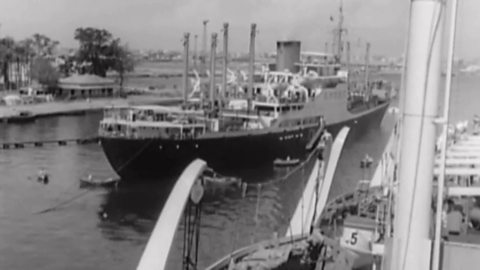
Suez and the arrival of the Cold War in the Middle East. video
Using guest speakers, this video clip examines how the Suez Crisis of 1956 changed international relationships and the landscape of power in the Middle East.
The Six-Day War and the Palestinian Liberation Organisation (PLO) video
Using guest speakers, this video clip discusses how Israel defeated Jordan, Syria and Egypt in only six days in 1967. It also discusses how the war inspired Palestinian resistance movements, such as the PLO under Yasser Arafat.

The Yom Kippur War. video
Using guest speakers, this video clip examines the events surrounding the Yom Kippur War in 1973.

Sabra and Shatila massacres in 1982. video
Using guest speakers, this video clip examines the events surrounding the Israeli invasion of Lebanon in 1982.
The first Intifada and Palestinian consciousness. video
Using guest speakers, this video clip discusses the first Palestinian mass uprising in 1987, and how it became a turning point in the conflict.