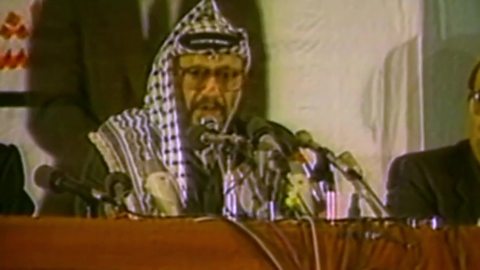
ARCHIVE NEWS: "Adolf Hitler, the indomitable Nazi leader, is now Chancellor of Germany. Inspired by his…"
REPORTER: The rise of Nazism in Hitler's Germany opened a new horrific chapter of antisemitism. Throughout the 1930s, Jews fled from Europe to settle in Palestine. Immigration quadrupled. But the Arabs resented their arrival and the Jews soon came under attack in their new homeland.
ARCHIVE NEWS: "At the Wailing Wall, refugees under British protection leave their quarters where terrorists have instituted the rule of force. British police search for arms in a country where in just over a month nearly 40 people have been killed in the disturbances."
Because they failed to respond to Arab fears, the British came to be seen as hostile to the Arab cause and they too began to come under attack. Arab discontent erupted into widespread civil disobedience with a general strike in 1936.
As things got worse, in 1937 Britain set up a royal commission to look at the issue, headed by the Secretary of State, Lord Peel. The Peel Commission recommended that the Mandate for Palestine should be ended. It called for the land to be divided into Jewish and Arab states.
The Peel Commission of Inquiry and its report was significant in the history of the conflict because the analysis was correct: they were two nations, and they could not be reconciled, and the only solution was partition. Palestinian and Arab representatives rejected this. They demanded an end to immigration and the setting up of an independent Arab state.
NEWSREEL MUSIC
ARCHIVE NEWS: A new Jerusalem, built for peace, today is the centre of turmoil and riot. British patrols in the city adopt the sternest methods to keep order.
REPORTER: In the summer of 1937, the Arab Revolt, that had been suspended during the deliberations of the Peel Commission, reignited. "Royal Engineers purged with dynamite the area where many have met a violent death."
That revolt, in turn, forced the British to bring in an unprecedented concentration of forces: tens of thousands of troops, squadrons of planes, and on the eve of World War II, which everyone knew, by the late 30s, was coming, put Britain in an impossible situation.
Once they'd crushed the revolt, the British began to rethink the way they ran the Mandate, trying to keep order in an increasingly tense environment. They were paying the price for their earlier double-dealing. That rethink resulted in a dramatic change of direction from Balfour's promise to the Zionists.
In 1939 a British Government white paper proposed that Palestine should be one country with Arabs and Jews sharing authority. For five years there'd be strict limits on Jewish immigration. Beyond that, new immigrants could come only if the Arabs agreed.
MORRIS: Just at the moment when the Jews most needed a state, a place to run away to, a haven for their persecuted brethren, the British closed the gates and left them stranded, in effect, in Europe, which ultimately meant that they were going to die at Nazi hands. I mean, the British didn't necessarily know this but they knew that the Jews were being persecuted and nonetheless they switched policy and closed Palestine to Jewish immigration.
In 1939 the British government published a white paper on Palestine which, looking back now, could have given the Arab community virtually all it wanted so long as it allowed continuing Jewish inward migration, but Jews would then have had to live within an Arab state of Palestine. And it was a historic error, on the part of the Palestinian leadership of that time, that it rejected the British white paper.
Video summary
Using guest speakers, this video clip discusses the origins of the two-state solution in the Arab-Israeli conflict, through the British Peel Commission of 1937 and the White Paper of 1939.
This clip is part of a series which can be treated as historical sources, looking at different viewpoints of the Arab-Israeli conflict. It is one of a series of clips taken from a longer documentary about the Israel/Palestine conflict, from 2004.
The series follows the history of the conflict through the mid-late 20th century, focussing on major incidents, pressure points and conflicts.
Please note, these clips have been edited from the original 2004 broadcast version to remove some scenes young audiences might find disturbing. However, teacher review is advised.
Teacher Notes
After watching the clip, split the class into groups and have them talk about what they saw.
Do the speakers think the deals on offer were fair?
If not, which side does each speaker think the deal supports? What do they say to make you think that?
Summarise the speakers' perspective. Can you think of anything that might influence them?
Do you think the deals are presented as a positive or negative idea?
Is there any more information you would like to know before making a decision?
This video clip will be relevant for teaching history at KS3, KS4/GCSE, in England and Wales and Northern Ireland. Also at Third Level, Fourth Level, National 4 and National 5 in Scotland.
This topic appears in AQA and Edexcel.
UN partition plan for Palestine and establishing the State of Israel. video
Using guest speakers, this video clip discusses the background and impact of the UN Partition Plan for Palestine in 1947.
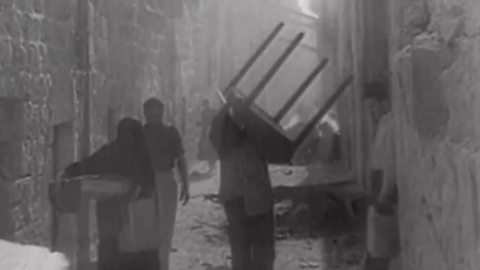
Suez and the arrival of the Cold War in the Middle East. video
Using guest speakers, this video clip examines how the Suez Crisis of 1956 changed international relationships and the landscape of power in the Middle East.
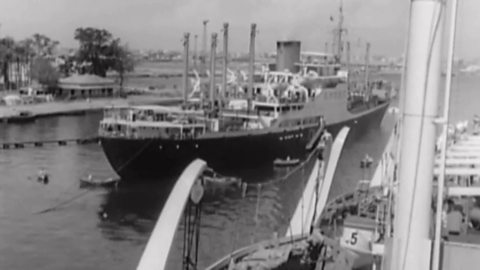
The Six-Day War and the Palestinian Liberation Organisation (PLO) video
Using guest speakers, this video clip discusses how Israel defeated Jordan, Syria and Egypt in only six days in 1967. It also discusses how the war inspired Palestinian resistance movements, such as the PLO under Yasser Arafat.

The Yom Kippur War. video
Using guest speakers, this video clip examines the events surrounding the Yom Kippur War in 1973.

Sabra and Shatila massacres in 1982. video
Using guest speakers, this video clip examines the events surrounding the Israeli invasion of Lebanon in 1982.
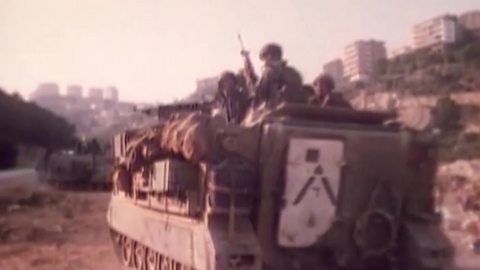
The first Intifada and Palestinian consciousness. video
Using guest speakers, this video clip discusses the first Palestinian mass uprising in 1987, and how it became a turning point in the conflict.